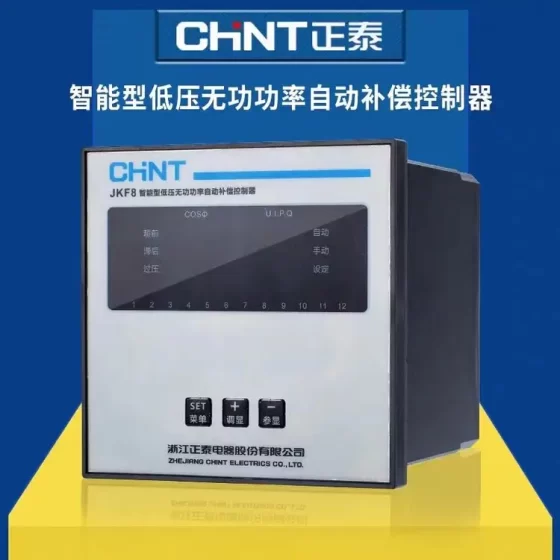
Contacteur,disjoncteur,capteur,Encodeur,API,Convertisseur





Industriel / electrical maintenance handheld true-RMS digital multimeter. It is the only model among the 175/177/179 trio with built-in temperature measurement, a classic instrument for industrial control, HVAC and equipment commissioning.
Suffix note: 179 = US version; 179C = China-assembled version, identical functions and specifications.
✅ Key Features
- True-RMS Measurement: Accurate readings for non-sinusoidal waveforms (entraînements à fréquence variable, moteurs, alimentations à découpage). Average-response meters will produce distorted readings for these signals.
- 6000-count display, backlit LCD + analog bar graph: Intuitive visualization of dynamic signal trends for fluctuating voltage; supports auto / manual ranging.
- Min/Max/Avg recording: Captures transient peak values for voltage surges during startup and shutdown.
- Display Hold + Auto Hold: Locks stable readings automatically for convenient two-handed operation; smoothing filter suppresses electrical noise.
- Cote de sécurité: CAT III 1000V / CAT IV 600V, compliant for power distribution and control cabinet measurements.
- Alimentation: 9V battery; battery compartment accessible without full case disassembly. Limited lifetime factory warranty.
📌 Key Technical Specifications
| Measurement Function | Gamme | Basic Accuracy |
| Tension CC | 0.1mV ~ 1000V | ±(0.09% + 2 chiffres) |
| Tension CA (True-RMS) | 0.1mV ~ 1000V | ±(1.0% + 3 chiffres) |
| AC/DC Current | 0.01mA ~ 10A | DC ±(1.0%+3 chiffres); AC ±(1.5%+3 chiffres) |
| Résistance | 0.1Ω ~ 50MΩ | ±(0.9% +1 chiffre) |
| Capacitance | 1nF ~ 10000μF | ±(1.2% +2 chiffres) |
| Fréquence | 0.01Hz ~100kHz | ±(0.1% +1 chiffre) |
| Température (with supplied 80BK-A thermocouple) | -40℃ ~ +400℃ | ±(1.0% +10)℃ |
Additional functions: Continuity beeper, diode test.
🧰 Standard Accessories (Basic Unit)
FLUKE 179 unité principale
TL224 insulated test leads
80BK-A K-type thermocouple (temperature probe)
Pre-installed 9V battery
Manuel d'instructions
The EDA2 kit adds alligator clips, probe tips, TPAK magnetic hanging strap and soft carry case, ideal for complete field maintenance.
🛠️ Scénarios d'application typiques
Troubleshooting industrial control cabinets, VFDs and PLC power supply circuits
Combined electrical and temperature inspection for motors, contactors and heating circuits
CVC, mechanical and electrical equipment fault diagnosis
Electrical installation acceptance and preventive maintenance
Measurement of harmonics and non-sinusoidal voltage in power supplies and switching power supplies
⚖️ Series Comparison (175 / 177 / 179)
175: Modèle de base, pas de rétroéclairage, no analog bar graph, no temperature measurement
177: Écran LCD rétroéclairé + analog bar graph, no temperature measurement
179: Full-featured model, rétroéclairage, analog bar graph, mesure de la température
⚠️ Common Weaknesses & Notes d'entretien
- Long-term use may wear the rotary switch markings; rubber overmolding becomes sticky upon prolonged contact with oil and grease.
- Current input terminals are fuse-protected (440mA /1000V fast-acting fuse). Incorrect high-current / high-voltage connection blows the fuse; continuous input exceeding 10A is prohibited.
- Diode test open-circuit voltage ≈2.4V, with limitations when measuring some low-leakage semiconductors.
- Second-hand unit inspection priorities: rotary switch contacts, loose solder joints at current terminals, backlight function and thermocouple channel integrity.
📎 Alternative Selection Reference
Upgrade within same platform: Fluke 87V (superior EMC noise immunity for heavy-duty industrial use)
Alternatives nationales: UNI-T UT61E+, Victory VC86E (True-RMS, rentable)
Simplified Fluke model: Patte 117 (electrician meter with NCV non-contact voltage detection, no temperature measurement)
FLUKE 179 【Terminal 2: 10A Current Jack】
Four jacks at bottom of panel, numbered:
1: mA (400mA)
2: 10UN
3: VΩ (Tension / Résistance / Température)
4: COM common terminal
✅ Function Definition
Terminal 2 (Marquage: 10UN / FUSED)
But: CA / DC high-current measurement, max continuous 10A. Can also measure frequency on current signals.
Short-time overload rating: 20A for maximum 30 secondes. Long-term input above 10A is strictly forbidden.
Opération: Red test lead inserted here, black lead fixed to COM (terminal4); rotary knob switched to A current range.
Built-in fuse: Dedicated 11A fast-acting fuse. Once blown, high-current range fails; voltage and resistance ranges remain unaffected.
⚠️ Critical Usage Reminders
- Current measurement requires series connection into the circuit. Never connect directly across a power supply, this will blow the fuse.
- For small current ≤400mA use terminal 1 mA jack instead of terminal2 10A jack, which has poorer resolution.
- Blown fuse is the most common fault on 179. Always test this range first when buying second-hand units.
- This jack is only for current measurement. For voltage, résistance, continuité, capacitance and temperature measurement, move the red lead to terminal3 VΩ jack.
📌 Full Summary of 4 Panel Jacks
| Nombre | Marquage | Fonction |
| 1 | mA | AC/DC milliamps, max 400mA |
| 2 | 10UN | AC/DC Amperes, max 10A |
| 3 | V惟 | Tension, résistance, diode, capacitance, température (unique to 179) |
| 4 | COM | Common negative, shared for all measurements |
FLUKE 179 Battery Runtime (Factory Specifications)
Powered by a single 9V alkaline battery
- Backlight off: Typique 200 heures de fonctionnement continu (Fluke official datasheet rating)
- Backlight on: Significantly higher power consumption; practical runtime approx 50~80 hours continuous use. Frequent backlight activation in dark field environments further shortens battery life.
📌 Practical Field Reference (Field Service Technician Experience)
Intermittent daily use (power off between readings): Battery lasts several months. Most technicians replace the 9V alkaline battery only 1~2 times per year.
Low-temperature outdoor winter operation: 9V alkaline battery capacity degrades and runtime reduces.
Carbon-zinc 9V battery: Not recommended. Low capacity, rapid voltage drop, prone to false low-battery warnings.
💡 Power Saving & Battery Maintenance Tips
- Le 179 has auto power-off: Automatically shuts down after approx 15 minutes inactivity, greatly extending practical service life.
- Backlight is the main power drain; keep it off unless required.
- Remove battery for long-term storage to prevent electrolyte leakage and PCB corrosion.
- Once low battery warning appears, short measurements can still be taken, but accuracy may degrade; replace battery promptly.
FLUKE 179 Fault Troubleshooting Checklist (Sorted by Failure Probability, Simple Checks First)
Pre-safety rule: Remove test leads and disconnect all external inputs before opening the case. Fuse testing and disassembly carry electric shock risk. Units damaged by high voltage are best sent for professional repair.
Two fuse specifications: mA range: 440mA 1000V fast-acting fuse (PN 943121); 10Une gamme:11A 1000V fast-acting fuse (PN 803293). Never replace with ordinary slow-blow fuses.
- Unit will not power on / flashes then shuts down / bAtt low battery warning
- Install a brand-new 9V alkaline battery. Carbon-zinc batteries have fast voltage drop and may trigger false low-battery alerts.
- Inspect battery compartment spring contacts: rust, oxidation or loose fit. Clean oxidation and adjust contact pressure (high-frequency fault on second-hand meters).
- Check for battery leakage corroding the PCB; thoroughly clean green corrosion if present.
- Ensure rotary switch is not positioned between two ranges; turn back to OFF then restart.
- Elimination: Mainboard power circuit damage caused by high-voltage surge; requires professional repair.
- Current range failure (Most frequent fault, fuse blown by parallel connection to power source)
Symptômes: mA /10A range reads OL no reading; voltage and resistance ranges work normally
- Fuse self-test method: Insert leads to VΩ and mA jacks, switch to resistance range. Near 0Ω reading = fuse intact; OL = fuse blown; abnormal reading = internal damage.
No reading on mA channel → 440mA fuse blown
No reading on 10A channel →11A fuse blown
- Replace with identical fast-acting fuse, ordinary fuses are not permitted.
- Before fuse replacement, inspect PCB input path for burn marks or varistor breakdown. If burn damage exists, the new fuse will blow immediately after power-up.
- Note: LEAd prompt only indicates incorrect lead placement, not hardware fault; appears automatically when selecting current ranges.
- Voltage range inaccurate, drifting, large offset baseline
- Basic verification: Test against stable known DC reference voltage; replace battery first, low battery causes drift.
- Inspect test leads: Broken TL224 leads or oxidized plugs; swap leads to verify.
- Worn rotary switch contacts: Oil contamination and oxidation cause reading jumps when switching ranges. Open housing, clean rotary metal contacts with isopropyl alcohol and fully dry before reassembly (common 170-series defect).
- High voltage mis-application damages protection components (varistances / current limiting resistors). Large measurement offset occurs; front-end protection components need replacement, severe cases damage mainboard.
- Interférence environnementale: Minor fluctuation under VFD strong electromagnetic field is normal; large fluctuation indicates hardware fault.
- Résistance / Continuity beeper range malfunction
Symptôme 1: Resistance always OL, no continuity tone
Dépannage: Broken test leads, oxidized COM/VΩ jacks, dirty rotary contacts, breakdown of front-end protection components
Symptom2: Fixed baseline offset, cannot zero
Dépannage: Jack leakage, PCB moisture contamination, input resistor network damaged by high voltage surge
Symptom3: Continuous constant beep
Dépannage: Shorted test leads or damaged analog front-end circuit
- Temperature function failure (Unique to 179)
- Screen OPEn: Thermocouple open circuit. Check broken 80BK-A probe or poor connector contact; swap probe for verification.
- Locked reading / severe temperature deviation: Sonde endommagée, oxidized thermocouple socket, failed temperature channel circuit.
Avertissement: Never apply live voltage to thermocouple port; it will burn out temperature channel instantly.
- Capacitance range dISC warning
Screen dISC: Residual high voltage charge remains on capacitor under test. Discharge capacitor fully before measurement, not a meter fault.
- Screen error codes (Matériel / Calibration failure, user non-repairable)
- CAL Err: Calibration data lost, recalibration required
- EEPr Err: EEPROM memory corruption, panne de la carte mère, factory repair mandatory
- Display-related faults
- Backlight not working: Tension de batterie faible, failed backlight LED, defective backlight pushbutton
- Segmented / distorted LCD screen: Loose ribbon cable connection or damaged LCD panel
- AutoHold / MinMax non-functional: Confirm meter is not in HOLD lock mode. Some ranges cannot auto-range under MIN MAX mode (design characteristic, not fault)
- Mechanical faults
- Sticky / jumping rotary selector: Worn plastic positioning, fatigued detent spring; rubber overmold aging and stickiness
- Loose jack terminals: Long-term lead insertion loosens base terminals, causing intermittent unstable readings
✅ Quick Self-Check Sequence (For second-hand 179 upon receipt)
- Fit new 9V alkaline battery, power on, verify backlight and no screen error codes
- DC voltage range: Measure stable DC reference voltage, confirm valid readings
- Resistance range: Short test leads to zero offset; test known reference resistor
- Fuse test: Verify continuity of both mA and 10A fuses
- Continuity beeper and diode test
- Plage de température: Attach 80BK-A thermocouple, squeeze probe by hand to confirm temperature follows change
- Capacitance and frequency test
⚠️ Repair Red Lines
- If meter has history of high-voltage misconnection, burnt PCB or burnt smell: Do not repeatedly power on, risk extending damage
- New fuse blows immediately after replacement: Do not keep replacing fuses, front-end protection circuit has broken down
- After disassembling and cleaning rotary contacts, confirm insulation integrity and fully reassemble case before high voltage measurement
FLUKE 170 Série (175 / 177 / 179) Full Checklist
Le 170 series is Fluke’s classic 6000-count True-RMS handheld multimeter. Domestic models carry suffix C (175C /177C /179C), US versions have no C suffix. Hardware core identical, only packaging and manual language differ.
Cote de sécurité: CAT III 1000V / CAT IV 600V; all use single 9V battery, factory limited lifetime warranty.
- Model Feature Comparison Table
| Article | Patte 175 (175C) | Patte 177 (177C) | Patte 179 (179C) |
| Positionnement | Basic general-purpose model | Fault repair model | Full-featured flagship |
| Rétroéclairage | ❌ No backlight | ✅ Backlit LCD + analog bar | ✅ Backlit LCD + analog bar |
| Temperature Measurement | ❌ No temperature | ❌ No temperature | ✅ Temperature (supplied 80BK-A K-type thermocouple) |
| DC Voltage Accuracy | ±(0.15%+2 chiffres) | ±(0.09%+2 chiffres) | ±(0.09%+2 chiffres) |
| AC True-RMS | ✅ | ✅ | ✅ |
| 6000 Count + Analog Bar Graph | ✅ | ✅ | ✅ |
| Min/Max/Avg Recording | ✅ | ✅ | ✅ |
| Auto / Manual Ranging | ✅ | ✅ | ✅ |
| Continuité, Diode, Capacitance, Fréquence | ✅ | ✅ | ✅ |
| Max Range:1000V CA/CC,10A Current,50MΩ Resistance,10000μF Cap,100kHz Frequency | ✅ | ✅ | ✅ |
- Factory Standard Packing List (Bare Unit)
- 175: Unité principale + TL75 test leads + pre-installed 9V alkaline battery + manuel
- 177: Unité principale + TL75 test leads + pre-installed 9V alkaline battery + manuel
- 179: Unité principale + TL224 test leads + 80BK-A K-type thermocouple + pre-installed 9V battery + manuel
- 179 Optional Kit Packages
179/EDA2: Main unit+TL224 leads+80BK-A thermocouple+TPAK magnetic strap+alligator clips+probe tips+C25 soft case (popular electronics repair kit)
179/TPK: Unité principale + Sangle de suspension magnétique TPAK + carry pouch
179/IMSK Industrial Maintenance Kit: Multimètre + current clamp + professional accessory pack, for switchgear inspection
179/1AC Electrician Combo Kit: Matched with non-contact voltage tester
- 170 Series Common Spare Parts List
- Fuses
mA channel: 440mA /1000V fast-acting (PN 943121)
10A channel:11A /1000V fast-acting (PN 803293)
- Test leads: TL75, TL224 (original standard); TL71, TL910 precision probes optional
- Sonde de température: 80BK-A (only for 179)
- Housing accessories: TPAK magnetic strap, C25 soft carry bag
- Batterie: 9V alkaline battery (carbon-zinc not recommended)
- 170 Series Unified Fault Troubleshooting Checklist (Common for 175/177/179, 179 adds temperature channel section)
Safety precondition: Remove test leads and disconnect external inputs before disassembly. High voltage damaged meters should go to professional repair.
- Will not power on / Low battery warning
- Install brand-new 9V alkaline battery; carbon-zinc batteries have fast voltage drop and false bAtt warning
- Inspect battery spring contacts for rust/oxidation/looseness; clean corrosion and adjust contact pressure
- Check battery leakage PCB corrosion; rotary switch not positioned between ranges, return to OFF and retry
- Mainboard power circuit breakdown (high voltage surge), réparation professionnelle requise
- Current range failure (Most common fault across three models, fuse blown by parallel power connection)
Symptômes: OL reading on mA/10A range, voltage/resistance work fine
- Resistance mode test fuse continuity: Conductive = good; OL = blown
No mA reading → 440mA fuse blown
No 10A reading →11A fuse blown
- Replace with identical fast-acting fuse, slow-blow fuses forbidden
- Before fuse replacement inspect PCB and varistors for burn marks; if burnt, new fuse blows instantly
- LEAd prompt is lead placement reminder, not hardware fault
- Voltage reading drift, inaccuracy, large baseline
- Replace battery first, low battery causes drift; swap leads to rule out broken/oxidized plugs
- Worn / contaminated rotary contacts (170-series common fault): Clean metal contacts with isopropyl alcohol, fully dry before assembly
- Misapplied high voltage damages front-end protection components (varistances, resistor networks), heavy reading deviation, requires component replacement
- Minor fluctuation in VFD strong EMI environment is normal
- Résistance / Continuity beeper fault
Constant OL: Broken leads, oxidized COM/VΩ jacks, dirty rotary contacts, front-end protection breakdown
Cannot zero, fixed baseline leakage: Jack leakage, PCB dampness, input resistor network damaged by surge
Constant continuous beep: Shorted leads or damaged analog channel
- Capacitance dISC warning
Capacitor holds residual high voltage charge, fully discharge capacitor before test, not meter fault
- Global screen error codes
CAL Err: Calibration data lost, recalibration needed
EEPr Err: EEPROM corrupted, panne de la carte mère, factory service
- Display faults
Backlight failure (177/179): Low battery, burnt LED, defective backlight button
LCD missing segments / garbled: Ribbon cable loose or LCD damaged
AutoHold / MinMax malfunction: Some ranges cannot auto-range under MinMax mode, inherent design feature
- Mechanical faults
Rotary switch sticking / jumping: Worn plastic detents, fatigued springs; rubber overmold sticky aging
Loose jack terminals: Repeated plugging loosens base terminals, intermittent unstable readings
- 179 exclusif: Temperature channel faults
- OPEn on screen: Thermocouple open, broken probe or oxidized connector; swap 80BK-A probe for verification
- Locked or drastically wrong readings: Failed probe, oxidized thermocouple socket, burnt temperature channel circuit
Never feed live voltage to thermocouple port; temperature circuit will burn out
- 170 Series Second-Hand Receiving Inspection Checklist (175/177/179)
- Fit new 9V alkaline battery, power up, check no error codes and working backlight (177/179)
- DC voltage test against stable reference
- Resistance test: Short leads to zero, test known reference resistor
- Fuse continuity check for mA and 10A fuses separately
- Continuity beeper and diode function test
- Capacitance and frequency test
- Extra 179 vérifier: Connect 80BK-A thermocouple, squeeze probe manually and confirm temperature responds
- Inspect smooth rotary action, no jumping; jacks free of burn and blackening
- Sélection du modèle & Alternatives Reference
Upgrade within same family: Fluke 87V (enhanced EMC noise immunity, heavy industrial duty)
Domestic True-RMS alternatives: UNI-T UT61E+, Victory VC86E
Simplified Fluke electrician meter: Patte 117 (NCV non-contact voltage, no temperature function)


NH42-63-318x560.png "Commutateurs de transfert automatiques de type PC CHINT (ATS)NH42-63/4SZ")