Contacteur,disjoncteur,capteur,Encodeur,API,Convertisseur

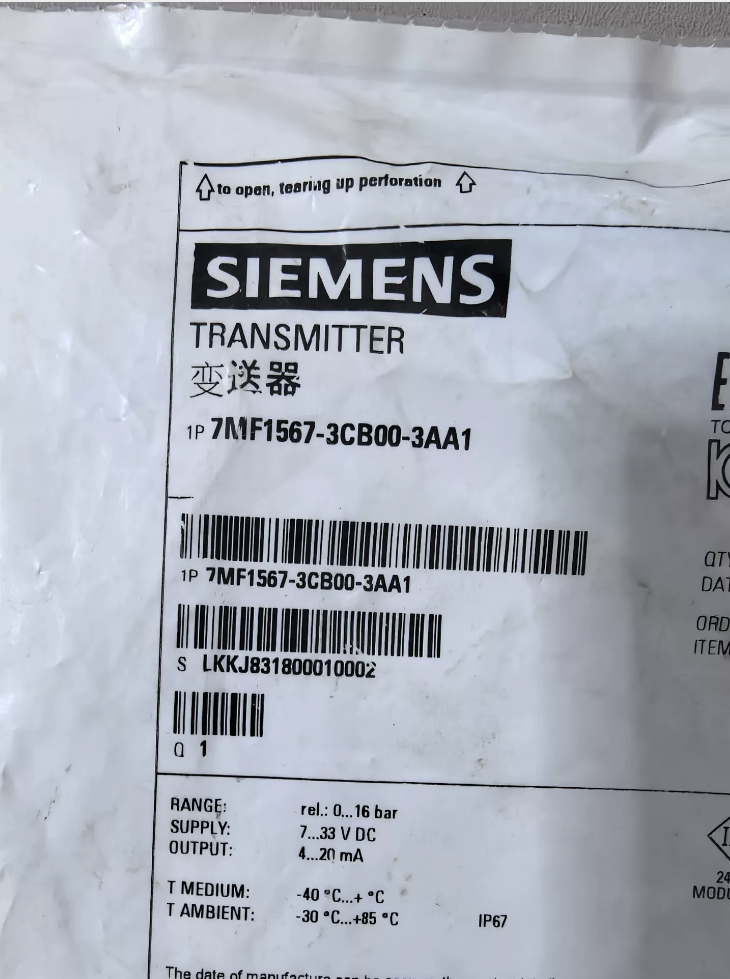

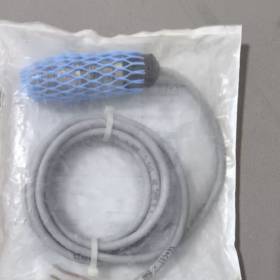
7MF1567: Série SITRANS P220, structure soudée entièrement en acier inoxydable, dédié au service haute pression et réfrigérant, transmetteur de pression manométrique piézorésistif
3CB00:
Plage de mesure: 0 … 16 bar (jauge)
Overpressure limit: 40 bar
Pression d'éclatement: environ. 80 bar
3AA1:
Sortir: 4–20 mA 2-wire system
Connexion au processus: 1/2″-14 NPT internal thread (widely used in North America, different from G1/2″ external thread of 1AA1)
Connexion électrique: M16 connector (DIN EN 175301-803-A)
Explosion protection: Non antidéflagrant (modèle standard)
- Paramètres techniques de base (2026 Manuel officiel)
- Mesures & Performance
Measured variable: Pression manométrique
Plage de mesure: 0–16 barres
Précision: ±0.25% FS (typique), maximum. ±0,5 % FS
Non-linéarité: ≤0.25% FS
Répétabilité: ≤0.1% FS
Temps de réponse: <5 MS (T99)
Stabilité à long terme: 0.25% FS per year
- Spécifications électriques
Signal de sortie: 4–20 mA 2-wire
Alimentation: DC 7–33 V (24 VDC recommandé)
Capacité de charge: R ≤ (U-10 V) / 0.02 UN
Max.. load resistance at 24 V: environ. 700 Oh
- Plage de température
Température moyenne: -30 … +120 ℃
Température ambiante: -25 … +85 ℃
Température de stockage: -40 … +100 ℃
- Structure mécanique & Matériel
Wetted & non-wetted parts: Entièrement en acier inoxydable (1.4435/316L), gasket-free fully welded design, ideal for high pressure and refrigerant media
Connexion au processus: 1/2″-14 NPT internal thread
Connexion électrique: M16 connector, IP65 protection grade
Poids: environ. 0.2 kilos
Origine: Suisse (CH)
III. Instructions de câblage (M16 Connector, 4–20 mA 2-wire)
Pin definition (Standard EN 175301-803-A):
Épingle 1 (+): 24 VCC positif
Épingle 2 (-): 4–20 mA signal return (connect to PLC AI positive terminal)
Épingle 3: De rechange
PE: Earth connection (housing grounding)
Remarques sur le câblage:
2-wire design: Power positive shares line with signal negative
Shielded cable single-ended grounding (control cabinet side only)
Recommended cable: 0.5–1.5 mm² shielded twisted pair cable
- Installation & Directives de fonctionnement
- Position d'installation: Vertical or horizontal mounting available; keep away from severe vibration
- Sealing treatment: Use PTFE tape or matched sealant for NPT thread connection
- Zero point calibration:
Output shall be 4.00 mA under zero pressure condition
Adjust zero trim screw at connector side if necessary
- Supports applicables:
✅ Gas, liquid, vapeur, refrigerants (R134a, R410A etc.)
✅ Slightly corrosive media (compatible with stainless steel)
❌ Strong corrosive fluid (acide concentré, alcali fort), high abrasion slurry
- Alternative commune & Modèles similaires (Gamme & Connection Comparison)
| Model No. | Gamme (bar) | Connexion au processus |
| 7MF1567-3CA00-3AA1 | 0–10 | 1/2″ NPT Internal |
| 7MF1567-3CB00-3AA1 | 0–16 | 1/2″ NPT Internal |
| 7MF1567-3CD00-3AA1 | 0–25 | 1/2″ NPT Internal |
| 7MF1567-3CE00-3AA1 | 0–40 | 1/2″ NPT Internal |
| 7MF1567-3CB00-1AA1 | 0–16 | G1/2″ Externe (BSP) |
- Dépannage courant
- Fixé 4 mA output
Alimentation électrique anormale (ci-dessous 7 V)
Open circuit in signal loop
- Fixé 20 mA output
Over-range pressure (dépasser 16 bar)
Diaphragm damage
- Signal drift & unstable reading
Mauvaise mise à la terre ou interférence électromagnétique
Forte fluctuation de température
Excessive installation stress
VII. Informations sur la commande & Délai de mise en œuvre (2026 Référence)
Production status: Active in production
Standard delivery time: 1 working day (European warehouse)
Reference price: About CNY 700–900 (taxe incluse, 1-5 pièces)
Défauts courants, Causes and Quick Solutions for Siemens 7MF1567-3CB00-3AA1 (P220) Transmetteur de pression
- Aucune sortie, zero current (0mA)
- Insufficient supply voltage
Cause: Voltage lower than 7VDC, large line voltage drop
Solution: Mesurer la tension aux bornes, keep stable at 20~26VDC
- Reverse positive and negative wiring
2-wire system rarely burns out device but causes no signal
Solution: Swap wiring of pin 1 et une épingle 2
- Broken cable or loose terminal connection
Solution: Conduct continuity test and fasten M16 connector
- Internal circuit damage of transmitter
Phénomène: Aucune réponse après la mise sous tension, invalid after power replacement
- Constant 4mA minimum output without change
- Actual pressure is zero under normal static status
- Blocked pressure tapping pipeline
Medium crystallization, oil dirt and impurities block pressure inlet
Solution: Purge and dredge pressure guiding pipe
- Diaphragm stuck by foreign objects
- Wrong measuring range or mismatched PLC configuration range
- Severe zero drift
Solution: Trim zero point on site under zero pressure
- Constant 20mA full-scale output
- Actual pressure far exceeds 16 bar full range
Solution: Reduce pressure and verify field actual pressure
- Pressure trapped inside pipeline unable to release
- Pressure diaphragm breakdown and failure
Most frequent hardware fault, replacement is required
- Short circuit of signal wire
Positive and negative wire short circuit leads to full current output directly
- Fluctuating and unstable signal reading
- Excessive on-site vibration (installed near pumps and fans)
Solution: Install shock-absorbing bracket and keep away from vibration sources
- Interférences électromagnétiques graves
Power cables laid together with signal cables without shielding
Solution: Single-end grounding for shielded twisted pair, separate wiring layout
- Pulsating medium pressure itself
Solution: Install damper and pressure stabilizing buffer tank
- Temperature drift caused by drastic ambient temperature change
- Câblage lâche, water ingress and oxidation inside connector
- Large measurement deviation, inaccurate reading, high or low indication
- Uncalibrated zero point (drift after long-term operation)
Solution: Calibrate zero under zero pressure to recover accuracy
- Static pressure error caused by improper installation position
- Exceed 120℃ medium temperature damages measurement precision
- Sur 40 bar overload pressure causes permanent offset
- Inconsistent range setting between PLC program and actual transmitter range
- Fault caused by water ingress and dampness
- Poor sealing of M16 connector leads to water penetration
Phénomène: Random reading fluctuation, intermittent normal operation
Solution: Dry internal parts, replace waterproof connector and reapply sealing glue
- Rainwater and condensed water penetrate into internal structure for outdoor installation
- Overload resistance fault
Phénomène: Normal supply voltage but current output insufficient
Cause: Excessive internal resistance of rear PLC module exceeding 700Ω load limit
Solution: Shorten signal cable length and reduce loop resistance
- Typical Vulnerable Defects Exclusive to P220 Series
- Excessive force during NPT thread installation squeezes internal diaphragm and causes permanent scrappage
- Zero drift easily occurs after long-term operation with refrigerant and low-temperature media
- Failure rate doubles under high-frequency vibration environment
- Fully welded structure disables disassembly and maintenance, direct replacement needed once damaged
- Three-step Quick Self-check Method
- Cut off power supply, stand by for 3 minutes then re-energize
- Release all pressure to check if output returns to 4mA
- Apply standard pressure to verify linear output up to 20mA
Conclusion fondamentale
7MF1567-3CB00-3AA1 (P220) adopts factory integrated fully welded sealing structure. The diaphragm cannot be replaced separately on site. The whole transmitter must be replaced once diaphragm is damaged.
Reasons for Non-separable Diaphragm Replacement (Core Structure of P220)
Model feature: 7MF1567 is fully welded SITRANS P220 transmitter without sealing gasket or detachable pressure cover
Diaphragm structure: 316L/1.4435 diaphragm is directly welded on pressure cavity; pressure cavity and electronic chamber are integrated via laser welding or argon arc welding with no detachable bolts or clamps
Official specification: The transmitter is maintenance-free. Repair work is only available by Siemens authorized personnel and on-site disassembly is prohibited.
Typical Phenomena of Damaged Diaphragm
Fixed 20mA output (over-range or diaphragm breakdown)
Extreme zero drift unable to be calibrated
Medium leakage at thread root or housing joint
Random data fluctuation and internal corrosion caused by water ingress via M16 connector
On-site Replacement Solutions
Solution 1: Direct overall replacement (Recommandé)
Spare part model: 7MF1567-3CB00-3AA1 (same range & connexion)
Replacement steps:
- Couper le courant, release pressure and close pressure valve
- Remove M16 connector
- Unscrew 1/2″ NPT thread gently with spanner (avoid squeezing new diaphragm)
- Wrap PTFE tape on new thread, tighten manually then turn 1/4 circle with spanner
- Câblage complet, power on and perform zero calibration
Solution 2: Factory return maintenance (Coût élevé & long cycle)
Maintenance content: Replace full welded pressure module and recalibrate
Coût d'entretien: À propos 60-80% of new product price, delivery cycle 2-4 semaines
Not cost-effective compared with direct replacement
Risks of Forced Disassembly
- Welded cavity cannot be opened without damage, resulting in housing deformation and diaphragm scrap
- Ultra-thin diaphragm (0.1-0.2mm) is easy to crack under prying, knocking and extrusion
- Siemens does not sell separate P220 diaphragm or pressure module, only complete transmitters available
- Disassembly will invalidate IP65 protection and explosion-proof certification, bringing potential safety hazards
Preventive Measures for Diaphragm Damage
- Strictly control installation torque for NPT thread, forbid excessive tightening
- Keep working pressure within 16 bar rated range, avoid instantaneous high pressure impact
- Install shock absorber when mounting near pumps and compressors to prevent fatigue crack of diaphragm
- Limit medium temperature below 120℃ to avoid metal creep and zero drift
- Apply sealing glue on M16 connector for reliable waterproof performance


NH42-63-318x560.png "Commutateurs de transfert automatiques de type PC CHINT (ATS)NH42-63/4SZ")