Contacteur,disjoncteur,capteur,Encodeur,API,Convertisseur


Définition du modèle de base
1.1 Répartition du modèle
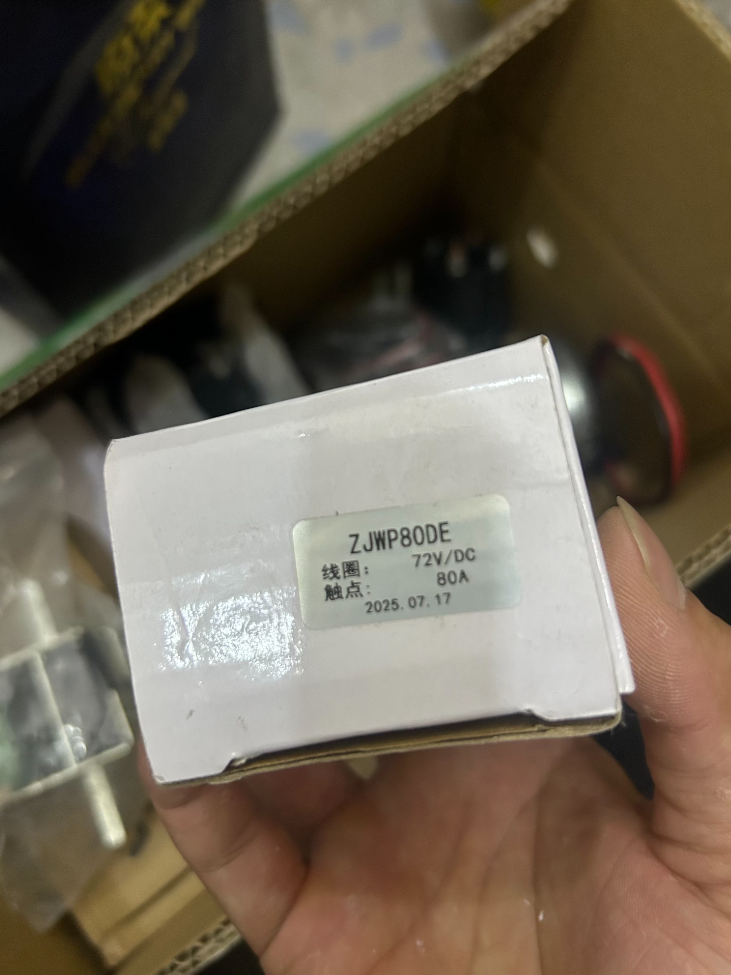
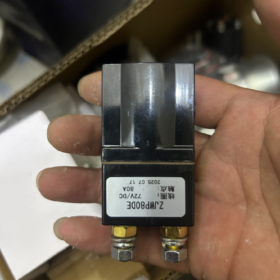
ZJW: Contacteur CC série
P.: Version avec support de montage plat
80: Courant nominal des contacts principaux – 80A
DE: Identificateur de tension de bobine, deux spécifications principales: 24À DC / 48À DC
- Positionnement du produit
Contacteur de fermeture du circuit principal pour transpalettes et gerbeurs électriques. Pas un interrupteur à clé de contact. On l'appelle souvent à tort “interrupteur d'alimentation / contacteur d'allumage”. Installé entre le contrôleur et le moteur d'entraînement; l'interrupteur à clé contrôle l'extraction de sa bobine.
- Modèles applicables
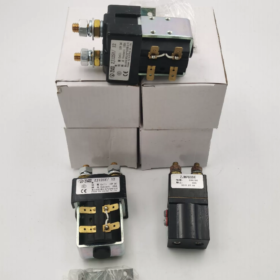
Noblift TianGang PTE20N, Zhongli Mini Roi, Lida, Transpalettes électriques Xilin 1,5 à 2 tonnes & gerbeurs. Remplacement Direct des contacteurs importés des séries Albright SW60 et SW80.
- Paramètres électriques de base
| Élément de paramètre | Spécification standard |
| Capacité du contact principal | DC 80A unipolaire normalement ouvert (1NON) |
| Tension de bobine | ZJWP80DE-24V / ZJWP80DE-48V |
| Consommation électrique de la bobine | Environ. 12W |
| Matériel de contact | Contacts en alliage d'argent, résistant aux fortes surtensions |
| Résister à la tension d'isolation | ≥500 V CC |
| Endurance mécanique | 1,000,000 opérations |
| Endurance électrique | 500,000 opérations (sous charge nominale) |
| Classe de protection | IP54, étanche à la poussière et à l'eau pour chariots élévateurs |
- Définition du câblage des bornes (4 Terminaux Total)
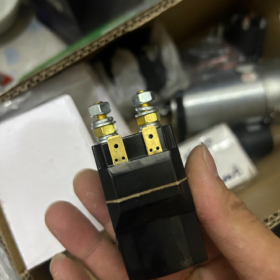
3.1 Deux boulons en cuivre épais sur le dessus (Circuit d'alimentation principal)
B+: Entrée positive de la batterie (connecté à la batterie / sortie interrupteur d'arrêt d'urgence)
M.: Puissance de sortie principale vers le moteur / contrôleur
3.2 Deux bornes à lame fine en bas (Circuit de commande de bobine)
A1, A2: Deux pôles de la bobine; Connexion DC sans distinction de polarité
Chemin du circuit: Interrupteur à clé sur marche → fusible → A1/A2. Lorsque la bobine est sous tension, Les contacts principaux se ferment et tout le véhicule s'allume.
- Dimensions hors tout de montage
Corps principal: 65mm L × 45 mm l × 38 mm H
Support de montage: Pattes de fixation en U, espacement des trous de montage 40 mm, Vis de fixation M4
Sens de sortie du câble: Les bornes d'alimentation sont tournées vers le haut; les lames de commande s'étendent latéralement
- Modèles de remplacement interchangeables
- Remplacements directs nationaux: ZJWP80A, ZJW80 (support universel, seul le suffixe diffère)
- Alternatives importées: Albright SW60-351P, SW80-65 (interchangeable si les trous de montage et la tension de la bobine correspondent)
- Règle de sélection critique: Doit correspondre à la tension de bobine d'origine du véhicule (24V et 48V ne peuvent pas être mélangés)
- Défauts courants & Dépannage
- Pas d'alimentation du véhicule et impossible de voyager après avoir allumé la clé
Mesurer la tension de la bobine à A1/A2: Pas de tension → circuit ouvert dans l'interrupteur à clé, fusible ou câblage; Tension présente → bobine du contacteur grillée, remplacer directement le ZJWP80DE
- Le contact s'établit mais le véhicule roule faiblement avec une forte surchauffe
Contacts principaux érodés et oxydés; 80Un contact carbonisé par une surintensité – remplacer le contacteur
- Bruit anormal et bavardages répétés
Chute de tension importante sur l'alimentation de la bobine (fil fin / bouchon desserré) ou charge de batterie insuffisante
- Démontage & Spécifications de sécurité de l'assemblage
- Débranchez toute la borne négative de la batterie du véhicule et appuyez sur l'interrupteur d'arrêt d'urgence pour décharger la puissance résiduelle avant l'utilisation.;
- Serrez les boulons électriques à un couple de 5 à 6 N·m pour éviter un mauvais contact., surchauffe et ablation terminale;
- Distinguer 24V / 48Bobines V; une tension incorrecte entraînera un échec de démarrage ou un grillage instantané de la bobine.
Principe de fonctionnement complet du contacteur principal pour chariots élévateurs électriques (Contacteur CC de type ZJWP80DE)
- Répartition de la structure de base
L'unité contient deux circuits non conducteurs indépendants reliés par attraction électromagnétique:
1.1 Circuit d'alimentation principal (Poteaux en cuivre épais B+, M.)
Contacts en alliage d'argent statiques et mobiles à courant élevé, transportant des dizaines à des centaines d'ampères de la batterie pour alimenter le contrôleur et les moteurs de pompe de déplacement/hydraulique.
1.2 Circuit de bobine de commande électromagnétique (Lames fines A1, A2)
Bobine émaillée interne, noyau de fer, ressort de rappel et armature liée. Interrupteur à clé, le fusible et l'arrêt d'urgence sont câblés en série dans ce circuit à faible courant.
1.3 Ressort de retour
Sépare de force les contacts principaux et coupe l'alimentation haute tension de l'ensemble du véhicule une fois l'alimentation de la bobine perdue..
- Séquence de fonctionnement à la mise sous tension complète (Clé en main → Véhicule sous tension)
- Conditions préalables: Réinitialisation de l'arrêt d'urgence, batterie normale, interrupteur à clé sur OFF
Circuit de bobine ouvert; le ressort sépare les contacts mobiles, circuit principal complètement déconnecté, le véhicule n'a pas de haute tension.
- Tournez la clé sur la vitesse ON
Le courant de batterie basse tension circule: Batterie positive → interrupteur d'arrêt d'urgence → fusible → clé de contact du chariot élévateur → bobine du contacteur A1 → A2 retour au négatif de la batterie.
Un faible courant traverse la bobine, générant une forte attraction électromagnétique CC sur le noyau de fer.
- Action de traction électromagnétique
La force magnétique surmonte la tension du ressort de rappel, en tirant l'armature interne vers le bas et en appuyant sur la plaque de cuivre mobile. Les contacts principaux B+ et M se ferment hermétiquement et conduisent.
Un courant de batterie important circule directement de B+ à M, alimenter le contrôleur de déplacement et le moteur de la pompe hydraulique, permettant les fonctions de déplacement et de levage du chariot élévateur.
- Séquence de mise hors tension (Éteindre la clé / Appuyer sur l'arrêt d'urgence)
L’alimentation de la bobine est immédiatement coupée, l'attraction électromagnétique disparaît. Le ressort de rappel ouvre instantanément les contacts mobiles., couper le circuit d'alimentation principal.
Les moteurs et le contrôleur sont entièrement hors tension, verrouillage de tous les mouvements du véhicule pour une protection sûre contre les coupures de courant.
- Principes de conception clés (Exclusif aux contacteurs CC)
3.1 Séparation des circuits haute et basse tension
Seulement un petit courant de bobine (plusieurs ampères max) est contrôlé par l'interrupteur à clé, éviter l'exposition des contacts clés à des centaines d'ampères de courant moteur important.
Avantage: Compact, interrupteur à clé durable, exempt d'ablation causée par un courant intense.
3.2 Principe d'extinction d'arc (Obligatoire pour les démarrages et arrêts fréquents du chariot élévateur)
Des arcs électriques inversés à haute tension se produisent lors du démarrage du chariot élévateur, arrêt et freinage, qui brûle facilement les contacts:
Les contacts en alliage d'argent de grande capacité résistent aux températures élevées et à l'érosion par arc;
La structure d'extinction d'arc magnétique intégrée utilise des champs magnétiques pour étirer et éteindre rapidement les arcs, empêcher le soudage par contact.
- 3 Isolation de verrouillage de sécurité
Une fois la puissance de la bobine perdue, le ressort coupe de force le circuit principal pour empêcher tout mouvement incontrôlé du véhicule dû aux contacts soudés.
L'interrupteur d'arrêt d'urgence est câblé en série avec le circuit de la bobine; appuyer sur l'arrêt d'urgence coupe immédiatement l'alimentation de la bobine du contacteur et met complètement le véhicule hors tension. C'est un élément de sécurité essentiel des chariots élévateurs.
- Exemple de conditions de travail typiques (Transpalette électrique ZJWP80DE 48V)
- Clé éteinte: Bobine non alimentée, principaux contacts ouverts, contrôleur hors tension, véhicule à l'arrêt
- Clé allumée: Bobine sous tension et tirée, 80Un circuit principal de batterie 48V conducteur; le véhicule roule lorsque l'on appuie sur l'accélérateur
- Clé éteinte / Arrêt d'urgence enfoncé: Bobine hors tension, contacts séparés, toute l'alimentation du véhicule est coupée
- Comparaison des mécanismes de défaillance courants
- Circuit de bobine ouverte: Pas d'attraction magnétique lorsque la clé est tournée, contacteur silencieux, véhicule totalement impuissant
- Contacts principaux soudés et érodés: Le véhicule conserve la puissance même avec la clé éteinte, perte de contrôle du véhicule
- Printemps fatigué: Faible traction, coupures de courant fréquentes et vibrations pendant les déplacements
- Tension de bobine incompatible (24Bobine V montée sur système 48V): La bobine surchauffe et brûle, incapable de rentrer
Défauts courants, Causes profondes & Solutions du contacteur principal ZJWP80DE pour chariots élévateurs électriques
Faute 1: Aucune réponse après avoir tourné la clé, véhicule mort, le contacteur ne parvient pas à s'enclencher
Phénomène de défaut
Non “cliquez” son d'attraction provenant du contacteur lorsque la clé est allumée; le véhicule ne peut pas voyager ou soulever des charges, voyant d'alimentation éteint.
Causes profondes
- Perte de puissance du circuit de commande: Arrêt d'urgence enfoncé / endommagé, circuit ouvert interne de l'interrupteur à clé, fusible de bobine grillé
- Lâche, bornes de câblage de bobine oxydées et déconnectées A1/A2
- Grillage de la bobine interne du contacteur (court-circuit / tension incompatible)
- Batterie épuisée: Tension de bobine bien inférieure à 24 V/48 V., attraction magnétique insuffisante pour l'attraction
Solutions
- Réinitialiser l'arrêt d'urgence; tester la continuité entre les bornes d'arrêt d'urgence avec un multimètre, remplacer si endommagé
- Mesurer la tension de sortie de l'interrupteur à clé sur la vitesse ON; remplacer le contacteur d'allumage s'il n'y a pas de tension de sortie
- Inspecter le fusible de la bobine; dépanner le court-circuit du câblage et remplacer le fusible de calibre identique s'il est grillé
- Débranchez le connecteur A1/A2 et testez la tension aux bornes.:
Tension présente = bobine du contacteur endommagée, remplacer directement le ZJWP80DE
Pas de tension = défaut dans le câblage en amont / commutateurs, dépanner le câblage section par section
- Charger ou remplacer la batterie de stockage épuisée
Faute 2: Approche répétée du contacteur, déplacement intermittent du véhicule
Phénomène de défaut
Le contacteur s'enclenche pendant plusieurs secondes puis se déconnecte avec un broutage constant; le véhicule vibre et manque de puissance pendant le trajet, les lumières s'allument et s'éteignent.
Causes profondes
- Cosses de batterie desserrées, résistance interne excessive de la batterie, une forte diminution de puissance entraînant une chute importante de la tension d'alimentation de la bobine
- Fiches oxydées à mauvais contact sur les fils de commande A1/A2, alimentation par bobine intermittente
- Tension excessive du ressort de rappel interne du contacteur, encrassement du carbone sur le noyau de fer provoquant une traction non sécurisée
- Légère érosion des contacts principaux; la charge abaisse la tension du circuit
Solutions
- Serrer les bornes positives/négatives de la batterie, nettoyer les poteaux corrodés; charger complètement la batterie de stockage
- Polissez les bornes à lames de la bobine et réinsérez-les fermement.; envelopper ou remplacer le câblage avec une isolation fissurée
- Démonter le contacteur pour nettoyer les taches d'huile et la poudre de carbone sur la surface du noyau de fer; remplacer directement le contacteur si le ressort est vieilli
- Inspecter le niveau d’érosion des contacts principaux; Remplacez la nouvelle unité si elle est fortement piquée et inégale.
Faute 3: Le contacteur s'enclenche normalement mais le véhicule roule faiblement, surchauffe lors de la montée des pentes, boîtier du contacteur brûlant
Phénomène de défaut
Son d'enclenchement audible provenant du contacteur, le véhicule peut rouler mais manque de puissance; la vitesse chute fortement sous une forte charge en montée; le boîtier extérieur du contacteur est extrêmement chaud.
Causes profondes
- Boulons desserrés sur les bornes d'alimentation principale B+ et M, résistance de contact excessive générant de la chaleur
- Érosion de l'arc à long terme sur les contacts internes en argent entraînant des surfaces inégales et une zone de contact réduite
- Courant nominal du contacteur sous-dimensionné (par exemple. 80Une unité fonctionnant en continu au-dessus de la charge nominale)
- Court-circuit mineur dans le moteur ou le contrôleur provoquant une surintensité persistante
Solutions
- Coupez l'alimentation électrique, puis resserrez les boulons principaux en cuivre au couple standard de 5 à 6 N·m.
- Remplacez le contacteur directement si les contacts présentent des creux profonds, noircissement ou pelage (irréparable)
- Vérifier le courant nominal pour les véhicules lourds; mise à niveau vers un contacteur à courant plus élevé si nécessaire
- Testez l'isolation du moteur et vérifiez le contrôleur pour détecter toute fuite ou court-circuit.
Faute 4: Le véhicule roule toujours avec la clé éteinte / arrêt d'urgence enfoncé, contacts soudés
Phénomène de défaut
Le véhicule conserve la puissance de déplacement et de levage après avoir éteint la clé ou appuyé sur l'arrêt d'urgence., posant des risques incontrôlés pour la sécurité de la course.
Causes profondes
- Démarrage/arrêt fréquents à fort courant; La température d'arc élevée fond et soude les contacts mobiles et statiques ensemble
- Structure d'extinction d'arc défaillante, fonctionnement en surcharge à long terme
- Ressort de rappel cassé et fatigué, incapable de séparer les contacts après une perte de puissance de la bobine
Solutions
- Coupez immédiatement l'alimentation en débranchant la borne négative de la batterie principale., cesser toute opération
- Les contacts soudés ne peuvent pas être réparés par polissage; le tout nouveau ZJWP80DE doit être installé
- Évitez le fonctionnement intermittent fréquent des chariots élévateurs lors d'une utilisation quotidienne afin de réduire la génération d'arc.
Faute 5: La bobine du contacteur surchauffe, fume et brûle rapidement
Phénomène de défaut
La température du contacteur augmente fortement quelques secondes après l'activation du contacteur avec une odeur de brûlé, suivi d'un échec complet de l'extraction.
Causes profondes
- Mauvais modèle de tension de bobine installé: 48Bobine V montée sur véhicule 24V, épuisement dû à une surtension
- Court-circuit positif/négatif des fils de commande A1/A2 conduisant à une surintensité soutenue de la bobine
- Pénétration d'eau humide à long terme dans la bobine provoquant un court-circuit du fil d'émail interne
Solutions
- Vérifier la tension de la bobine correspondant au suffixe DE du modèle de contacteur; Correspond strictement à la tension de la batterie du véhicule d'origine
- Dépanner les courts-circuits d'isolation fissuré sur les fils de commande et envelopper le câblage endommagé
- Remplacez l'unité directement si elle est endommagée par l'eau.; mettre en œuvre une protection étanche à la poussière et à l'eau dans l'armoire
Faute 6: Bruit interne anormal et blocage mécanique du contacteur
Phénomène de défaut
Étouffé, son d'entrée saccadé; fermeture de contact incomplète occasionnelle, sujet aux coupures de courant sur les routes cahoteuses.
Causes profondes
- Poussière de chariot élévateur, de la boue et de l'eau pénètrent à l'intérieur du contacteur, provoquant un blocage du noyau de fer et de l'armature
- Ressorts internes déformés ou détachés
- Fortes vibrations à la position de montage, boulons de fixation desserrés entraînant un blocage décalé
Solutions
- Démontez le boîtier pour éliminer la poussière et éliminer les débris sur le noyau de fer.; remplacer l'unité directement si elle est corrodée par l'eau
- Resserrez les boulons de fixation du support de montage du contacteur
- Installez un joint anti-poussière sur l'armoire électrique pour bloquer les éclaboussures de boue et d'eau.
- Règles générales de sécurité pour la maintenance
- La borne négative de la batterie doit être déconnectée avant la maintenance du contacteur; appuyer sur l'interrupteur d'arrêt d'urgence pour décharger la puissance résiduelle du contrôleur
- Ne touchez jamais les bornes sous tension du circuit principal à courant élevé à mains nues.
- La tension de la bobine du contacteur de remplacement doit correspondre au véhicule d'origine; 24Les modèles V et 48V ne sont pas interchangeables
- Les boulons des bornes principales desserrés déclenchent facilement un incendie et un grillage du câblage; resserrer au couple spécifié à chaque cycle de maintenance




NH42-63-318x560.png "Commutateurs de transfert automatiques de type PC CHINT (ATS)NH42-63/4SZ")