Contacteur,disjoncteur,capteur,Encodeur,API,Convertisseur


Step-by-Step Model Code Decoding
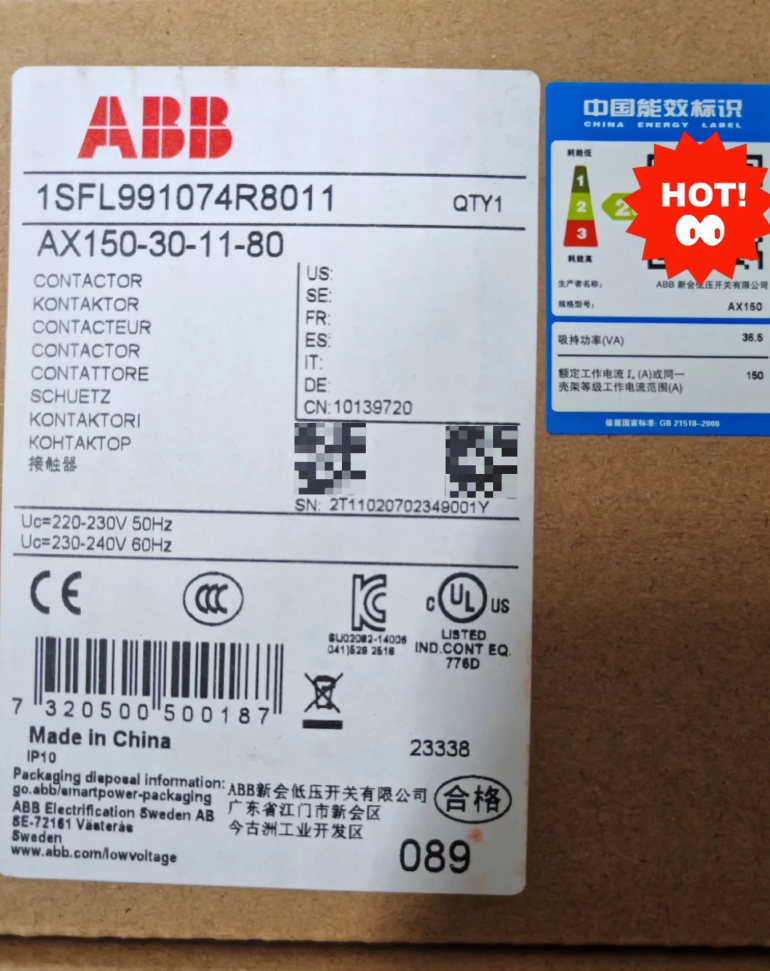
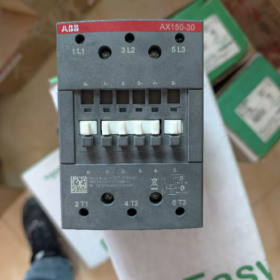
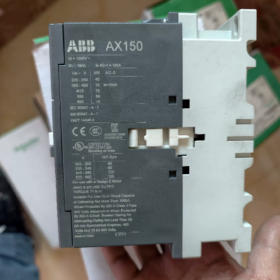
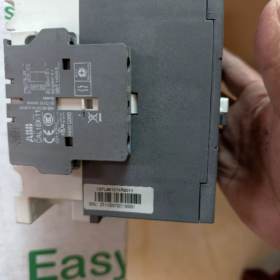
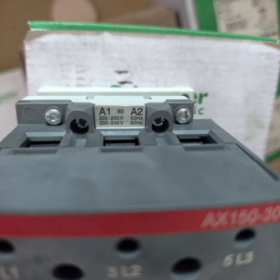
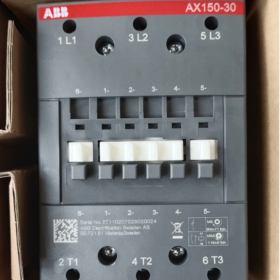
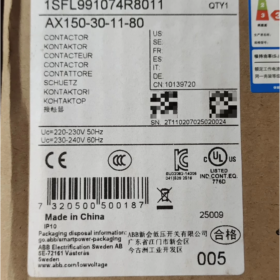
AX150-30-11-80
- HACHE: New generation general-purpose Contacteur CA series of ABB
- 150: Rated operational current of 150A under AC-3 load at 400V
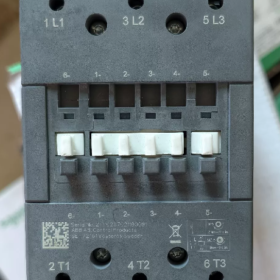
- 30: 3-contacts principaux des pôles, 3 normalement ouvert (no main normally closed contacts)
- 11: Built-in standard auxiliary contacts: 1 Normalement ouvert + 1 Normalement fermé (1NON+1NC)
- 80: Coil code → AC 220–230V 50Hz / AC 230–240V 60Hz (Standard domestic AC 220V coil)
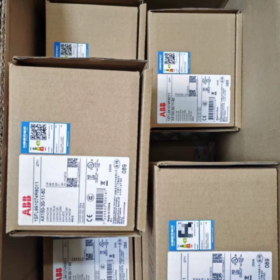
Original factory material order number: 1SFL991074R8011
Domestic catalog order number: 10139720
- Paramètres électriques de base
2.1 Main Circuit Load (CEI 60947-4-1)
| Élément de paramètre | Valeur de spécification |
| Rated motor current under AC-3 (400V / 55℃) | 150UN |
| Controlled motor power at 400V | 75kW |
| AC-1 resistive thermal current (40℃ / 690V) | 190UN |
| AC-1 resistive thermal current (55℃ / 690V) | 145UN |
| Rated insulation voltage Ui of main circuit | 690V |
| Maximum allowable operating voltage of main circuit | 1000V et |
| Tension assignée de tenue aux chocs Uimp | 8kV |
| Making and breaking capacity under AC-3 | 10×C'est à dire (1500UN) |
| Fréquence de fonctionnement maximale | 300 opérations/heure |
2.2 Circuit de commande de bobine
Tension de bobine: 220–230V 50Hz; 230–240V 60Hz
| Pull-in voltage range: 0.85~1.1 × rated voltage
Tension de chute: ≤0.1 × rated voltage
Type de bobine: AC excitation coil
2.3 Contacts auxiliaires
Configuration standard: 1NON + 1Caroline du Nord, no extra auxiliary contact blocks required
Rated current of auxiliary contacts: 6A AC-15
- Environnemental & Paramètres mécaniques
- Température ambiante
Without thermal overload relay: -40℃ ~ +70℃
Matched with thermal overload relay: -25℃ ~ +55℃
Température de stockage: -40℃ ~ +70℃
- Altitude d'installation: ≤3000m (Derating is required above 3000m)
- Dimensions hors tout: W 90mm × H 148mm × D 123.5mm
- Méthode de montage: Dual-purpose for standard 35mm DIN rail mounting and screw fixing
- Connexion des bornes: Connexion du jeu de barres du circuit principal, compatible with cable/busbar crimping
- Classe de protection: IP20 (Pour installation en armoire intérieure uniquement)
- Scénarios d'application typiques
- Commande start-stop de moteurs asynchrones triphasés (75kW motors for fans, pompes à eau, compresseurs d'air, machines de moulage par injection)
- Switching contactors for capacitor compensation cabinets (AC-1 load)
- High-power load control for central air conditioning and HVAC systems
- Power circuits for machine tools, lifting and conveying equipment
- Standard power switching device for power distribution cabinets and complete control cubicles
- Accessoires assortis en option
TA200DU series thermal overload relays (Matching 150A current range)
Module de verrouillage mécanique (For forward/reverse bidirectional control)
Monté sur le côté / front-mounted extended auxiliary contact modules
Suppresseur de surtension (Absorbeur RC, varistor pour la protection des bobines)
Terminal protective covers
- Equivalent Replacement Reference
- Même série, same current rating with different coil voltages:
AX150-30-11-81: AC 110V coil; AX150-30-11-84: AC 380V coil
- Upgrade replacement for old model: A150-30-11 → AX150-30-11 (Direct interchange, dimensions de montage identiques)
- Cross-brand equivalent alternatives: Schneider LC1D150, Siemens 3RT1056
- Avantages clés
- Conforme à la CEI, CE and national standards; Taper 2 short-circuit coordination, safe and reliable when matched with circuit breakers/fuses
- Mirror contact design, applicable to safety circuits and interlock control
- Eco-friendly flame-retardant materials, bobine de faible puissance, low temperature rise during long-term operation
- Taille compacte, less cabinet space occupation compared with the old A series
Official Mechanical Endurance Parameters of ABB AX150-30-11-80
- Durabilité mécanique
10 millions d'opérations (10×10⁶ cycles)
Conditions d'essai: No load on the main circuit; only reciprocating make/break driven by the coil mechanism. No electric arc or contact electrical wear; only mechanical service life of springs, armature, brackets and other mechanical components is assessed.
- Key Supporting Frequency Parameters
Fréquence de fonctionnement mécanique maximale: 3600 opérations/heure (Standard no-load test condition)
Maximum electrical operating frequency (Charge du moteur AC-3): 300 opérations/heure (Load start-stop, limited by contact arcing)
- Distinction: Mechanical Life vs Electrical Life (AC-3 Working Condition)
| Article | Valeur | Description |
| Durée de vie mécanique | 10 millions de cycles | No current, only mechanical abrasion |
| Durée de vie électrique AC-3 | Environ. 1 millions de cycles | For start-stop control of 75kW motors; contact arc erosion determines replacement cycle |
- Notes complémentaires
- All high-current models of the full AX series (AX110/AX150/AX185/AX205) share a uniform mechanical life of 10 millions de cycles; the old A150 also features 10 million mechanical cycles with structurally compatible direct replacement.
- Température ambiante, altitude, dust and oil contamination will slightly shorten the actual mechanical service life; the nominal value can be achieved under clean cabinet and normal temperature conditions.
- The mechanical life remains unchanged at 10 million cycles after installing a mechanical interlock module in reversible control circuits.
Complete Operating Principle of ABB AX150-30-11-80 AC Contactor
- Core Internal Structure
- Electromagnetic Driving System (Bobine + Noyau fixe + Movable Armature)
Bobine: The coil with code 80 is an AC 220V excitation coil wound on the fixed core.
Noyau fixe: Fixed base fitted with a shading ring on the end face (Core noise and vibration suppression component for AC contactors)
Movable Armature: Movable iron core linked synchronously with main and auxiliary contacts
Ressort de retour: Pushes the armature open under normal state to ensure reliable contact separation after power-off
- Main Contact Circuit (3 Normally Open Main Poles)
Three sets of high-power silver alloy moving and fixed contacts that carry 150A three-phase main circuit current to control loads such as 75kW motors.
- Contacts auxiliaires (1NON+1NC)
Operate synchronously with main contacts, used for self-locking, interlocking, signal feedback and indicator light circuits, rated at 6A.
- Arc Chute
Grid-type metal arc shield that splits and cools electric arcs during heavy current breaking to prevent contact melting and welding.
- Base & Linkage Bracket
Insulated plastic bracket that drives all moving and fixed contacts to open/close synchronously with armature movement.
- Make Operation When Energized
- Rated AC 220V voltage is supplied to the coil via the control circuit, generating an alternating magnetic field.
- Electromagnetic attraction produced by the fixed core overcomes the tension of the return spring and pulls in the movable armature.
- The linkage bracket moves downward synchronously:
Three sets of main normally open contacts close, conducting the three-phase main circuit and energizing the motor/load for operation.
Auxiliary Normally Open (NON) contacts close and auxiliary Normally Closed (Caroline du Nord) contacts open.
- Function of the shading ring on the fixed core end face: AC voltage crosses zero every cycle, causing instantaneous magnetic field disappearance and attraction drop. The shading ring induces a lagging current to maintain partial attraction, eliminating high-frequency armature chattering, abnormal noise and contact sparking.
- No electric arc occurs inside the arc chute, and the circuit conducts stably.
- Break Operation When De-energized
- Coil power supply from the control circuit is cut off; the alternating magnetic field of the coil vanishes rapidly and electromagnetic attraction drops to zero.
- The return spring rebounds instantly to separate the movable armature from the fixed core.
- All contacts reset synchronously:
Three groups of main contacts open, couper le circuit principal et arrêter la charge.
Auxiliary NO contacts open and NC contacts restore closed state.
- High-voltage electric arcs generate the instant main contacts separate (Current cannot mutate for inductive loads).
The arcs enter the arc chute, split into small segments by multi-layer metal grids, cool down rapidly and extinguish to avoid contact fusion welding.
- Self-Locking Control Principle (Standard Motor Start-Stop Circuit)
- Press the start button → Coil energizes, contactor pulls in and auxiliary NO contact closes synchronously.
- After releasing the start button, current continuously feeds the coil through the closed auxiliary NO contact to sustain the pull-in state (Self-locking function).
- Press the stop button to cut off coil power; the spring releases the armature, all contacts of the contactor reset and the equipment shuts down.
- Key Matching Protection Logic
- Matching with thermal overload relay: Under overload conditions, the normally closed contact of the thermal relay opens the contactor coil circuit and cuts off motor power supply.
- Mechanical interlock installed for reversible circuits: Interlock two AX150 contactors to prevent simultaneous pull-in of forward and reverse contactors which would cause three-phase short circuit.
- RC surge suppressor connected in parallel with the coil: Absorbs induced high voltage generated during breaking to avoid breakdown of low-current contacts of PLCs and relays.
- Core Difference Between AC and DC Contactors (AX Series Equipped with AC Coils)
The AX150 adopts AC excitation and relies on a shading ring to eliminate vibration. DC contactors require no shading ring and maintain pull-in via constant magnetic attraction.
AC electric arcs extinguish more easily than DC arcs upon power cut-off; paired with grid arc chutes, it meets the requirement of breaking 150A heavy current.




NH42-63-318x560.png "Commutateurs de transfert automatiques de type PC CHINT (ATS)NH42-63/4SZ")