Contacteur,disjoncteur,capteur,Encodeur,API,Convertisseur

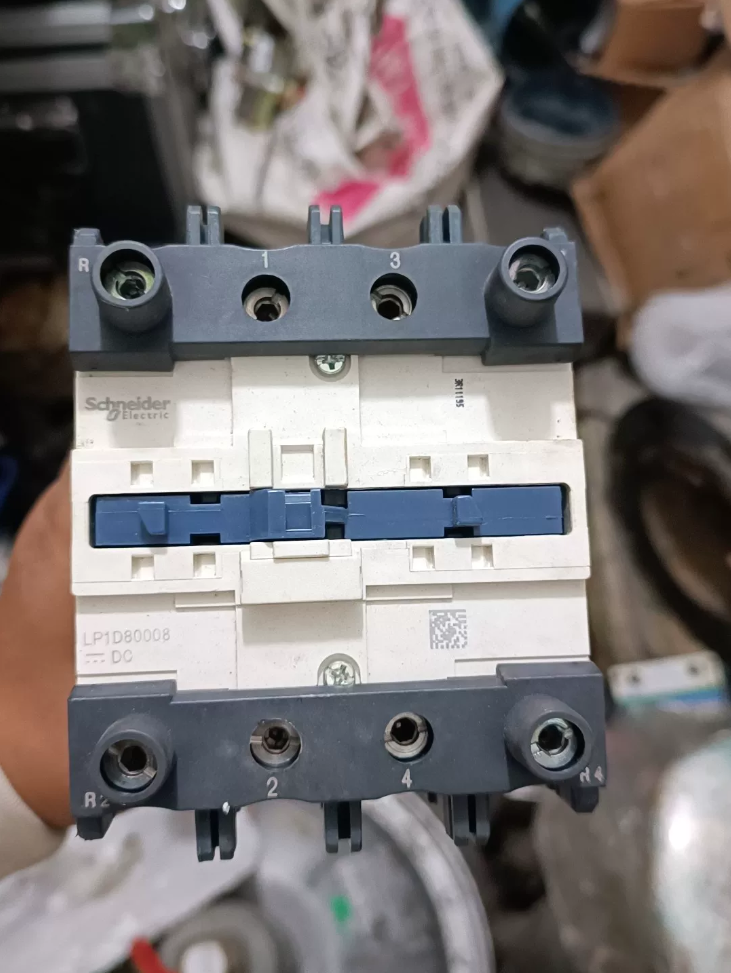

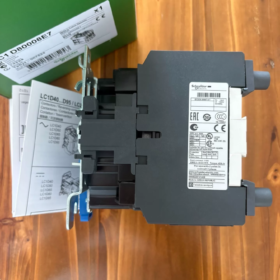
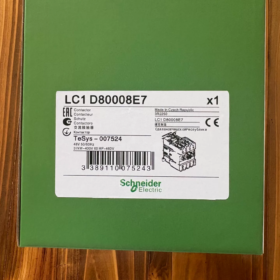
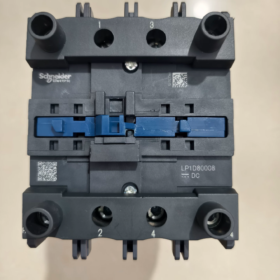
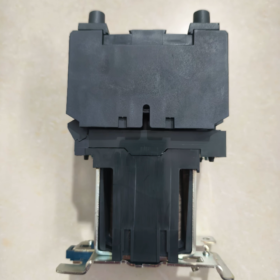
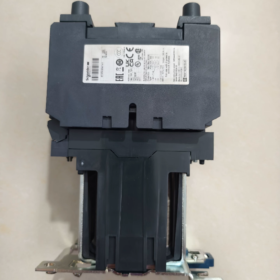
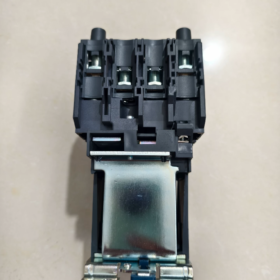
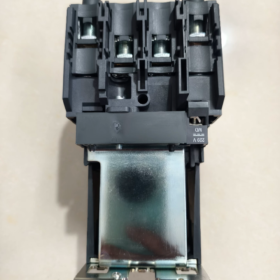
LC1D80008 Contacteur 4 pôles Schneider TeSys série D
C'est un 4-contacteur AC pôle de Schneider Électrique Série TeSys D, with main contacts configured as 2 Normalement ouvert + 2 Normalement fermé (2NON+2NC). Courant nominal: 80UN (AC-3) / 125UN (AC-1), suitable for resistive loads. The coil voltage suffix needs to be specified (par exemple. B7=24VAC, G7=120VAC, M7=220VAC).
- Explication du code modèle (LC1D80008□7)
| Segment | Code | Description |
| LC1 | – | Schneider contactor series code (compliant with IEC standards) |
| D | – | Série TeSys D (Déca) |
| 80 | – | Reference rated operational current (80A under AC-3 duty) |
| 8 | – | 4-pôle (2NON+2NC) main contact arrangement |
| □7 | Lettre + Chiffre | Code de tension de bobine: B7=24VAC, D7=42VAC, G7=120VAC, M7=220VAC, U7=240VAC, Q7=380VAC, etc.. |
Exemple de modèle complet: LC1D80008M7 = 4-pole (2NON+2NC), 80UN, 220VAC coil
- Principales spécifications techniques
| Article | Valeur | Remarques |
| Fabricant | Schneider Électrique | Telemecanique product line |
| Poteaux / Configuration des contacts | 4P. (2NON+2NC) | 2 normalement ouvert + 2 normally closed main contacts |
| Courant opérationnel nominal | AC-1: 125UN (≤440V) | AC-1: Charge résistive; AC-3: Charge du moteur |
| AC-3: 80UN (400V) | ||
| Tension d'isolation nominale (Interface utilisateur) | 690V (CEI) / 600V (UL/CSA) | Catégorie de surtension III |
| Tension de fonctionnement nominale (Ue) | ≤440V (AC-1) | 50/60Hz |
| Tension de tenue aux impulsions nominale (Ump) | 6kV | Conforme à la CEI 60947 |
| Courant de tenue de courte durée (Icw) | 640UN (40°C, 10s) | For power circuit |
| Capacité de coupure nominale | 1100A @ 440V | For power circuit |
| Type de bobine | CA / DC optional | AC coil as standard |
| Connexion des bornes | Bornes à vis-étrier | Montable sur rail DIN |
| Protection contre la pénétration | IP20 | Version standard |
| Degré de pollution | 3 | Convient aux environnements industriels |
| Montage | 35mm DIN rail or panel mounting | Conforme à la norme EN 50022 |
| Poids | Environ. 2.5kilos | Hors accessoires |
- Liste complète des modèles (LC1D80008 Series)
| Modèle | Tension de bobine | Numéro de commande | Remarques |
| LC1D80008B7 | 24V et | LC1D80008B7 | Tension de commande commune |
| LC1D80008D7 | 42V et | LC1D80008D7 | Special industrial application |
| LC1D80008G7 | 120V et | LC1D80008G7 | Widely used in North America |
| LC1D80008M7 | 220V et | LC1D80008M7 | Standard for Chinese market |
| LC1D80008U7 | 240V et | LC1D80008U7 | Widely used in North America |
| LC1D80008Q7 | 380V et | LC1D80008Q7 | Industrial high-voltage control |
| LC1D80008P7 | 400V et | LC1D80008P7 | Standard for European market |
| LC1D80008E7 | 48À DC | LC1D80008E7 | DC control application |
| LC1D80008F7 | 110À DC | LC1D80008F7 | DC control application |
- Équivalent & Modèles de remplacement
| Taper | Modèle | Fabricant | Compatibilité | Remarques |
| Remplacement d'origine | LC1D80008□7 | Schneider Électrique | 100% | Direct replacement within the same series |
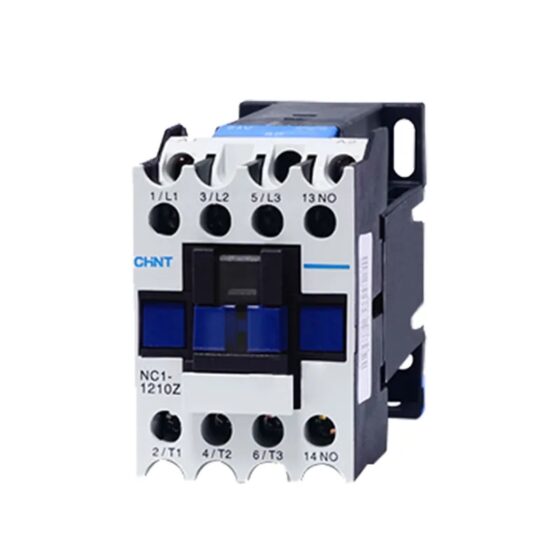
| Equivalent domestique | CJX2-8004 | Chint / Délicieux | Mechanically compatible | Minor differences in electrical parameters |
| Équivalent ABB | A145-30-11 | ABB | Fonctionnellement équivalent | Mounting dimensions need adjustment |
| Équivalent Siemens | 3RT2036-1BB40 | Siemens | Fonctionnellement équivalent | Coil voltage must be matched |
| Équivalent Mitsubishi | S-N80 | Mitsubishi | Fonctionnellement équivalent | Different auxiliary contact layout |
Obsolescence Notice: The LC1D80008 series is not discontinued and remains an active product of Schneider TeSys D range.
- Application & Cas industriels
5.1 Applications recommandées
Industrial heating systems: Control of resistance furnaces and electric heaters (AC-1 load)
Systèmes d'éclairage: Lighting control for large workshops and malls (multi-circuit switching)
Banques de condensateurs: Switching for reactive power compensation (special accessories required)
Systèmes UPS: Standby power switching control
Équipement de traitement de l'eau: Control of water pumps and fans (derating required for AC-3 loads)
Systèmes électriques du bâtiment: Control of central air conditioning and ventilation units
5.2 Applications non recommandées
Frequently started/stopped motors: Rated current only 80A under AC-3 duty, not applicable for motors ≥45kW with frequent cycling
Environnements à fortes vibrations: Anti-vibration fixtures are mandatory
Environnements corrosifs: Anti-corrosion version or protective enclosure is required
Outdoor use without protection: Standard IP20 protection is insufficient
5.3 Cas d'application typiques
Fabrication automobile: Temperature control for oven furnaces in coating workshops. LC1D80008M7 controls three groups of heating elements for segmented temperature regulation.
Food processing: Dairy sterilization equipment. 4-pole design enables dual-circuit switching for main power and auxiliary heating.
Centres de données: Linked control of fans and electric heaters for precision air conditioners to improve energy efficiency.
- Dépannage & Entretien
6.1 Défauts courants & Solutions
| Phénomène de défaut | Causes possibles | Étapes de dépannage |
| Coil fails to pull in | 1. Tension de bobine insuffisante | 1. Mesurer la tension de la bobine, ensure it is within ±10% of rated value |
| 2. Bobine brûlée | 2. Tester la résistance de la bobine (normal value: several hundred ohms) | |
| 3. Open circuit in control loop | 3. Check fuses, pushbuttons and wiring of control circuit | |
| Soudage par contact | 1. Surcharge / court-circuit | 1. Check load current and replace damaged contacts |
| 2. Usure des contacts | 2. Replace contact assembly | |
| 3. Excessive operating frequency | 3. Reduce operation frequency or use higher-rated contactor | |
| Bruit anormal pendant le fonctionnement | 1. Dirty core surface | 1. Surface du noyau propre (power off first) |
| 2. Anneau d'ombrage cassé | 2. Replace shading ring | |
| 3. Printemps fatigué | 3. Inspect and replace spring assembly | |
| Serpentin surchauffé | 1. Excessive supply voltage | 1. Adjust voltage to rated value |
| 2. Température ambiante excessive | 2. Improve ventilation or apply derating | |
| 3. Aged coil insulation | 3. Replace coil | |
| Contacter l'ablation | 1. Courant de charge excessif | 1. Check load and select properly sized contactor |
| 2. Poor arc suppression | 2. Installer un limiteur de surtension | |
| 3. Defective contact material | 3. Replace original contact assembly |
6.2 Calendrier d'entretien & Guidelines
Inspection quotidienne: Visually check for contact ablation, loose wiring and abnormal noise
Monthly Maintenance: Surface du noyau propre, inspect contact wear
Entretien trimestriel: Mesurer la résistance de la bobine, retighten all terminal screws
Entretien annuel: Replace worn contacts, test insulation performance, verify pull-in and drop-out voltage
6.3 Conseils de diagnostic rapide
Check power first if coil won’t act; test resistance when voltage is normal.
Check overload for welded contacts; clean core and inspect shading ring for noise.
Improve ventilation and derate for overheating; replace parts and suppress arc for ablated contacts.
- Sélection & Directives d'installation
7.1 Three-step Selection Procedure
- Confirm load type (AC-1 / AC-3) et courant nominal
- Select pole number and contact configuration (008 = 4P 2NO+2NC)
- Faire correspondre la tension de la bobine (B7 / G7 / M7, etc.)
7.2 Notes d'installation
Reserve clearance ≥50mm for heat dissipation; avoid vertical stacking installation
Installer un limiteur de surtension (RC circuit or varistor) on control circuit
Ensure reliable mechanical interlock when used with thermal overload relays
Maintain spacing ≥20mm between adjacent contactors
7.3 Conformité du transport aérien
Pas de batterie au lithium intégrée, compliant with air transportation safety regulations
CE certification number: Refer to product nameplate; conforme à la norme CEI 60947-4-1




NH42-63-318x560.png "Commutateurs de transfert automatiques de type PC CHINT (ATS)NH42-63/4SZ")