コンタクタ,サーキットブレーカー,センサー,エンコーダ,PLC,コンバータ

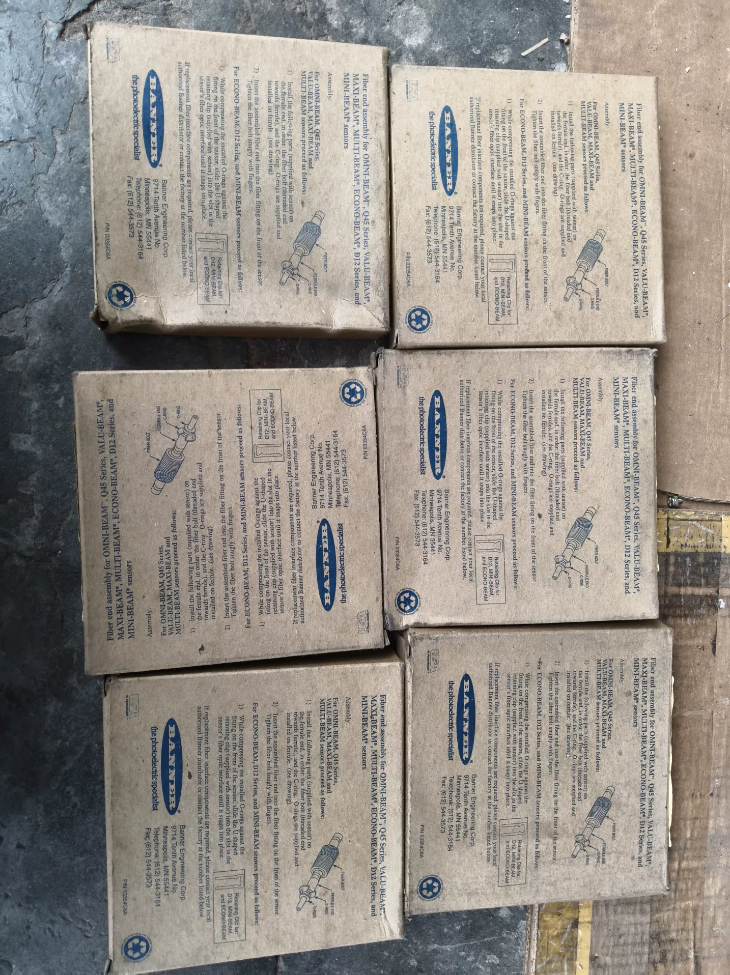

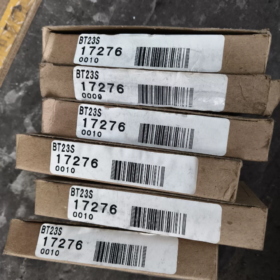
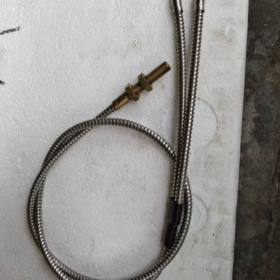
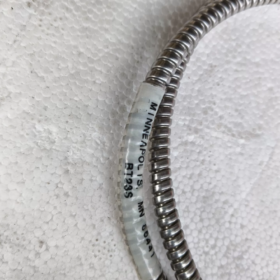
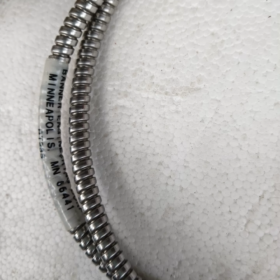
(バナー, 部品番号: 17276)
製品タイプ: Bifurcated diffuse reflection glass fiber cable. Fiber only, fiber optic amplifier required for operation.
✅ Model Definition
BT: Bifurcated fiber (one transmit fiber + one receive fiber)
23: シリーズ, stainless steel flexible armor sheath, high-temperature glass fiber
S: Straight threaded sensing tip (BAT23S is the 90° elbow version)
📋 Core Specifications
| アイテム | 仕様 |
| Sensing Mode | 拡散モード (object reflected light detection) |
| Fiber Material | Glass fiber bundle, 0.125で (3.2mm) bundle diameter |
| Sheath | Stainless steel monocoil flexible hose (cut-resistant, abrasion-resistant) |
| Overall Length | 36 inch = 0.914m |
| Sensing Tip | Brass body, #5/16-24 UNC external thread |
| Minimum Bend Radius | 25 mm |
| Max Operating Temperature | 249 ℃, suitable for high-temperature applications |
| Light Emission Direction | In-line coaxial straight tip |
| 互換性 | Requires Banner fiber amplifier (例えば. D10, D11, D12) |
| 起源 | アメリカ合衆国 |
| HSコード | 90011090 (Optical glass fibers) |
🧰 Typical Applications
- Part presence detection inside high-temperature equipment (オーブン, die casting, heat treatment stations)
- Small-space, oil/cutting fluid environment for part counting and position detection
- Installation locations subject to mechanical pulling and abrasion (stainless steel armor resists compression)
- Metal machining, 射出成形, heat treatment production lines
⚠️ Important Notes
- This is only fiber assembly, NOT a photoelectric sensor. An external fiber amplifier is mandatory.
- Glass fiber cannot withstand sharp dead bends; bending radius less than 25 mm causes permanent fiber breakage.
- 249 ℃ rating applies only to the sensing tip. The amplifier must not be placed in high-temperature zones.
- Series comparison:
BT23S: Straight threaded tip, diffuse bifurcated fiber
BAT23S: 90° elbow tip, diffuse bifurcated fiber
IT23S: Thru-beam single fiber (separate transmitter and receiver assemblies)
🛠️ Troubleshooting
- 信号がありません: Inspect fiber end face for oil contamination or scratches; check if stainless hose crushed internal glass fibers; verify fiber connector cleanliness at amplifier.
- Signal flickering: Detection distance exceeds valid diffuse range; low reflectivity of target object; ambient strong light interference.
- Increased light attenuation: Excessively small bend radius causing microcracks inside glass fiber bundle.
📌 Alternative Selections
OEM alternative from Banner: BAT23S (elbow version); BT23PMSS (PVC sheath low-temperature variant)
国内代替品: High-temperature stainless steel armored bifurcated glass fiber, 5/16-24 糸, 0.9長さメートル, compatible with fiber amplifiers.
Detection Distance for BT23S (Banner Bifurcated Diffuse Glass Fiber)
重要: BT23S is just a fiber probe with no fixed detection range. Sensing distance depends entirely on the paired fiber amplifier.
✅ Typical Official Data (High-reflectivity white target)
- Paired with Q45F amplifier: マックス. 100 mm (4 インチ)
- Paired with QS18F amplifier: 約. 37.5 mm (1.5 インチ)
- Paired with classic D10 / D11 / D12 amplifiers: Typical stable range 20~60 mm
注記: Target reflectivity greatly affects working range:
Bright white metal / white paper: close to maximum values listed above
Matte black workpiece: effective distance reduces by half or more
Oxidized surface of hot workpiece reduces reflectivity and shortens detection range
📌 Engineering Recommendation
Recommended stable operating range: 5~40 mm (stable performance for most working conditions)
その上 50 mm, signal margin decreases. Oil dust and workpiece color variation easily trigger unstable readings.
Diffuse fiber is short-range sensing, not suitable for long-distance detection.
Supplementary Comparison
BT23S: Straight coaxial bifurcated diffuse fiber
BAT23S: 90° elbow version, identical optical performance and detection range as BT23S
Material Breakdown for Banner BT23S (公式データシート)
| セクション | Material Description |
| Fiber Core Bundle | Glass Fiber. 0.125 inch bundle, multi-strand glass filaments for light transmission and high temperature resistance |
| Outer Armor Sheath | Stainless Steel Monocoil Sheath / SteelSkin邃「. Compression-resistant, abrasion-resistant, cut-proof, flexible bending |
| Threaded Sensing Tip | 真鍮, #5/16-24 UNC external thread; optional BT23SMSS variant with stainless steel tip |
| Y-Split Connector | Black engineering plastic, secures fiber bundle internally and splits into two independent fibers for amplifier insertion |
補足事項
- Temperature rating determined by glass fiber and stainless steel sheath: Max tip temperature 249℃. Y-shaped plastic connector must be kept away from high-temperature zones.
- Stainless steel hose resists cutting fluid, oil and mechanical pulling, ideal for machine tools and heat treatment environments.
- Distinguish from plastic fiber versions with PVC sheath (max temp only 105℃). BT23S is glass armored fiber.
Banner BT23S Fiber Probe Installation Manual (Engineering Version, Part No.17276)
製品: Bifurcated diffuse glass fiber BT23S (fiber only, Banner fiber amplifier required. Amplifier powered separately)
応用: Object presence detection in high-temperature & confined space, diffuse sensing
- 製品概要
BT23S is an inline straight bifurcated glass fiber. The Y-end splits into two fibers to plug into fiber amplifier. The opposite end is brass 5/16-24 UNC threaded sensing tip, protected by stainless steel armor hose.
Overall Length: 36 で (0.914 メートル)
Max Tip Temperature: 249 ℃
Minimum Bend Radius: 25 mm
Sensing Mode: 拡散する
- 設置前検査
- Visual check upon unpacking: Stainless hose no crushing or twisting; fiber end face no scratches or oil; Y-connector no cracking.
- Prohibited operations: Bending radius less than 25 mm, treading, heavy pulling on armor hose, glass filaments break easily.
- Confirm matched amplifier model (D10/D11/D12/Q45F/QS18F etc.). Amplifier cannot be placed in hot area.
- Prepare mounting hardware: 5/16-24 UNC lock nut and mounting bracket.
- 機械的設置手順
ステップ 1: Mount Sensing Tip
- Machine 5/16-24 UNC threaded hole on equipment frame, or use lock nut + 取付ブラケット.
- Screw BT23S brass sensing tip into threaded hole. 締付トルク: 0.7~1.0 N·m. Do not over-tighten to avoid cracking fiber end face.
- Adjust gap between probe face and workpiece: recommended stable working range 5~40 mm. Keep probe perpendicular to target surface.
注記: Workpiece tilt reduces return light signal; tilt angle ≤10°.
ステップ 2: Route Stainless Steel Armor Hose
- Maintain bending radius ≥25 mm throughout routing. Avoid dead bends and sharp edges cutting metal sheath.
- Only brass sensing tip section can be placed in high-temperature zone. Stainless hose and Y-split connector must be located in area below 80℃.
- Secure armor hose with cable clips to prevent repeated pulling from machine reciprocating motion.
- Avoid continuous cutting fluid splash; oil buildup on end face attenuates optical signal.
ステップ 3: Insert Fibers into Amplifier
- Clean fiber ferrule end face: Wipe two fiber tips with lint-free paper dipped in anhydrous ethanol and dry thoroughly.
- Insert transmit (Tx) and receive (Rx) fibers into corresponding Tx / Rx ports on Banner amplifier, seat fully and fasten compression nut.
⚠️ Do not force insertion. Dirty fiber end face is the top cause of unstable signal.
- Amplifier Setup (BT23S contains no circuitry; all adjustments on amplifier)
- Power on amplifier (DC10~30V, refer to amplifier manual).
- Teach-in calibration (2-point teach recommended)
ステップ 1: Teach background with no workpiece present.
ステップ 2: Teach target with workpiece in position.
- Observe amplifier signal strength LED, ensure sufficient signal margin.
- Save threshold, perform repeated workpiece in/out tests to eliminate missed detection and false triggering.
- 設置禁止事項
- ❌ Y-type plastic connector cannot be exposed to high temperature (max ambient temp ≤80℃). Only sensing tip rated for 249℃.
- ❌ Fiber bend radius <25 mm causes permanent breakage of internal glass filaments and fiber failure.
- ❌ Impact or scratch fiber end face; damaged end face leads to severe optical attenuation.
- ❌ Install amplifier in high temperature or heavy oil environment.
- ❌ Multiple fiber probes mounted closely together, optical crosstalk may occur.
- ❌ Workpiece distance exceeds maximum sensing range of matched amplifier.
- 定期的なメンテナンス
- Periodically clean fiber sensing end face: lint-free paper + anhydrous alcohol to remove dust, oil and oxide scale.
- Inspect stainless hose for crushing and cracks. Recheck fastening quarterly for vibrating equipment.
- Periodically clean fiber connectors at amplifier side.
- トラブルシューティング
| 症状 | Check Items |
| No received light signal at amplifier | 1. Fiber ferrule not fully seated; 2. Contaminated end face; 3. Internal glass fiber broken (hose bending damage) |
| Intermittent signal fluctuation | 1. Excessive detection distance; 2. Low workpiece reflectivity; 3. Oil on end face; 4. Loose fiber caused by vibration; 5. Strong ambient light hitting sensing tip |
| 不安定な検出, failure at high temperature | 1. Y-connector close to heat source; 2. Oxidized hot workpiece surface reduces reflectivity; 3. Thermal deformation of hose pulls sensing tip |
NH42-63-318x560.png "CHINT PC型自動切替スイッチ (ATS)NH42-63/4SZ")