Contator,disjuntor,sensor,Codificador,CLP,Conversor

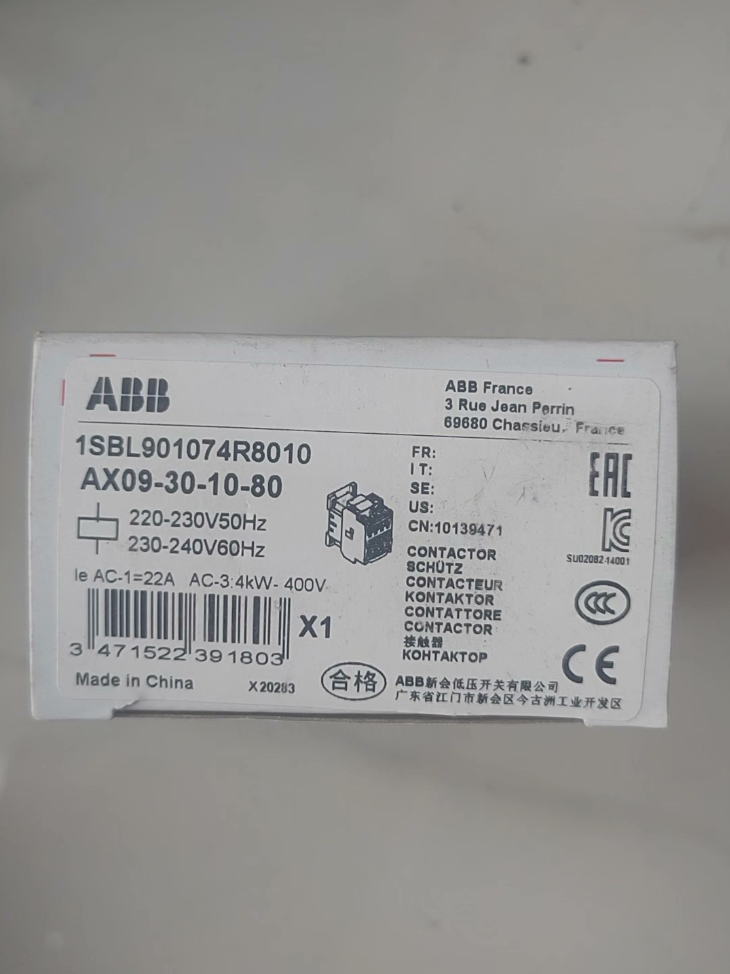

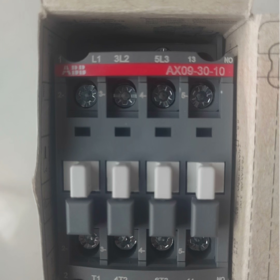
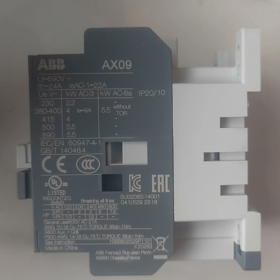
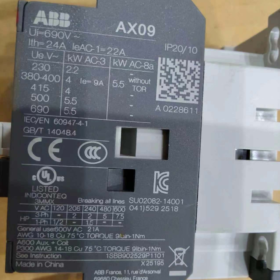
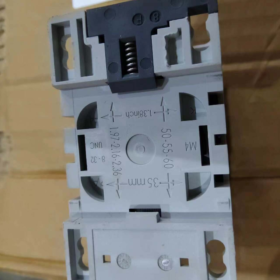
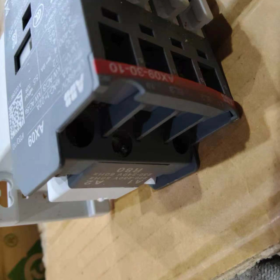
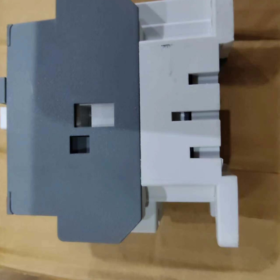
O AX09-30-10-80 é um uso geral 3-contator CA de pólo de ABB Série AX, o sucessor oficial do clássico contator A9 da antiga série A. Ele é projetado para controlar cargas de baixa potência em aplicações industriais em geral, usado principalmente para partida e parada direta de motores assíncronos trifásicos, bem como comutação de circuitos de distribuição AC, cargas indutivas e resistivas.
Equipado com uma bobina AC convencional, este contator apresenta estrutura compacta e tamanho reduzido. Suporta montagem em padrão 35 mm trilhos DIN, e oferece longa vida útil mecânica, alta frequência operacional e excelente adaptabilidade ambiental. É amplamente aplicado na construção de sistemas HVAC, sistemas de automação de luz, Montagem de equipamentos OEM, distribuição de energia municipal e outros campos.
- Interpretação de código modelo
Modelo Completo: AX09-30-10-80
- MACHADO: Código da série, representando contatores CA de uso geral da série AX (substituição da série A legada).
- 09: Classe atual avaliada. A corrente operacional nominal é 9 A categoria de subutilização AC-3 em 400 V.
- 30: Configuração de contato principal. 3 normally open main contacts with no normally closed main contacts (the first digit = number of main poles; the second digit = number of normally closed main contacts).
- 10: Configuração de contato auxiliar. 1 normally open auxiliary contact with no normally closed auxiliary contacts (the first digit = number of normally open auxiliary contacts; the second digit = number of normally closed auxiliary contacts).
- 80: Código da bobina, corresponding to standard AC coil: 220-230 V e 50 Hz / 230-240 V e 60 Hz.
- Parâmetros técnicos principais
3.1 Parâmetros do Circuito Principal
| Item | Especificação |
| Poloneses & Configuração de contato | 3P, 3 Contatos principais normalmente abertos |
| Corrente Térmica Convencional (É) | 24 UM (Ambient temperature ≤ 40 ℃) |
| Corrente Operacional Nominal (AC-1) | 22 UM (≤ 690 V e, ≤ 40 ℃); 18 UM (≤ 70 ℃) |
| Corrente Operacional Nominal (AC-3) | 9 UM (≤ 440 V e, ≤ 55 ℃); 7 UM (≤ 690 V e, ≤ 55 ℃) |
| Tensão operacional nominal máxima (Ué) | 690 V e |
| Potência de controle nominal (AC-3) | 4 kW@ 400 V; 5.5 kW@ 690 V |
| Capacidade nominal de ruptura (AC-3) | 8 × Ie |
| Tensão nominal suportável ao impulso (Um) | 6 kV |
| Categoria de sobretensão | Categoria III |
| Conexão do Circuito Principal | Conexão de terminal de parafuso, suitable for solid/stranded copper conductors |
| Torque for Main Terminals | 1.2 ~ 1.5 N·m |
3.2 Parâmetros do Circuito de Controle
| Item | Especificação |
| Tensão nominal da bobina (Uc) | 220~230 V AC 50 Hz; 230~240 V AC 60 Hz |
| Pick-up Voltage Range | 0.85 Uc ~ 1.1 Uc |
| Faixa de tensão de queda | 0.2 Uc ~ 0.75 Uc |
| Tipo de bobina | Conventional AC excitation coil |
| Standard Auxiliary Contact | 1 NÃO, compatible with AC-15 / DC-13 control circuits |
| Rated Capacity of Auxiliary Contact | AC-15: 10 UM / 220 V; DC-13: 0.55 UM / 220 V |
| Conexão do Circuito de Controle | Terminais de parafuso |
3.3 Mecânico & Parâmetros Ambientais
| Item | Especificação |
| Dimensões Gerais (L × A × P) | 44 milímetros × 74 milímetros × 74 milímetros |
| Peso líquido | Aprox.. 0.326 kg |
| Classe de Proteção | IP20 (corpo principal) |
| Temperatura ambiente operacional | -25 ℃ ~ +55 ℃ (Full rating within 55 ℃; current derating required at 70 ℃) |
| Altitude de instalação | No current derating up to 3000 eu |
| Método de montagem | Padrão 35 mm montagem em trilho DIN; vertical screw mounting available |
| Certificações | CEI 60947-4-1, CCC, CE, UL, RoHS |
3.4 Vida útil & Parâmetros de desempenho
| Item | Especificação |
| Vida Mecânica | 10,000,000 ciclos operacionais |
| Vida Elétrica (Dever AC-3) | 1,000,000 ciclos operacionais |
| Frequência máxima de operação | 1200 ciclos por hora |
| Pick-up Time | 7 ~ 21 EM |
| Hora de desistência | 4 ~ 11 EM |
- Modelos Alternativos & Cross-Series Reference
4.1 ABB Equivalent Replacements
- Substituição para modelos descontinuados: Direct replacement for legacy A series A9-30-10. Fully compatible with original mounting holes and rail dimensions, with upgraded electrical life and overall reliability.
- Mesma classificação atual com bobinas diferentes:
AX09-30-10-81: 24 V e 50/60 Bobina Hz
AX09-30-10-84: 110 V e 50 Hz / 110~120 V 60 Bobina Hz
AX09-30-01-80: Same main circuit, fitted with 1 Contato auxiliar NC
- Higher Current Models in the Same Series: AX12-30-10-80 (12 UM), AX18-30-10-80 (18 UM). Identical mounting width for direct replacement and capacity upgrade.
4.2 Equivalent Products from Other Brands
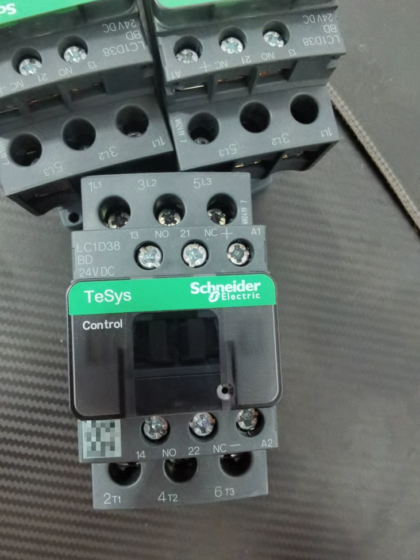
Schneider Elétrica: LC1D09M7C
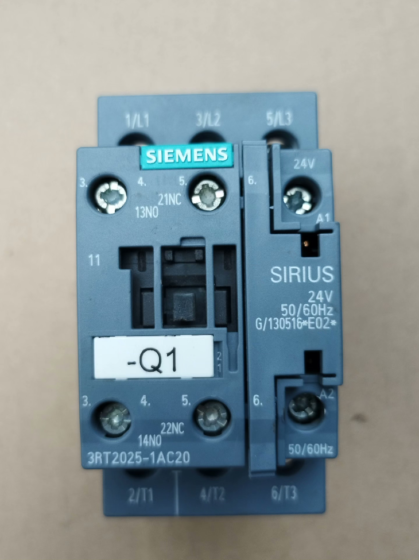
Siemens: 3RT6015-1AN21
Chint: NXC-09 (220 Bobina V)
> Observação: All cross-brand models support 35 mm DIN rail mounting for direct replacement. Please verify auxiliary contact configuration and coil voltage before installation.
- Full List of AX Series 3-Pole Contactors (220 V Coil)
| Modelo | Corrente nominal (AC-3 @ 400 V) | Corresponding Motor Power @ 400 V | Contatos Auxiliares Padrão |
| AX09-30-10-80 | 9 UM | 4 KW | 1 NÃO |
| AX12-30-10-80 | 12 UM | 5.5 KW | 1 NÃO |
| AX18-30-10-80 | 18 UM | 7.5 KW | 1 NÃO |
| AX25-30-10-80 | 25 UM | 11 KW | 1 NÃO |
| AX32-30-10-80 | 32 UM | 15 KW | 1 NÃO |
| AX40-30-10-80 | 40 UM | 18.5 KW | 1 NÃO |
| AX50-30-11-80 | 50 UM | 22 KW | 1 NÃO + 1 NC |
| AX65-30-11-80 | 65 UM | 30 KW | 1 NÃO + 1 NC |
| AX80-30-11-80 | 80 UM | 37 KW | 1 NÃO + 1 NC |
| AX95-30-11-80 | 95 UM | 45 KW | 1 NÃO + 1 NC |
Acessórios Comuns
Relé de sobrecarga térmica: Série TA25DU (por exemplo. TA25DU-9M). Montagem inferior plug-in direta para proteção contra sobrecarga do motor.
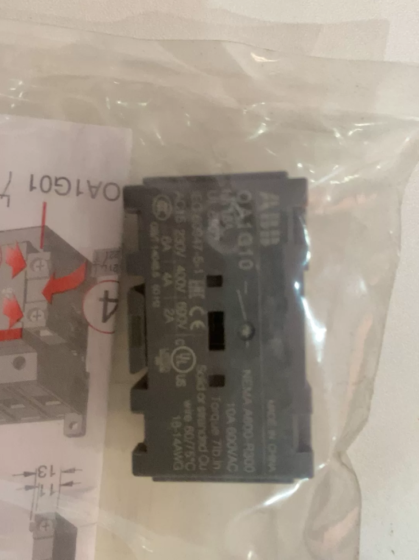
Blocos de contato auxiliares: Módulos montados frontalmente da série CA5X (CA5X-10E, CA5X-01E, CA5X-22E), expansível até 4 pares de contatos auxiliares.
Supressor de surto: Série RV5X, absorve a sobretensão de comutação das bobinas para proteger os circuitos de controle do PLC.
Intertravamento Mecânico: Série VB5X, fornece intertravamento mecânico para operação direta/reversa de dois contatores.
Mortalha Terminal: Melhora o nível de proteção e evita contato acidental.
- Escopo de aplicação & Limites Operacionais
6.1 Aplicações Típicas
- Controle de motor pequeno: Partida/parada direta de motores assíncronos trifásicos, como pequenos ventiladores, bombas de água, transportadores, motores de mesa de rolos e minicompressores, adequado para cargas de até 4 KW.
- Prédio & Sistemas HVAC: Controle de unidades terminais de ar condicionado central, unidades de ar fresco, exaustores de incêndio, fornecimento de água & bombas de drenagem e amortecedores de incêndio. Ele atua como um atuador chave para circuitos de distribuição de energia na automação predial.
- Equipamento OEM: Controle de circuito de energia para máquinas de embalagem, máquinas têxteis, pequenas máquinas-ferramentas, equipamentos de processamento de alimentos e outras máquinas automatizadas. O tamanho compacto economiza espaço no gabinete.
- Distribuição de energia & Controle de iluminação: Comutação remota de circuitos de iluminação de alta capacidade e pequenos alimentadores de distribuição; comutação de bancos de capacitores de baixa capacidade em gabinetes de compensação de potência reativa de baixa tensão.
- Controle Lógico de Automação: Atua como um amplificador de potência para saídas do CLP para acionar válvulas solenóides, luzes indicadoras e outros pequenos atuadores.
6.2 Requisitos Ambientais
Instale dentro de casa dentro de quadros de distribuição ou caixas de controle. A exposição ao ar livre à chuva e à luz solar direta é proibida.
O nível de poluição não deve exceder a Classe 3; sem gás altamente corrosivo, presença de gás explosivo ou poeira condutiva.
Nenhum impacto severo ou vibração na superfície de montagem; aceleração de vibração ≤ 20 m/s².
A redução de corrente é necessária quando a altitude de instalação excede 3000 m ou a temperatura ambiente excede 55 ℃, consulte o manual oficial para cálculo.
- Matriz de solução de problemas
| Fenômeno de falha | Causa raiz | Soluções |
| O contator não fecha sem som | 1. Sem fonte de alimentação, fiação solta ou quebrada no circuito de controle | 1. Desligue a energia e execute a verificação de segurança; inspecione a fiação nos terminais A1/A2 e meça novamente a tensão da bobina |
| 2. Bobina queimada ou quebrada | 2. Teste a resistência da bobina com multímetro; substitua a bobina ou complete a unidade se ocorrer circuito aberto | |
| 3. Atolamento mecânico da armadura ou obstrução estranha | 3. Operar manualmente a armadura após desligar, limpe poeira e corpos estranhos nas faces dos polos centrais | |
| 4. Tensão de alimentação muito abaixo do valor nominal | 4. Ajuste a tensão de alimentação para a faixa nominal e elimine a queda de tensão da linha | |
| Ruído de zumbido contínuo após o fechamento | 1. Óleo e poeira nas faces dos pólos centrais causando mau contato | 1. Desmonte o núcleo após desligar e limpar o óleo & sujeira nas faces dos postes |
| 2. Bobina de sombreamento quebrada ou desconectada | 2. Substitua o núcleo ou a unidade completa se a bobina de proteção estiver danificada | |
| 3. Sucção insuficiente devido à baixa tensão de alimentação | 3. Aumente a tensão de alimentação para a faixa nominal | |
| Superaquecimento anormal nos terminais principais / contatos | 1. Parafusos terminais soltos que levam a alta resistência de contato | 1. Reaperte os terminais com o torque especificado após desligar |
| 2. Sobrecarga contínua com corrente excedendo o valor nominal | 2. Medir a corrente de carga, verifique a seleção do modelo e substitua por um modelo de classificação superior, se necessário | |
| 3. Ablação por contato e má condução | 3. Polonês contatos ligeiramente ablacionados; substitua a unidade completa em caso de danos graves | |
| Sinal anormal dos contatos auxiliares, sem feedback para PLC | 1. Ablação ou mau contato dos contatos auxiliares | 1. Teste o desempenho liga-desliga dos contatos auxiliares após desligar e substitua os blocos defeituosos |
| 2. Cabos soltos ou quebrados | 2. Inspecione a fiação e o circuito de entrada do CLP para corrigir falhas de linha | |
| 3. Instalação inadequada do bloco de contato auxiliar | 3. Reinstale o bloco de contato auxiliar e garanta uma conexão firme | |
| Superaquecimento severo da bobina, cheiro de queimado ou fumaça | 1. A tensão de alimentação excede a classificação da bobina | 1. Corte a energia imediatamente, verifique a tensão de alimentação e descarte a conexão errada de alta tensão |
| 2. Curto-circuito entre espiras da bobina | 2. Medir a resistência da bobina; substitua a bobina se o curto-circuito entre espiras for confirmado | |
| 3. Operação de longo prazo sob condição de subtensão com corrente excessiva | 3. Mantenha a tensão de alimentação dentro da faixa nominal e evite operação prolongada com subtensão | |
| Falha na abertura ou liberação lenta após corte de energia | 1. Adesão causada por óleo nas faces dos pólos centrais | 1. Limpe o óleo nas faces dos pólos centrais e verifique o magnetismo residual |
| 2. Contatos principais soldados | 2. Inspecione os contatos principais após desligar; substitua os contatos ou complete a unidade se ocorrer soldagem | |
| 3. Falha por fadiga da mola de retorno | 3. Substitua a mola de retorno ou o contator completo |




NH42-63-318x560.png "Chaves de transferência automática tipo PC CHINT (ATS)NH42-63/4SZ")