Contacteur,disjoncteur,capteur,Encodeur,API,Convertisseur

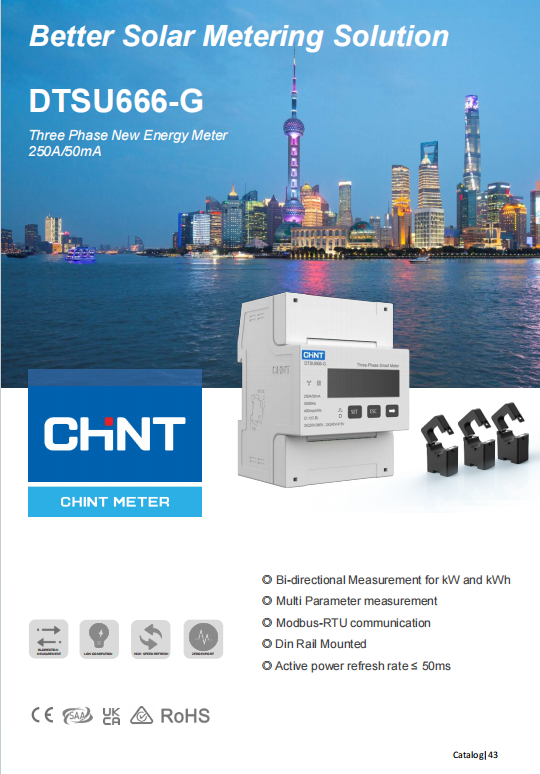


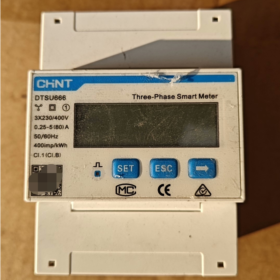
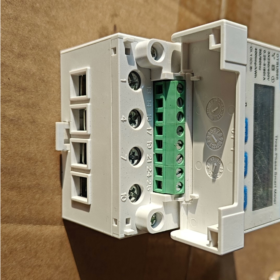
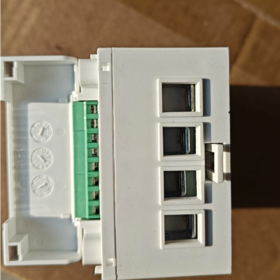
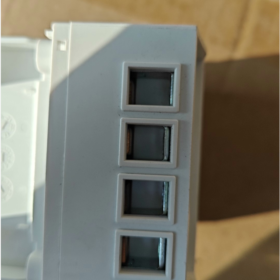
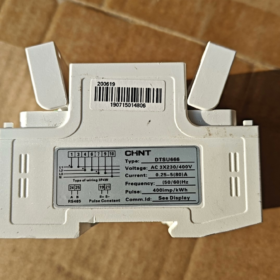
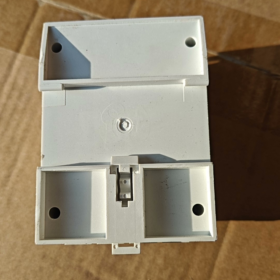
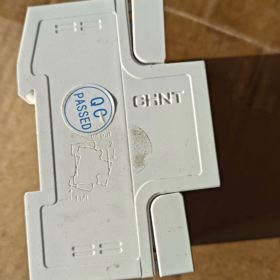
CHINT DTSU666-G PDF est un bidirectionnel intelligent compteur d'énergie spécialement conçu pour les nouveaux scénarios énergétiques tels que le photovoltaïque et le stockage d'énergie. Il adopte un montage sur rail standard DIN35 mm et présente une grande précision, rafraîchissement à grande vitesse, et comptage bidirectionnel, adapté au photovoltaïque résidentiel, industriel & systèmes de stockage d'énergie commerciaux et applications de micro-réseaux.
- Guide de câblage: CHINT DTSU666G vers carte de commande de l'onduleur (Mètre-485)
| Fonctionnalité de base | Description |
| Mesure bidirectionnelle | Mesure avec précision vers l'avant (entrée de grille) et inverser (nouvelle production d'énergie) Flux d'énergie en kW et kWh; prend en charge le contrôle anti-reflux. |
| Actualisation à grande vitesse | Taux de rafraîchissement de la puissance active ≤ 50 ms pour répondre aux exigences de réponse rapide des nouveaux systèmes énergétiques. |
| Surveillance multiparamétrique | Mesure de tension en temps réel, actuel, pouvoir, facteur de puissance, fréquence et autres paramètres électriques complets. |
| Fonction de communication | Interface RS485 standard, prend en charge le protocole Modbus‑RTU, connectable aux systèmes de gestion de l’énergie. |
| Installation facile | Montage sur rail standard DIN35 mm, 4P. (4 modules) construction compacte (98×72×65 mm). |
| Fonctionnement à large température | Plage de température de fonctionnement: -25 ℃ à +55 ℃, adaptable à divers environnements de boîtes de distribution extérieures. |
- Principales spécifications techniques
| Article | Spécification |
| Type de compteur | Compteur d'énergie électronique triphasé à quatre fils (Type sur rail DIN) |
| Classe de précision | Actif: Classe 0,5S / 1; Réactif: Classe 2 |
| Tension de référence | 3×220/380 V (triphasé à quatre fils) |
| Note actuelle | 0.015-1,5(6) UN (via transformateur), compatible avec 5 Un côté secondaire du CT |
| Constante d'impulsion | 800 imp/kWh |
| Plage de tension | 0.8Un ~ 1.15Un |
| Consommation d'énergie | ≤ 2 W / 10 Virginie |
| Interface de communication | RS485, débit en bauds 9600/19200 bps (défaut 9600), adresse 1‑247 |
| Afficher | Écran LCD à segments, prend en charge l'affichage automatique du cycle et la requête clé |
| Classe de protection | IP20 (installation intérieure) |
| Alimentation auxiliaire | Aucune alimentation externe nécessaire; alimenté directement par un signal de tension |
III. Différences par rapport à la norme DTSU666
| Article | DTSU666‑G (Nouvelle version énergétique) | Norme DTSU666 |
| Scénario de conception | Comptage bidirectionnel pour le PV, stockage d'énergie et autres énergies nouvelles | Industriel général / comptage d'électricité commercial |
| Note actuelle | 0.015-1,5(6) UN (plus adapté au raccordement d'un transformateur) | Plusieurs notes, dont 0,25 à 5(80) UN |
| Taux de rafraîchissement | ≤ 50 MS (réponse rapide pour les nouveaux systèmes énergétiques) | Taux de rafraîchissement normal |
| Optimisation des fonctions | Précision de mesure bidirectionnelle améliorée, optimisé pour le contrôle anti-reflux | Fonctions de base de mesure de l'énergie électrique |
| Champs d'application | PV résidentiel, industriel & stockage d'énergie commercial, systèmes de micro-réseaux | Industriel & entreprises minières, hôtels, écoles, etc.. |
- Scénarios d'application typiques
- Systèmes photovoltaïques résidentiels: Compter l’énergie bidirectionnelle pour l’autoconsommation et l’énergie excédentaire alimentée par le réseau, travailler avec des onduleurs pour le contrôle anti-reflux.
- Industriel & Systèmes de stockage d'énergie commerciaux: Surveiller le flux d'énergie pendant la charge et la décharge pour optimiser l'efficacité énergétique.
- Systèmes de micro-réseaux: Réaliser un comptage et une surveillance bidirectionnels entre les sources d'énergie distribuées et le réseau principal.
- Gestion des piles de chargement: Mesurez avec précision la consommation électrique des piles de charge triphasées, prise en charge de la lecture des compteurs à distance et de l'analyse des données.
- Installation & Remarques sur l'opération
- Montage: Montage sur rail standard DIN35 mm, 4Largeur P, convient pour une installation dans des boîtes de distribution.
- Câblage: Système triphasé à quatre fils; phases A, B, C connecté aux bornes 1, 3, 5 respectivement; neutre (N) au terminal 7; côté secondaire des transformateurs de courant connecté aux bornes de courant correspondantes.
- Paramétrage: Entrez dans le menu de programmation via la touche SET; mot de passe par défaut 700; Rapport CT, Rapport PT, paramètres de communication, etc.. peut être configuré.
- Configuration des communications: Prend en charge le protocole Modbus-RTU; débit en bauds par défaut 9600 bps, pas de parité, 1 peu d'arrêt.
- Sélection & Informations de commande
Modèle complet: DTSU666-G 3 × 220/380 V 0.015-1.5(6)Un 4P
Suggestion correspondante: Utilisé avec les transformateurs de courant CHINT (par exemple. BH-0.66 série); sélectionner le rapport en fonction de la charge réelle.
Modèles alternatifs: Compteur d'énergie neuf monophasé: DDSU666-G; triphasé à trois fils: DSSU666-G
CHINT DTSU666-G contre DTSU666: Différences fondamentales & Analyse d'interchangeabilité
Conclusion fondamentale: DTSU666-G est la nouvelle version dédiée à l'énergie (optimisé pour le stockage photovoltaïque/énergie), tandis que DTSU666 est la version à usage général. Ils peuvent être temporairement remplacés dans les scénarios de comptage de base, mais le DTSU666-G est fortement recommandé pour les nouveaux systèmes énergétiques afin de garantir une précision de mesure bidirectionnelle et une réponse rapide.
- Aperçu des différences fondamentales
| Dimension | DTSU666‑G (Nouvelle version énergétique) | DTSU666 (Version générale) | Impact |
| Objectif de conception | Comptage bidirectionnel pour le stockage photovoltaïque/énergie, compatible avec le contrôle anti-reflux | Comptage d'énergie électrique de base pour l'industrie / commercial / usage résidentiel | Direction d'optimisation déterminée par le scénario d'application |
| Note actuelle | 0.015-1,5(6) UN (connexion transformateur uniquement) | 0.25-5(80) UN (connexion directe) / 0.1-1,5(6) UN (connexion du transformateur) | Une grande différence dans la méthode de connexion et la plage affecte la sélection |
| Taux de rafraîchissement de la puissance active | ≤ 50 MS (réponse à grande vitesse) | Tarif normal (environ. 500 MS) | Les nouveaux systèmes énergétiques nécessitent une détection rapide des changements de puissance pour un contrôle anti-reflux |
| Précision de mesure bidirectionnelle | Conception améliorée pour répondre aux nouvelles exigences de connexion au réseau énergétique | Mesure bidirectionnelle de base, se concentre sur la direction vers l'avant | Le DTSU666‑G fournit une mesure plus précise pour les scénarios de surplus d'alimentation du réseau |
| Optimisation des fonctions | Adapté pour le contrôle des onduleurs photovoltaïques, prend en charge la détection de sortie de puissance nulle | Comptage d'énergie standard, pas de nouvelle optimisation spécifique à l’énergie | Le DTSU666‑G est plus fiable dans les systèmes de protection anti-reflux |
| Scénarios d'application | PV résidentiel, industriel & stockage d'énergie commercial, micro-réseaux | Entreprises industrielles, hôtels, écoles, bâtiments généraux | Les performances dépendent de la correspondance des scénarios |
- Différences détaillées des paramètres techniques
- Note actuelle & Méthode de connexion
DTSU666-G: Uniquement disponible en 0.015-1.5(6) Une version connectée au transformateur, conçu spécifiquement pour 5 Un côté secondaire du scanner, adapté à la mesure de courants élevés dans les nouveaux systèmes énergétiques.
DTSU666: Offre plusieurs évaluations, notamment 0.25-5(80) Une connexion directe et 0.1-1.5(6) Un type connecté au transformateur pour divers scénarios de charge.
- Différences de performances
Taux de rafraîchissement de la puissance active: DTSU666-G≤ 50 MS (pour une réponse rapide dans les nouveaux systèmes énergétiques); DTSU666 utilise un taux de rafraîchissement normal (environ. 500 MS).
Courant de démarrage: Le DTSU666-G a un courant de démarrage plus faible (0.001Dans), adapté à la mesure de sortie de faible puissance dans les nouveaux systèmes énergétiques.
Précision du dosage: Les deux ont une classe active 0,5S/1, mais le DTSU666-G offre une meilleure cohérence dans la mesure bidirectionnelle.
- Différences de fonctions logicielles
Le DTSU666-G intègre de nouveaux algorithmes spécifiques à l'énergie optimisant le calcul de puissance bidirectionnel et la logique de contrôle anti-reflux.
DTSU666 utilise des algorithmes de mesure généraux, plus adapté aux charges unidirectionnelles ou équilibrées.
Les deux prennent en charge Modbus-RTU sur RS485, mais certaines adresses de registre dans DTSU666-G sont optimisées pour de nouveaux paramètres énergétiques.
III. Analyse d'interchangeabilité
- Scénarios interchangeables (Remplacement temporaire)
Comptage d'énergie de base: Dans les scénarios industriels/commerciaux généraux où seule la mesure de l'énergie directe est nécessaire, ils peuvent être temporairement interchangés (La note actuelle doit correspondre).
Surveillance des paramètres: Les fonctions sont cohérentes lorsque seuls les paramètres électriques de base tels que la tension, le courant et la puissance sont surveillés.
Intégration des communications: Même protocole Modbus-RTU pris en charge, peut accéder au même système de gestion de l’énergie.
- Scénarios non recommandés pour l'échange (Doit correspondre au modèle)
| Scénario | Modèle recommandé | Raison |
| Surplus d’alimentation du réseau photovoltaïque | DTSU666‑G | Nécessite une mesure bidirectionnelle de haute précision; Le DTSU666‑G offre un rafraîchissement plus rapide et une meilleure adaptation anti-reflux |
| Gestion des charges/décharges du stockage d’énergie | DTSU666‑G | Les commutations de charge/décharge fréquentes nécessitent une réponse rapide ≤ 50 ms pour éviter les erreurs de mesure |
| Systèmes de contrôle anti-refoulement | DTSU666‑G | Un algorithme dédié garantit une détection précise de la sortie de puissance nulle et empêche les fluctuations du réseau |
| Connexion directe pour petite charge | DTSU666 | DTSU666‑G n'a pas de version à connexion directe et ne peut pas s'adapter à 0,25‑5(80) Une charge |
| Évaluation du service d'électricité | Selon les exigences locales | Doit être conforme aux normes de comptage du réseau; certaines régions exigent explicitement de nouveaux compteurs spécifiques à l'énergie |
- Notes sur l'échange
- Correspondance des notes actuelles: Méthode de connexion (direct/transformateur) et la portée doit correspondre à la charge réelle.
- Paramétrage: Après remplacement, réinitialiser le rapport CT/PT, adresse de communication et autres paramètres; le mot de passe par défaut pour les deux est 700.
- Limitation de fonction: Le remplacement du DTSU666-G par le DTSU666 perd le rafraîchissement à grande vitesse et l'adaptation anti-reflux, ce qui peut réduire la précision du contrôle du système.
- Recommandations de sélection
- Nouveaux systèmes énergétiques: Donnez la priorité au DTSU666-G pour garantir la précision des mesures bidirectionnelles et la compatibilité du système.
- Utilisation industrielle/commerciale générale: Choisissez DTSU666, sélectionner une connexion directe ou par transformateur en fonction du type de charge.
- Projets de rénovation: Lors de la mise à niveau des systèmes DTSU666 existants vers le stockage photovoltaïque/énergie, remplacer par DTSU666-G pour éviter les erreurs de mesure et les problèmes de contrôle.
NH42-63-318x560.png "Commutateurs de transfert automatiques de type PC CHINT (ATS)NH42-63/4SZ")