Contacteur,disjoncteur,capteur,Encodeur,API,Convertisseur

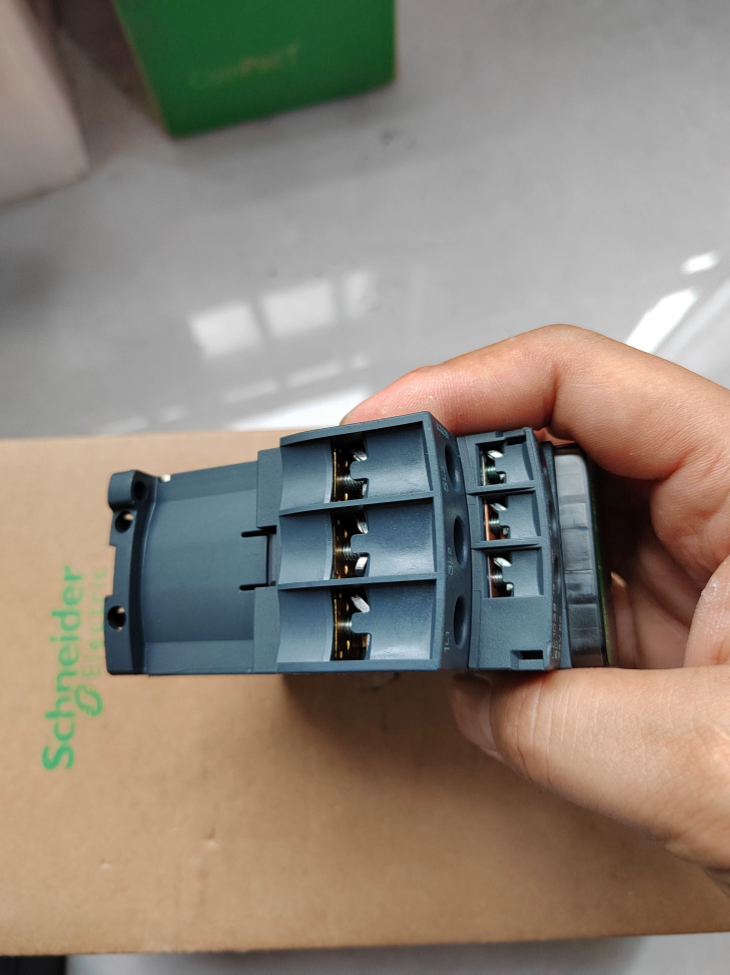

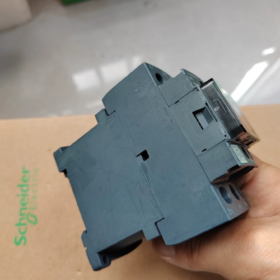
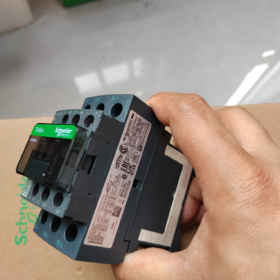
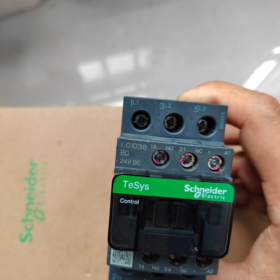
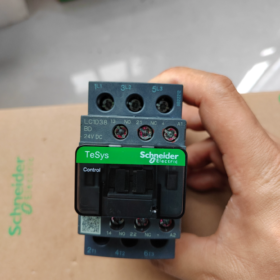
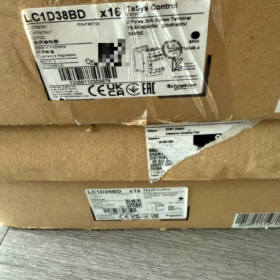
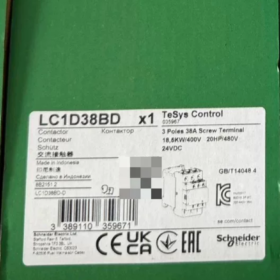
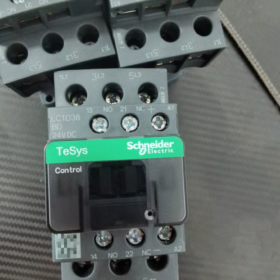
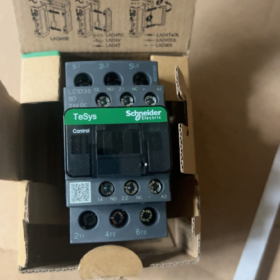
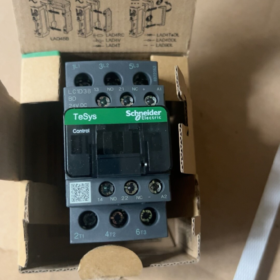
Schneider TeSys Deca series, 3-contacts principaux des pôles, 24Bobine VCC. Designed for motor start/stop, HVAC and automation control cabinets. Contacts auxiliaires 1NO+1NC intégrés.
✅ Model Code Definition
LC1: Contacteur standard
D: TeSys D (Déca) série
38: Rated operational current 38A @ AC-3, 400V
BD: 24Bobine V CC (integrated coil surge suppression)
📌 Key Electrical Specifications
| Article | Spécification |
| Contacts principaux | 3P Normalement ouvert (3NON) |
| AC-3 @ 400V | 38UN, controls motor power up to 18.5kW |
| Charge résistive AC-1 | 50UN |
| Tension assignée d'emploi Ue (circuit principal) | 690V et |
| Coil voltage Uc | 24À DC |
| Contacts auxiliaires intégrés | 1NON + 1Caroline du Nord (NC is mirror contact for safety circuits) |
| Fréquence de fonctionnement maximale | 3600 cycles/heure |
| Température ambiante | -5℃ ~ +60℃ (pas de déclassement) |
| Montage | Montage sur rail DIN / Screw panel mounting |
| Largeur | 45mm |
| Poids net | 0.54kilos |
| Terminaux | EverLink screw-clamp terminals, compatible with cable lugs |
🛠️ Typical Applications
Direct-on-line, star-delta and forward/reverse control of 3-phase asynchronous motors
Systèmes CVC, pompes à eau, les fans, compresseurs d'air
Équipement d'automatisation, packaging machinery and production line control cabinets
Direct coil drive by PLC 24VDC digital outputs (no intermediate relay required)
🧩 Compatible Accessories
Relais de surcharge thermique: série LRD (LRD35…), snap-fit directly below the contactor
Bloc de contacts auxiliaires: LA1DN (for extra NO/NC contacts)
Module de verrouillage mécanique: LA9D4001 (for forward/reverse interlock)
Suppression des surtensions: Integrated inside coil, no external component needed
🔁 Alternative & Compatible Selection
- AC coil variants within the same series: LC1D38M7 (220ACC), LC1D38B7 (24ACC)
- Alternative nationale: CJX2-3811 DC24V (note differences in dimension, terminals and mechanical life)
⚠️Important: BD = 24VDC, B7 = 24VAC. Coils are NOT interchangeable.
📋 Certifications & Normes
CEI 60947-1/-2/-4-1, CCC, cULus. Complies with IEC60335-1 flame retardant standard and A2L refrigerant safety certification for HVAC.
🧪 Second-hand Inspection Checklist
- Bobine: Continuity check on A1/A2. Apply 24VDC; armature pulls in without noise or overheating.
- Contacts principaux: L1/L2/L3 ↔ T1/T2/T3. Conductive when closed, high resistance when open; inspect contact erosion.
- Contacts auxiliaires: 13-14(NON), 21-22(Caroline du Nord). Switch synchronously with main contacts.
- Mécanique: Pas de collage; housing free of cracks or carbon blackening.
HS Code Reference
8536410000 (Electromagnetic contactor, voltage ≤60V)
Typical Engineering Application Cases for LC1D38BD
Core advantages: Bobine DC24V, direct PLC drive without intermediate relay; built-in surge suppression and certified mirror NC contact; 18.5kW max 3-phase motor @ AC-3, 50A for AC-1 resistive loads
Cas 1: Chilled water pump DOL start for HVAC BMS (Système d'automatisation du bâtiment)
Charger: 15kW 3-phase chilled water pump, 380V, motor rated current ≈28A
Control scheme: API (Siemens / Schneider M241) DO directly drives LC1D38BD 24VDC coil
Circuit principal: 3P circuit breaker → LC1D38BD → LRD35 thermal overload relay → pump motor
Logique de contrôle: BMS outputs 24VDC based on water temperature/pressure differential to energize contactor and start pump. Built-in 1NO auxiliary contact feeds running status back to PLC; built-in mirror NC contact for fault acquisition.
Selection rationale: DC coil provides strong anti-interference. BMS cabinets commonly adopt DC24V control. Wide temperature range -5~+60℃ suits high-temperature equipment rooms. 45mm narrow body saves cabinet space.
Accessoires: LRD35 thermal relay (28~36A), Montage sur rail DIN.
Cas 2: Air compressor motor control (OEM machinery manufacturer)
Charger: 18.5kW screw air compressor main motor, 400V
Control scheme: PLC directly drives LC1D38BD with pressure switch interlock for shutdown
Circuit: Circuit breaker → LC1D38BD → LRD thermal relay → air compressor motor
Caractéristiques: Démarrages et arrêts fréquents (maximum 3600 cycles/heure). DC coil pulls in stably without AC hum. Built-in coil surge suppression protects PLC output points against back EMF.
Note: AC-3 operation reaches the 38A rating limit. Derating evaluation is recommended for heavy-duty frequent cycling.
Cas 3: Water treatment — duty/standby mutual interlock control cabinet for sewage lift pumps
Charger: Two 15kW sewage pumps, duty-standby auto-switching by liquid level
Configuration: 2 × LC1D38BD + LA9D4001 mechanical interlock module
Logique: Pump starts on high liquid level. If main pump trips (thermal relay fault), PLC automatically switches to standby pump. Mechanical interlock prevents simultaneous closure and short circuit.
Safety feature: Built-in mirror NC contact for safety loop and fault diagnosis, meeting water treatment control cabinet safety specifications.
Application: Municipal sewage, factory circulating water, rainwater lift pumping stations.
Cas 4: Forward/reverse circuit for conveyor motors in packaging machinery / lignes de production
Charger: 11~15kW belt conveyor motor requiring forward and reverse rotation
Configuration: 2 × LC1D38BD (KM1 forward, KM2 reverse) + LA9D4001 mechanical interlock
Contrôle: PLC 24VDC digital outputs drive each contactor coil separately. Verrouillage électrique (using built-in NC auxiliary contacts) plus mechanical interlock provides double protection to prevent power short circuit.
Avantage: DC coil has better EMI immunity than AC coils in workshops dense with inverters and sensors, reducing accidental pull-in faults.
Cas 5: Star-delta reduced voltage starting for 18.5kW dust extraction fan
Charger: 18.5kW dust removal fan with high inrush current, star-delta starting adopted
Configuration: 3 × LC1D38BD, serving as main contactor, star contactor and delta contactor respectively
Logique: PLC outputs 24VDC sequential control; star reduced-voltage start first, then time-delayed switch to delta full-voltage operation. Built-in contactor auxiliary contacts provide status feedback and electrical interlock.
Note: High inrush current occurs at delta switching in star-delta circuits; contact life must be reviewed.
Cas 6: Charge résistive AC-1: Industrial heating module control
Charger: 3-phase heating elements, total resistive load ≤33kW (AC-1 50A @400V)
Fonctionnalité: Resistive load has no starting inrush current. AC-1 rated 50A capacity higher than motor duty. PLC 24V DO directly controls heating circuit on/off.
Application: Fours, constant temperature units, process heating equipment.
Cas 7: Cleanroom air handling unit for medical facilities (medical HVAC)
Charger: 15kW supply air fan for operating room clean air conditioning
Caractéristiques: Medical equipment demands high reliability and low EMI. LC1D38BD DC coil with built-in surge suppression, no electromagnetic noise from AC coils. Complies with IEC60335 HVAC safety standard, suitable for A2L refrigerant HVAC equipment, widely used in hospital BMS control cabinets.
Sélection générale & Construction Key Points (Valid for All Cases)
- DC coil critical note: BD = 24VDC, MUST NOT be connected to AC24V. PLC output capacity must meet coil power consumption (~15VA).
- Contacts auxiliaires: Built-in 1NO (running feedback) +1Caroline du Nord (mirror safety contact, NOT for normal latching). Add LA1DN auxiliary contact block for more contacts.
- Protection contre les surcharges: Must be fitted with LRD thermal overload relay, set per motor nameplate current and shall not exceed motor rated current.
- Utilisation category distinction
AC-3 (démarrage-arrêt normal du moteur): 38UN, max 18.5kW @400V
AC-1 (pure resistive heating): 50UN
AC-4 (jogging fréquent, plug braking): déclassement requis
Not Suitable Applications
Direct-on-line starting of 3-phase motors above 18.5kW (AC-3)
High-power capacitor switching (use dedicated LC1DxxKQ capacitor contactors)
Explosion hazardous areas (explosion-proof series required)
LC1D38BD (TeSys D DC Coil) Contour & Dimensions de montage
Without attached accessories (contacts auxiliaires, relais thermique, verrouillage mécanique), DC coil version
Dimensions du contour (L × H × P)
45 mm × 85 mm × 92 mm
Largeur: 45mm (DIN rail module, 1 module unit)
Hauteur: 85mm
Profondeur: 92mm (from mounting backplate to front face)
Panel screw mounting holes (DC coil specific, round holes for M4)
Horizontal center distance between two holes: 35 mm
Vertical center distance between two holes: 70 mm
Screw size: M4, two round holes (⚠️ AC coil LC1D38M7 uses slotted holes; mounting layout differs from BD DC version)
Montage sur rail
Compatible avec le rail DIN standard de 35 mm (TH35-7.5), clip-on installation, no drilling required.
Cabinet Layout Recommendations
- Mounting LRD thermal relay at bottom: overall height increases; reserve adequate clearance.
- Mounting LA1DN auxiliary contact block on top: extra depth and height required.
- Multiple contactors side-by-side: 45mm largeur, can be mounted tightly on rail without gap. Reserve heat dissipation gap for high-temperature environments.
Operating Principle of Schneider LC1D38BD Contactor
LC1D38BD is an electromagnetic contactor with DC coil (Série TeSys D). Essentiellement, it is a remotely controlled electrical switch driven by 24VDC electromagnet, using low DC signal to switch high-power 3-phase main circuit.
- Basic Structure
- Electromagnetic actuation section (Bobine A1/A2): 24V DC excitation coil, fixed core, moving armature, ressort de retour
- Contacts principaux (power circuit L1/L2/L3 → T1/T2/T3): 3 pairs of normally-open main contacts, rated 38A AC-3, carrying high current for 3-phase motors / charges de chauffage
- Contacts auxiliaires (retour de signal): Built-in 1NO (13-14)+1Caroline du Nord (21-22) mirror auxiliary contacts for status feedback and electrical interlock
- Arc chamber: Extinguishes electric arc when main contacts open, protecting contacts from rapid erosion
✅ Key feature for BD model: DC coil with integrated surge suppressor.
- Full Operating Sequence
2.1 Coil Energized (Pull-in action)
Apply DC24V to A1 and A2 via PLC or external control circuit:
DC coil generates constant magnetic field, magnetizing fixed core, overcoming return spring force and pulling in moving armature.
Armature drives contact carrier synchronously:
3 pairs of main NO contacts close → 3-phase main circuit energized, motor/load powered on
Auxiliary contacts switch simultaneously: 13-14(NON) ferme; 21-22(Caroline du Nord) ouvre
Characteristic of DC coil: constant current after pull-in, no vibration or hum from AC coils.
2.2 Coil De-energized (Drop-out action)
DC24V control signal removed:
Magnetic field of coil disappears, return spring pulls armature back.
All main contacts open, cutting high-current main circuit.
Réinitialisation des contacts auxiliaires: 13-14(NON) ouvre; 21-22(Caroline du Nord) restores closed state.
Built-in surge suppression absorbs back EMF generated at coil de-energization, protecting upstream PLC output points.
- Core Differences Between DC Coil (BD) and Conventional AC Coil
- Bobine CA: operates on alternating magnetic field, prone to vibration and hum; courant d'appel élevé; contact bounce under voltage fluctuation.
- LC1D38BD DC24V coil:
Stable magnetic field, armature free of vibration, fonctionnement silencieux
Pull-in current ≈ holding current, low inrush
Built-in freewheeling suppression, ideal for direct PLC DO drive
Inconvénient: Must never connect to AC supply; AC input burns coil immediately.
- Typical Functions of Auxiliary Contacts
1NON (13-14): Running status feedback to PLC to detect contactor pull-in state
1Caroline du Nord (21-22, mirror contact): Circuits de sécurité, fault detection, electrical interlock (forward/reverse circuits)
⚠️ Mirror contact property: NC contact cannot close when main contacts are welded shut, complying with safety circuit requirements.
- Mandatory Protection Logic for Engineering
The contactor only performs switching and has NO overload protection:
Fit LRD thermal overload relay in main circuit: on motor overload, thermal relay NC contact opens contactor coil circuit to cut motor power.
Circuit breaker installed upstream: fast short-circuit protection for main power supply.
Résumé en une phrase:
Apply DC24V to A1/A2; electromagnetic force actuates internal contacts to close high-power 3-phase main circuit. Remove 24V supply; spring resets and opens main circuit. Low-voltage 24V signal remotely switches high-power loads. Auxiliary contacts provide status feedback and safety interlock.


NH42-63-318x560.png "Commutateurs de transfert automatiques de type PC CHINT (ATS)NH42-63/4SZ")