Contacteur,disjoncteur,capteur,Encodeur,API,Convertisseur

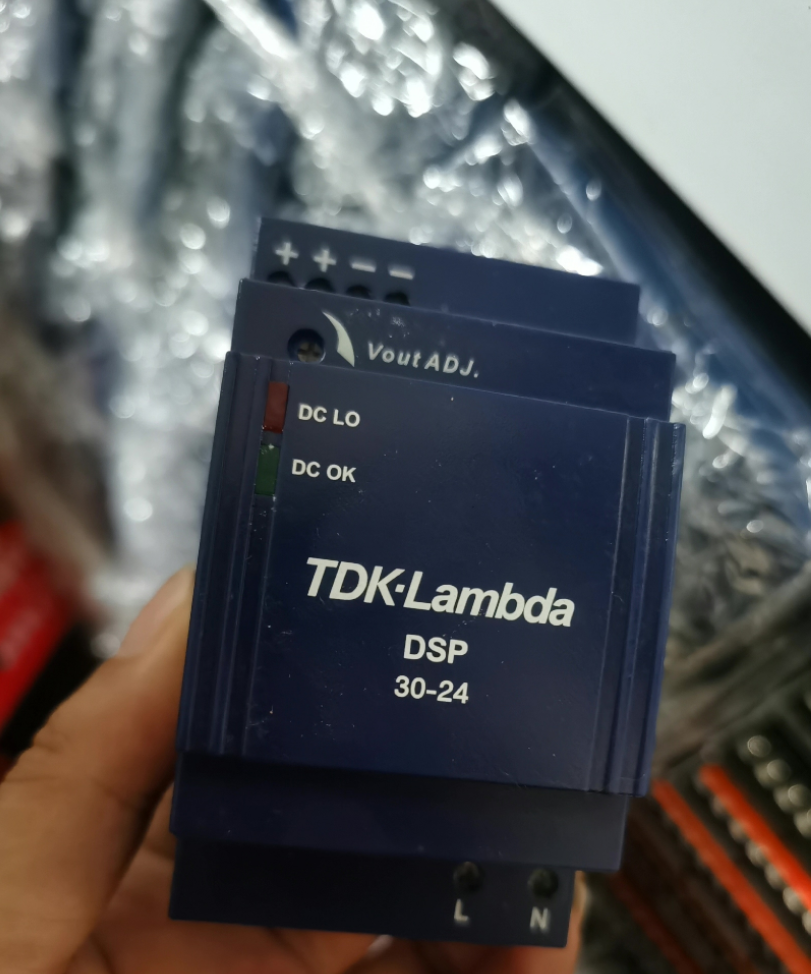

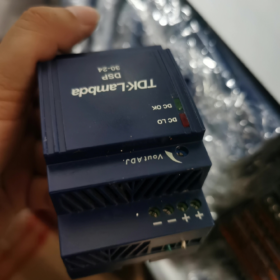
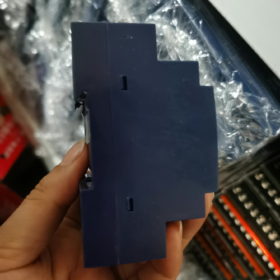
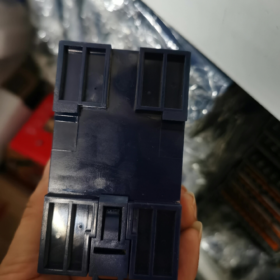
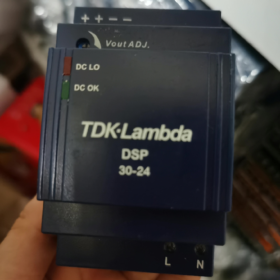
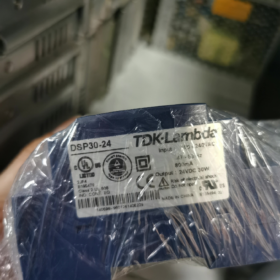
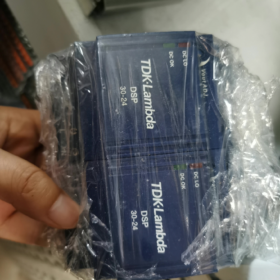
DSP DIN rail AC-DC alimentation, DSP30-24, rated output 24VDC / 30W class, Montage sur rail DIN35, Class II double insulation, no protective earth terminal required
- Spécifications électriques de base
Saisir
CA: 90~264VAC, 47~63 Hz (wide input voltage for global use)
DC input compatible: 120~370VDC
Built-in PFC, compliant with EN61000-3-2
Cold-start inrush current: 25A@115VAC /50A@230VAC
Sortir
Tension nominale: 24VCC, adjustable range 24~28VDC via potentiometer
Courant nominal: 1.3UN, rated power 31.2W
Voltage regulation accuracy: ±1%; ondulation & bruit: 50mV (20MHz bandwidth)
Fonctions de protection: Protection contre les surintensités (110~160%, fold-back current limiting, protection contre les courts-circuits), overvoltage protection 30~36Vdc, overtemperature protection
Hold-up time: 25ms @115VAC input
Efficacité: Typical 83%~87%
- Mécanique & Environnemental
Montage: Rail DIN standard de 35 mm
Dimensions: W53mm × H95.5mm × D55.6mm
Poids: Environ. 200g
Refroidissement: Convection naturelle, sans ventilateur
Température de fonctionnement: -25℃ ~ +71℃; derating starts above 61℃ (2.5%/℃)
Température de stockage: -25~+85℃; humidity 20~90%RH (sans condensation)
- Indicator LEDs & Définition du terminal
L: AC Line; N: AC Neutral
+: 24V Output Positive; −: Output Negative
Vout ADJ: Output voltage trim potentiometer
LED verte: DC OK (Output normal)
LED rouge: DC LO (Sous-tension / Faute)
- Certifications & Sécurité
Safety standards: EN60950-1, UL60950-1, UL1310 Class2 output, CE/UKCA
CEM: EN55032 Class A; Immunity to EN61000-4 series
Tension de tenue d'isolement: 3kV CA
- Model Status & Remplaçants
DSP30-24 legacy model: NRND (Not Recommended for New Design); upgraded model DSP30-24/277A2, supports wider input 90~304VAC, direct rail replacement, verify pin definition before use
- Applications typiques
API, capteurs, électrovannes, small control cabinets, automatisation des bâtiments, 24V industrial low-voltage power supply, ideal for compact cabinet installation.
- Dépannage courant
- LED verte éteinte: Check AC input L/N, internal fuse, and minimum input voltage
- Red LED steady on: Output overload or short circuit; disconnect load to test power supply recovery
- Output voltage too high/low: Adjust Vout ADJ potentiometer
- Voltage drop under high temperature: Exceed derating temperature; reduce load or improve cabinet ventilation
- Alternatives compatibles nationales
Meanwell: DR-30-24 (30W, Rail DIN)
Delta: DRP-24V30W
Soleil du matin: LI30-24B24
DSP30-24 (DSP30-24VDC) Cas de candidature
Core advantages: Slim depth (only 56mm), Class II double insulation without PE, fanless natural cooling, wide input voltage, well suited for wall-mounted small electrical boxes and slim control cabinets; rated 24V 1.3A, recommended total load power ≤25W for derating margin
Cas 1: Building Management System (GTC) / Contrôle CVC (OEM Primary Application)
Charges: Small DDC controllers, température & humidity transmitters, differential pressure sensors, electric damper actuators, room panels
System Description: Slim wall-mounted low-voltage cabinet, DSP30-24 DIN-rail mounted locally to supply HVAC field I/O modules and sensors. Class II design eliminates PE wiring and simplifies cabling.
Notes de sélection: Total current of multiple sensors + small dampers <1A; full power available if cabinet temperature ≤61℃.
Typical Sites: Immeubles de bureaux, centres commerciaux, hospital air handling units, fresh air unit local control cabinets.
Cas 2: Access Control & Sécurité / Fire Alarm Systems
Charges: Access controller, door contacts, lecteurs de cartes, fire alarm input modules, sounder beacons, zone modules
System Description: Wall-mounted security/fire control cabinet, AC220V feeds DSP30-24, 24VDC output powers access host and alarm modules. Wide 90~264VAC input provides tolerance against grid voltage fluctuation. Built-in short/overcurrent protection prevents host damage from field wiring short-circuit.
Note: Not for fire main backup power loops, used for auxiliary monitoring and access control subsystems only.
Cas 3: Small Industrial Automation Cabinets (Standalone Stations)
Charges: Micro PLC (Siemens S7-200SMART, Mitsubishi FX3U compact CPU), proximity sensors, capteurs photoélectriques, relay modules, petites électrovannes
System Description: Local control cabinet for assembly line stations, inspection benches, petits convoyeurs. One PLC + 4~8 sensors + 2~3 small solenoid valves.
Prudence: Solenoid valves draw high inrush current, reserve margin for surge current during load calculation; recommended total steady-state load ≤25W.
Convient pour: Sorting stations, équipement d'inspection, small packaging machine local controls.
Cas 4: Surveillance à distance & IoT Data Acquisition Cabinets
Charges: RTU, data acquisition modules, 4G/5G gateways, pressure/level transmitters, wireless sensors
System Description: Remote acquisition cabinets for water, heat, huile & gas sites or equipment rooms. Wide input range and -25℃ cold-start capability for non-constant-temperature environments.
Caractéristiques: Fanless natural convection, no wearing parts, maintenance-free for unattended sites.
Cas 5: Small Intelligent Lighting Control Systems
Charges: DALI lighting gateway, dimmer modules, 24V lighting bus sensors
System Description: Wall-mounted control cabinets for shopping malls and conference rooms, power supply for lighting bus controllers. Low profile fits slim lighting distribution boxes.
Cas 6: Test & Mesures / Laboratory Small Tooling
Charges: Test fixture I/O boards, signal conditioning modules, sensor signal transmitters
System Description: Simple production test benches and small laboratory measurement cabinets. Stable 24V DC with low ripple, ideal for transmitter powering.
Sélection & Limites des applications (Engineering Key Points)
- Max continuous output: 31.2W /1.3A, engineering design recommended derate to 80% (≤25W)
- Derating required when ambient temperature>61℃; further reduce load for high cabinet temperature
- Conception sans ventilateur; reserve ventilation gaps on left/right, do not stack tightly beside circuit breakers
- NRND legacy model; use DSP30-24/277A2 for new designs; DSP30-24 only for spare replacement on existing equipment
- Class II double insulation, no PE wire required, simplifies wiring for many wall-mounted low-voltage cabinets, but not applicable for safety loops beyond extra-low voltage safety requirements
Typical Wiring Topology Reference
AC L/N → DSP30-24 → 24V+ /24V→ Parallel loads: PLC/DDC + Capteurs + Relay modules; recommend fuse and surge absorber on output side to protect inductive loads such as solenoid valves.
DSP30-24 Engineering Selection Checklist
Applicable pour: TDK-Lambda DSP30-24 (24VDC 31.2W, Rail DIN, Classe II, refroidissement naturel)
But: New project evaluation / field retrofit / spare part verification; legacy NRND model, use DSP30-24/277A2 for new projects
✅ 1. Load Power & Current Verification (Cœur)
Noté: 24V, 1.3UN, 31.2W; recommandé 80% derating limit: 25W /1.04A
- Sum steady-state loads
Sum rated current of all 24V devices: API, DDC, capteurs, transmitters, relais, gateways, etc..
Charges inductives (électrovannes, small actuators): inrush current must be considered, not only steady-state value
Total steady-state current ≤1.04A (recommandé); short peak up to 1.3A, not continuous
- Load type restrictions
✅ Convient: Transmitters, proximity/photoelectric switches, small I/O, RTU, access controllers, DALI gateways
⚠️ Use caution: Électrovannes haute puissance, large actuators, charges de chauffage, moteurs
❌ Prohibited: Direct battery float charging (no charge management), high-power LED constant-current boards
- Output side protection selection
Recommended series fuse at output: 2Un fusible à fusion lente (24V side)
Charges inductives (solenoid / damper actuators): Freewheeling diode or RC snubber across coil to suppress back EMF and prevent power supply damage
Long cable runs: Add 24V-rated TVS for surge protection
✅ 2. Input Side Verification
- AC input voltage: 90~264VAC, 47~63 Hz; compatible with DC 120~370VDC
Sites with large voltage fluctuation (old factories): Confirm minimum field voltage ≥90VAC
- Câblage d'entrée: L Line, N Neutral; Classe II, PE earth not required for power supply
Note: Cabinet shell should connect to protective earth for EMC, power supply itself does not require PE
- Input inrush current: 25A@115VAC; 50A@230VAC
When multiple power supplies switch on simultaneously in one distribution box, select MCB carefully to avoid tripping at switch-on
✅ 3. Température ambiante & Derating Verification (Common Pitfall)
Plage de température de fonctionnement: -25℃ ~ +71℃
Derating rule: Derating starts above 61℃ at 2.5%/℃
Exemple: Cabinet temperature 66℃, 5℃ above 61℃ → 12.5% power derating, max available power=31.2×(1-0.125)=27.3W
Engineering recommendation: Reserve extra margin if cabinet temperature>55℃, ideally keep ≤60℃
- Installation ventilation requirements
Minimum gap top/bottom ≥10mm; left/right ≥5mm clearance
❌ Do not mount tightly next to heat-generating components such as breakers and contactors
❌ Do not enclose inside fully sealed airtight boxes
- Température de stockage: -25~+85℃, mise hors tension
✅ 4. Vérification de l'installation mécanique
- Montage: Rail DIN standard de 35 mm, installation verticale (bornes vers le haut)
Horizontal / upside-down mounting not recommended; worsens heat dissipation and accelerates derating
- Dimensions: W53 × H95.5 × D55.6 mm; preferred for slim cabinets
- Vibration & choc: Suitable for general industrial and building automation; add rail lock for heavy machinery with high vibration
✅ 5. Protection Function Verification (Fault Modes)
Built-in protections: Fold-back current limiting / protection contre les courts-circuits, protection contre les surtensions, overtemperature protection
Protection behavior: Hiccup mode on some versions; auto-recovery after fault removal
- Surintensité: 110~160% rated current, fold-back limiting
- Protection contre les surtensions: Trigger at 30~36VDC
- Overtemperature protection: Shutdown on overtemperature, auto retry after cooling
Note: Repeated short-circuit / thermal cycling shortens service life; output fuse should not be omitted
✅ 6. Status Indicators Verification
DC OK (Vert): Output healthy
DC LO (Rouge): Sous-tension / surcharge / défaut de court-circuit
Vout ADJ potentiometer: Output adjustable 24~28VDC
Commissioning tip: Do not turn voltage up to 28V upper limit under no-load; re-measure voltage with load connected to avoid overvoltage damage to transmitters
✅ 7. CEM, Isolement & Vérification de sécurité
- Isolation rating: Class II double insulation, input-output isolation withstand 3kV AC
- CEM: EN55032 Class A; immunity meets EN61000-4 (ESD, burst, surtension)
⚠️ Class A: Pour les environnements industriels; not recommended for residential environments due to EMI non-compliance risk
- Certifications: UL/CE/UKCA; safety standard EN60950-1
- Câblage: Route 24V DC cables away from 220V AC power cables to reduce coupling interference
✅ 8. Model Lifecycle Verification (Critical Engineering Reminder)
DSP30-24: NRND Not Recommended for New Design
For repair & replacement on existing equipment: DSP30-24 acceptable
Nouveaux projets: Upgrade to DSP30-24/277A2, input 90~304VAC, direct DIN rail replacement, verify terminal definition
Alternative domestic models: DR-30-24, LI30-24B24
✅ 9. Site Commissioning Procedure (Power-up Sequence)
- Disconnect all loads, power supply alone, measure no-load output voltage, trim Vout ADJ to 24V
- Connect loads gradually, monitor output voltage, temperature rise and LED status
- Perform short-circuit test (short duration), confirm hiccup protection activates and auto-recovers after fault removal
- Run full load for 30min, check housing temperature rise for abnormal heating
- Check voltage drop on long wiring runs; slightly increase output voltage to compensate for cable drop if wire gauge is thin or distance is long
📋 Quick Tick List (Copy directly to Excel)
| Verification Item | Exigence | Remarques |
| Total steady-state load power | ≤25W (80% déclassement) | Include inrush for inductive loads |
| Cabinet ambient temperature | Full power ≤61℃; derate above 61℃ | Measure cabinet internal temp, not room ambient |
| Plage de tension d'entrée | 90~264VAC | Record minimum site voltage |
| Installation ventilation clearance | Top/bottom ≥10mm, left/right ≥5mm | Do not mount adjacent to heat sources |
| Output protection components | 2Un fusible à fusion lente, snubber for inductive loads | |
| Orientation de montage | DIN rail vertical mount, bornes vers le haut | Upside-down impairs heat dissipation |
| Project type | Existing maintenance / New design | DSP30-24 not recommended for new projects |
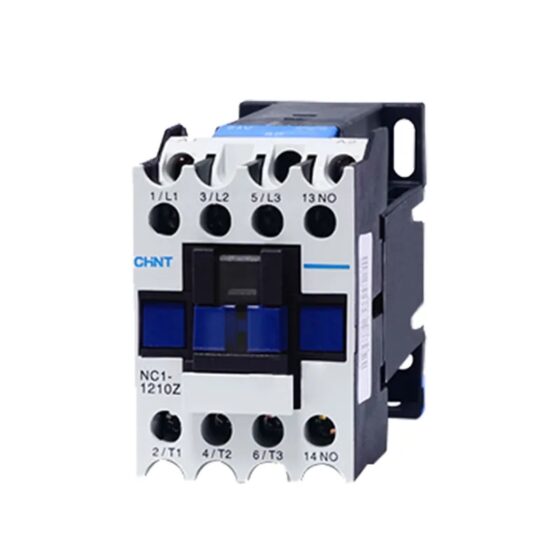
NH42-63-318x560.png "Commutateurs de transfert automatiques de type PC CHINT (ATS)NH42-63/4SZ")