Contactor,circuit breaker,sensor,Encoder,PLC,Converter

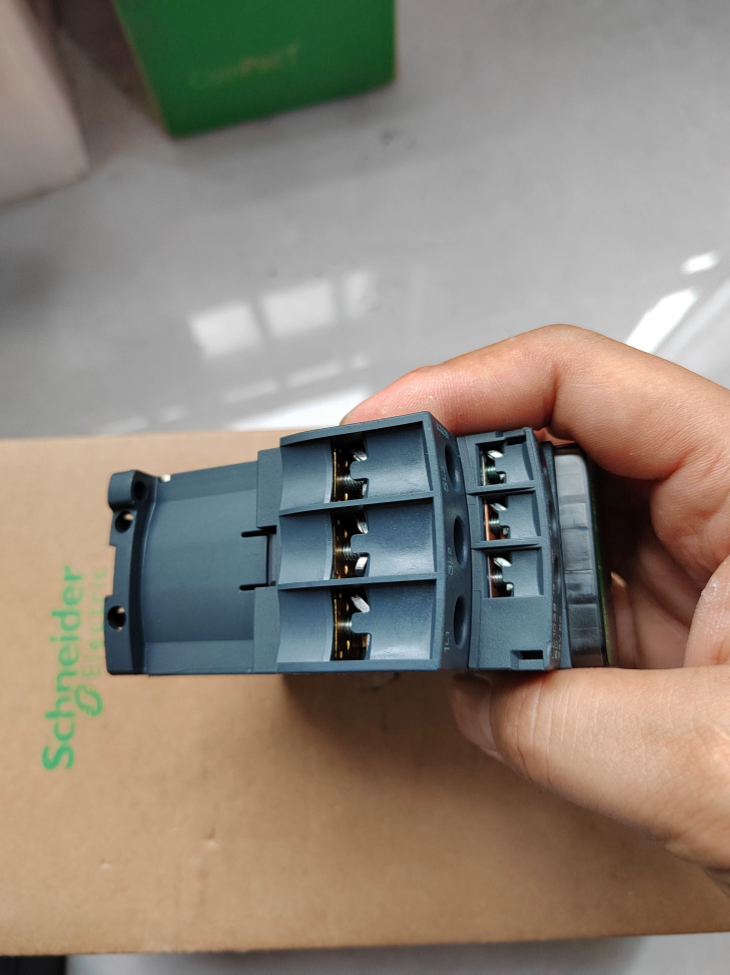

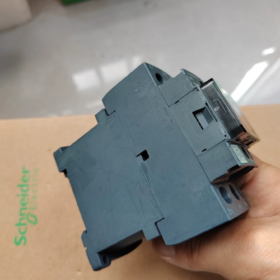
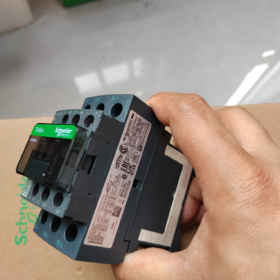
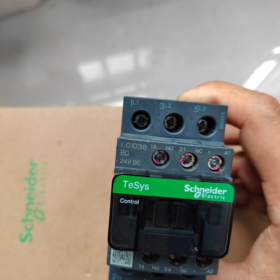
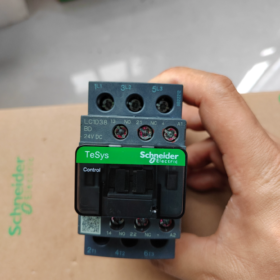
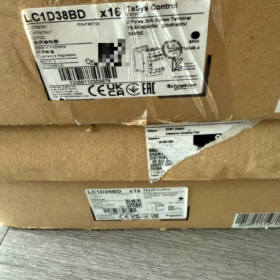
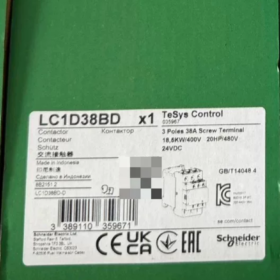
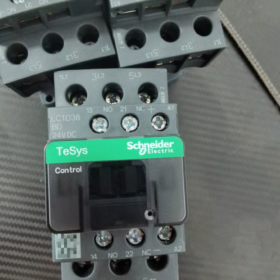
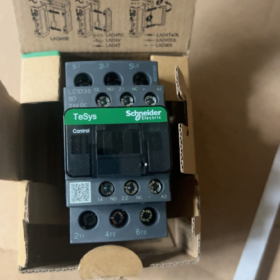
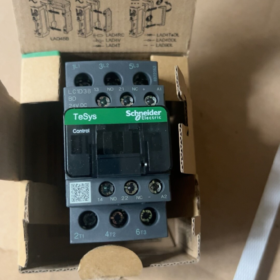
Schneider TeSys Deca series, 3-pole main contacts, 24VDC coil. Designed for motor start/stop, HVAC and automation control cabinets. Built-in 1NO+1NC auxiliary contacts.
✅ Model Code Definition
LC1: Standard contactor
D: TeSys D (Deca) series
38: Rated operational current 38A @ AC-3, 400V
BD: 24V DC coil (integrated coil surge suppression)
📌 Key Electrical Specifications
| Item | Specification |
| Main Contacts | 3P Normally Open (3NO) |
| AC-3 @ 400V | 38A, controls motor power up to 18.5kW |
| AC-1 resistive load | 50A |
| Rated operational voltage Ue (main circuit) | 690V AC |
| Coil voltage Uc | 24V DC |
| Built-in auxiliary contacts | 1NO + 1NC (NC is mirror contact for safety circuits) |
| Max operating frequency | 3600 cycles/hour |
| Ambient temperature | -5℃ ~ +60℃ (no derating) |
| Mounting | DIN rail mounting / Screw panel mounting |
| Width | 45mm |
| Net weight | 0.54kg |
| Terminals | EverLink screw-clamp terminals, compatible with cable lugs |
🛠️ Typical Applications
Direct-on-line, star-delta and forward/reverse control of 3-phase asynchronous motors
HVAC systems, water pumps, fans, air compressors
Automation equipment, packaging machinery and production line control cabinets
Direct coil drive by PLC 24VDC digital outputs (no intermediate relay required)
🧩 Compatible Accessories
Thermal overload relay: LRD series (LRD35…), snap-fit directly below the contactor
Auxiliary contact block: LA1DN (for extra NO/NC contacts)
Mechanical interlock module: LA9D4001 (for forward/reverse interlock)
Surge suppression: Integrated inside coil, no external component needed
🔁 Alternative & Compatible Selection
- AC coil variants within the same series: LC1D38M7 (220VAC), LC1D38B7 (24VAC)
- Domestic alternative: CJX2-3811 DC24V (note differences in dimension, terminals and mechanical life)
⚠️ Important: BD = 24VDC, B7 = 24VAC. Coils are NOT interchangeable.
📋 Certifications & Standards
IEC 60947-1/-2/-4-1, CCC, cULus. Complies with IEC60335-1 flame retardant standard and A2L refrigerant safety certification for HVAC.
🧪 Second-hand Inspection Checklist
- Coil: Continuity check on A1/A2. Apply 24VDC; armature pulls in without noise or overheating.
- Main contacts: L1/L2/L3 ↔ T1/T2/T3. Conductive when closed, high resistance when open; inspect contact erosion.
- Auxiliary contacts: 13-14(NO), 21-22(NC). Switch synchronously with main contacts.
- Mechanical: No sticking; housing free of cracks or carbon blackening.
HS Code Reference
8536410000 (Electromagnetic contactor, voltage ≤60V)
Typical Engineering Application Cases for LC1D38BD
Core advantages: DC24V coil, direct PLC drive without intermediate relay; built-in surge suppression and certified mirror NC contact; 18.5kW max 3-phase motor @ AC-3, 50A for AC-1 resistive loads
Case 1: Chilled water pump DOL start for HVAC BMS (Building Automation System)
Load: 15kW 3-phase chilled water pump, 380V, motor rated current ≈28A
Control scheme: PLC (Siemens / Schneider M241) DO directly drives LC1D38BD 24VDC coil
Main circuit: 3P circuit breaker → LC1D38BD → LRD35 thermal overload relay → pump motor
Control logic: BMS outputs 24VDC based on water temperature/pressure differential to energize contactor and start pump. Built-in 1NO auxiliary contact feeds running status back to PLC; built-in mirror NC contact for fault acquisition.
Selection rationale: DC coil provides strong anti-interference. BMS cabinets commonly adopt DC24V control. Wide temperature range -5~+60℃ suits high-temperature equipment rooms. 45mm narrow body saves cabinet space.
Accessories: LRD35 thermal relay (28~36A), DIN rail mounting.
Case 2: Air compressor motor control (OEM machinery manufacturer)
Load: 18.5kW screw air compressor main motor, 400V
Control scheme: PLC directly drives LC1D38BD with pressure switch interlock for shutdown
Circuit: Circuit breaker → LC1D38BD → LRD thermal relay → air compressor motor
Features: Frequent start-stop (max 3600 cycles/hour). DC coil pulls in stably without AC hum. Built-in coil surge suppression protects PLC output points against back EMF.
Note: AC-3 operation reaches the 38A rating limit. Derating evaluation is recommended for heavy-duty frequent cycling.
Case 3: Water treatment — duty/standby mutual interlock control cabinet for sewage lift pumps
Load: Two 15kW sewage pumps, duty-standby auto-switching by liquid level
Configuration: 2 × LC1D38BD + LA9D4001 mechanical interlock module
Logic: Pump starts on high liquid level. If main pump trips (thermal relay fault), PLC automatically switches to standby pump. Mechanical interlock prevents simultaneous closure and short circuit.
Safety feature: Built-in mirror NC contact for safety loop and fault diagnosis, meeting water treatment control cabinet safety specifications.
Application: Municipal sewage, factory circulating water, rainwater lift pumping stations.
Case 4: Forward/reverse circuit for conveyor motors in packaging machinery / production lines
Load: 11~15kW belt conveyor motor requiring forward and reverse rotation
Configuration: 2 × LC1D38BD (KM1 forward, KM2 reverse) + LA9D4001 mechanical interlock
Control: PLC 24VDC digital outputs drive each contactor coil separately. Electrical interlock (using built-in NC auxiliary contacts) plus mechanical interlock provides double protection to prevent power short circuit.
Advantage: DC coil has better EMI immunity than AC coils in workshops dense with inverters and sensors, reducing accidental pull-in faults.
Case 5: Star-delta reduced voltage starting for 18.5kW dust extraction fan
Load: 18.5kW dust removal fan with high inrush current, star-delta starting adopted
Configuration: 3 × LC1D38BD, serving as main contactor, star contactor and delta contactor respectively
Logic: PLC outputs 24VDC sequential control; star reduced-voltage start first, then time-delayed switch to delta full-voltage operation. Built-in contactor auxiliary contacts provide status feedback and electrical interlock.
Note: High inrush current occurs at delta switching in star-delta circuits; contact life must be reviewed.
Case 6: AC-1 resistive load: Industrial heating module control
Load: 3-phase heating elements, total resistive load ≤33kW (AC-1 50A @400V)
Feature: Resistive load has no starting inrush current. AC-1 rated 50A capacity higher than motor duty. PLC 24V DO directly controls heating circuit on/off.
Application: Ovens, constant temperature units, process heating equipment.
Case 7: Cleanroom air handling unit for medical facilities (medical HVAC)
Load: 15kW supply air fan for operating room clean air conditioning
Features: Medical equipment demands high reliability and low EMI. LC1D38BD DC coil with built-in surge suppression, no electromagnetic noise from AC coils. Complies with IEC60335 HVAC safety standard, suitable for A2L refrigerant HVAC equipment, widely used in hospital BMS control cabinets.
General Selection & Construction Key Points (Valid for All Cases)
- DC coil critical note: BD = 24VDC, MUST NOT be connected to AC24V. PLC output capacity must meet coil power consumption (~15VA).
- Auxiliary contacts: Built-in 1NO (running feedback) +1NC (mirror safety contact, NOT for normal latching). Add LA1DN auxiliary contact block for more contacts.
- Overload protection: Must be fitted with LRD thermal overload relay, set per motor nameplate current and shall not exceed motor rated current.
- Utilisation category distinction
AC-3 (normal motor start-stop): 38A, max 18.5kW @400V
AC-1 (pure resistive heating): 50A
AC-4 (frequent jogging, plug braking): derating required
Not Suitable Applications
Direct-on-line starting of 3-phase motors above 18.5kW (AC-3)
High-power capacitor switching (use dedicated LC1DxxKQ capacitor contactors)
Explosion hazardous areas (explosion-proof series required)
LC1D38BD (TeSys D DC Coil) Outline & Mounting Dimensions
Without attached accessories (auxiliary contacts, thermal relay, mechanical interlock), DC coil version
Outline Dimensions (W × H × D)
45 mm × 85 mm × 92 mm
Width: 45mm (DIN rail module, 1 module unit)
Height: 85mm
Depth: 92mm (from mounting backplate to front face)
Panel screw mounting holes (DC coil specific, round holes for M4)
Horizontal center distance between two holes: 35 mm
Vertical center distance between two holes: 70 mm
Screw size: M4, two round holes (⚠️ AC coil LC1D38M7 uses slotted holes; mounting layout differs from BD DC version)
Rail Mounting
Compatible with standard 35mm DIN rail (TH35-7.5), clip-on installation, no drilling required.
Cabinet Layout Recommendations
- Mounting LRD thermal relay at bottom: overall height increases; reserve adequate clearance.
- Mounting LA1DN auxiliary contact block on top: extra depth and height required.
- Multiple contactors side-by-side: 45mm width, can be mounted tightly on rail without gap. Reserve heat dissipation gap for high-temperature environments.
Operating Principle of Schneider LC1D38BD Contactor
LC1D38BD is an electromagnetic contactor with DC coil (TeSys D series). Essentially, it is a remotely controlled electrical switch driven by 24VDC electromagnet, using low DC signal to switch high-power 3-phase main circuit.
- Basic Structure
- Electromagnetic actuation section (Coil A1/A2): 24V DC excitation coil, fixed core, moving armature, return spring
- Main contacts (power circuit L1/L2/L3 → T1/T2/T3): 3 pairs of normally-open main contacts, rated 38A AC-3, carrying high current for 3-phase motors / heating loads
- Auxiliary contacts (signal feedback): Built-in 1NO (13-14)+1NC (21-22) mirror auxiliary contacts for status feedback and electrical interlock
- Arc chamber: Extinguishes electric arc when main contacts open, protecting contacts from rapid erosion
✅ Key feature for BD model: DC coil with integrated surge suppressor.
- Full Operating Sequence
2.1 Coil Energized (Pull-in action)
Apply DC24V to A1 and A2 via PLC or external control circuit:
DC coil generates constant magnetic field, magnetizing fixed core, overcoming return spring force and pulling in moving armature.
Armature drives contact carrier synchronously:
3 pairs of main NO contacts close → 3-phase main circuit energized, motor/load powered on
Auxiliary contacts switch simultaneously: 13-14(NO) closes; 21-22(NC) opens
Characteristic of DC coil: constant current after pull-in, no vibration or hum from AC coils.
2.2 Coil De-energized (Drop-out action)
DC24V control signal removed:
Magnetic field of coil disappears, return spring pulls armature back.
All main contacts open, cutting high-current main circuit.
Auxiliary contacts reset: 13-14(NO) opens; 21-22(NC) restores closed state.
Built-in surge suppression absorbs back EMF generated at coil de-energization, protecting upstream PLC output points.
- Core Differences Between DC Coil (BD) and Conventional AC Coil
- AC coil: operates on alternating magnetic field, prone to vibration and hum; high inrush current; contact bounce under voltage fluctuation.
- LC1D38BD DC24V coil:
Stable magnetic field, armature free of vibration, quiet operation
Pull-in current ≈ holding current, low inrush
Built-in freewheeling suppression, ideal for direct PLC DO drive
Disadvantage: Must never connect to AC supply; AC input burns coil immediately.
- Typical Functions of Auxiliary Contacts
1NO (13-14): Running status feedback to PLC to detect contactor pull-in state
1NC (21-22, mirror contact): Safety circuits, fault detection, electrical interlock (forward/reverse circuits)
⚠️ Mirror contact property: NC contact cannot close when main contacts are welded shut, complying with safety circuit requirements.
- Mandatory Protection Logic for Engineering
The contactor only performs switching and has NO overload protection:
Fit LRD thermal overload relay in main circuit: on motor overload, thermal relay NC contact opens contactor coil circuit to cut motor power.
Circuit breaker installed upstream: fast short-circuit protection for main power supply.
One-sentence summary:
Apply DC24V to A1/A2; electromagnetic force actuates internal contacts to close high-power 3-phase main circuit. Remove 24V supply; spring resets and opens main circuit. Low-voltage 24V signal remotely switches high-power loads. Auxiliary contacts provide status feedback and safety interlock.


NH42-63-318x560.png "CHINT PC-type automatic transfer switches (ATS)NH42-63/4SZ")