Schütz,Leistungsschalter,Sensor,Encoder,SPS,Konverter

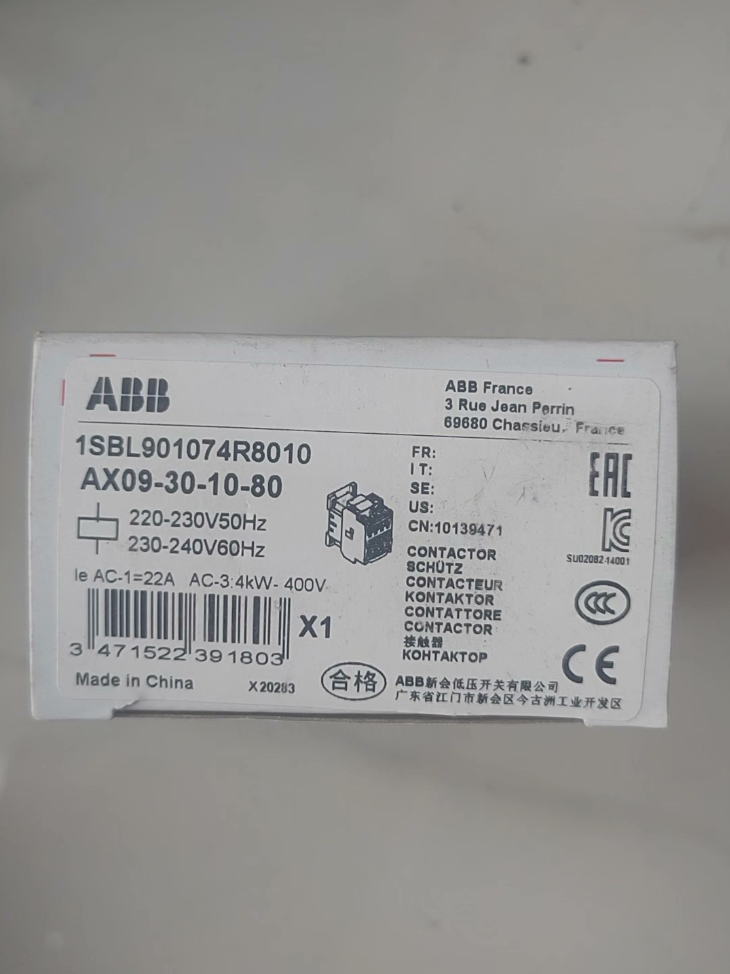

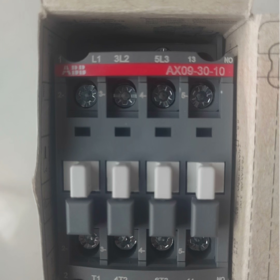
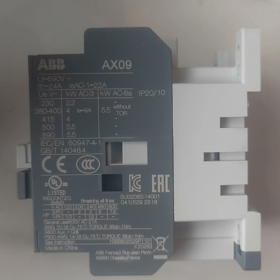
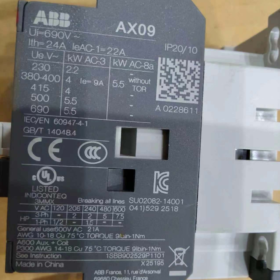
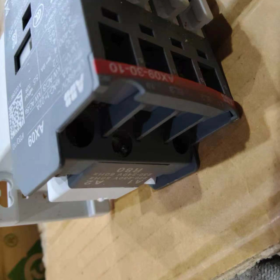
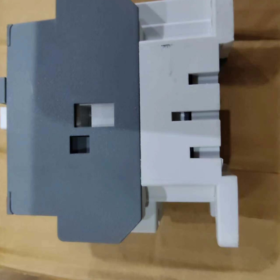
Der AX09-30-10-80 ist ein Allzweckgerät 3-Pol-AC-Schütz von ABB AX-Serie, der offizielle Nachfolger des klassischen A9-Schützes aus der ehemaligen A-Serie. Es ist für die Steuerung von Lasten mit geringer Leistung in allgemeinen Industrieanwendungen konzipiert, Wird hauptsächlich zum direkten Starten und Stoppen von Drehstrom-Asynchronmotoren verwendet, sowie das Schalten von Wechselstromverteilungskreisen, induktive und ohmsche Lasten.
Ausgestattet mit einer herkömmlichen Wechselstromspule, Dieses Schütz zeichnet sich durch eine kompakte Struktur und einen geringen Platzbedarf aus. Es unterstützt die Montage auf Standard 35 mm DIN-Schienen, und bietet eine lange mechanische Lebensdauer, hohe Betriebsfrequenz und hervorragende Anpassungsfähigkeit an die Umgebung. Es wird häufig in Gebäude-HLK-Systemen eingesetzt, Lichtautomatisierungssysteme, OEM-Gerätemontage, kommunale Energieverteilung und andere Bereiche.
- Interpretation des Modellcodes
Vollständiges Modell: AX09-30-10-80
- AXT: Seriencode, repräsentiert Allzweck-Wechselstromschütze der AX-Serie (Ersatz für die ältere A-Serie).
- 09: Bewertete aktuelle Klasse. Der Nennbetriebsstrom beträgt 9 Eine Unternutzungskategorie AC-3 bei 400 V.
- 30: Hauptkontaktkonfiguration. 3 normalerweise offene Hauptkontakte ohne normalerweise geschlossene Hauptkontakte (die erste Ziffer = Anzahl der Hauptpole; die zweite Ziffer = Anzahl der normalerweise geschlossenen Hauptkontakte).
- 10: Hilfskontaktkonfiguration. 1 normalerweise offener Hilfskontakt ohne normalerweise geschlossene Hilfskontakte (Die erste Ziffer = Anzahl der normalerweise offenen Hilfskontakte; die zweite Ziffer = Anzahl der normalerweise geschlossenen Hilfskontakte).
- 80: Spulencode, entsprechend einer Standard-Wechselstromspule: 220-230 V und 50 Hz / 230-240 V und 60 Hz.
- Technische Kernparameter
3.1 Hauptstromkreisparameter
| Artikel | Spezifikation |
| Polen & Kontaktkonfiguration | 3P, 3 Normalerweise offene Hauptkontakte |
| Konventioneller thermischer Strom (Ith) | 24 A (Umgebungstemperatur ≤ 40 ℃) |
| Nennbetriebsstrom (AC-1) | 22 A (≤ 690 V und, ≤ 40 ℃); 18 A (≤ 70 ℃) |
| Nennbetriebsstrom (AC-3) | 9 A (≤ 440 V und, ≤ 55 ℃); 7 A (≤ 690 V und, ≤ 55 ℃) |
| Maximale Nennbetriebsspannung (Ue) | 690 V und |
| Nennsteuerleistung (AC-3) | 4 kW @ 400 V; 5.5 kW @ 690 V |
| Bewertete Ausschaltkapazität (AC-3) | 8 × Dh |
| Bewertete Stoßspannungsfestigkeit (Ump) | 6 kV |
| Überspannungskategorie | Kategorie III |
| Hauptstromkreisanschluss | Schraubklemmenanschluss, geeignet für massive/litzige Kupferleiter |
| Drehmoment für Hauptklemmen | 1.2 ~ 1.5 N·m |
3.2 Parameter des Steuerkreises
| Artikel | Spezifikation |
| Nennspulenspannung (Uc) | 220~230 V Wechselstrom 50 Hz; 230~240 V Wechselstrom 60 Hz |
| Aufnahmespannungsbereich | 0.85 Uc ~ 1.1 Uc |
| Dropout-Spannungsbereich | 0.2 Uc ~ 0.75 Uc |
| Spulentyp | Konventionelle AC-Erregerspule |
| Standard-Hilfskontakt | 1 NEIN, kompatibel mit AC-15 / DC-13-Steuerkreise |
| Nennkapazität des Hilfskontakts | AC-15: 10 A / 220 V; DC-13: 0.55 A / 220 V |
| Anschluss des Steuerkreises | Schraubklemmen |
3.3 Mechanisch & Umgebungsparameter
| Artikel | Spezifikation |
| Gesamtabmessungen (B × H × T) | 44 mm × 74 mm × 74 mm |
| Nettogewicht | Ca. 0.326 kg |
| Schutzklasse | IP20 (Hauptteil) |
| Betriebsumgebungstemperatur | -25 ℃ ~ +55 ℃ (Volle Bewertung innerhalb 55 ℃; Stromreduzierung erforderlich bei 70 ℃) |
| Installationshöhe | Keine Stromreduzierung bis zu 3000 M |
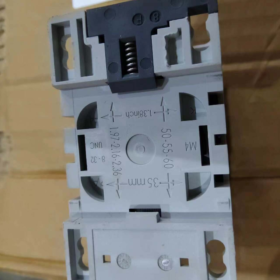
| Montagemethode | Standard 35 mm DIN-Schienenmontage; vertikale Schraubmontage möglich |
| Zertifizierungen | IEC 60947-4-1, CCC, CE, UL, RoHS |
3.4 Lebensdauer & Leistungsparameter
| Artikel | Spezifikation |
| Mechanisches Leben | 10,000,000 Betriebszyklen |
| Elektrisches Leben (AC-3-Dienst) | 1,000,000 Betriebszyklen |
| Maximale Betriebsfrequenz | 1200 Zyklen pro Stunde |
| Abholzeit | 7 ~ 21 MS |
| Ausstiegszeit | 4 ~ 11 MS |
- Alternative Modelle & Serienübergreifende Referenz
4.1 Äquivalenter ABB-Ersatz
- Ersatz für Auslaufmodelle: Direkter Ersatz für die ältere A-Serie A9-30-10. Vollständig kompatibel mit den Original-Befestigungslöchern und Schienenabmessungen, mit verbesserter elektrischer Lebensdauer und allgemeiner Zuverlässigkeit.
- Gleicher Nennstrom mit unterschiedlichen Spulen:
AX09-30-10-81: 24 V und 50/60 Hz-Spule
AX09-30-10-84: 110 V und 50 Hz / 110~120 V 60 Hz-Spule
AX09-30-01-80: Gleicher Hauptstromkreis, ausgestattet mit 1 NC-Hilfskontakt
- Höhere aktuelle Modelle der gleichen Serie: AX12-30-10-80 (12 A), AX18-30-10-80 (18 A). Identische Einbaubreite für direkten Austausch und Kapazitätserweiterung.
4.2 Gleichwertige Produkte anderer Marken
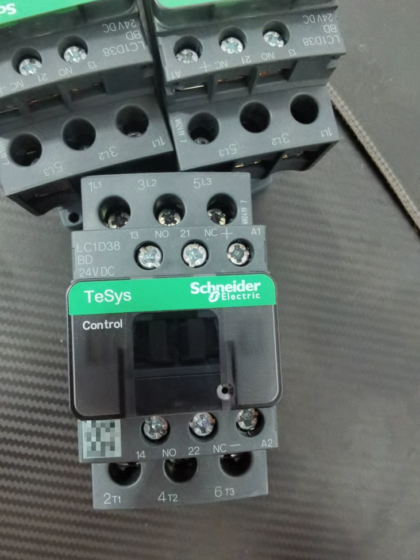
Schneider Electric: LC1D09M7C
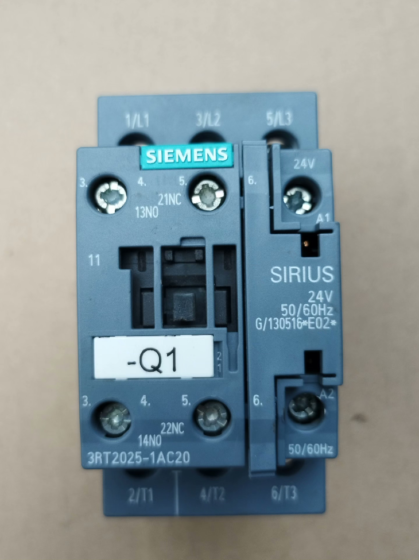
Siemens: 3RT6015-1AN21
Chint: NXC-09 (220 V-Spule)
> Notiz: Alle markenübergreifenden Modelle werden unterstützt 35 mm DIN-Schienenmontage für direkten Austausch. Bitte überprüfen Sie vor der Installation die Hilfskontaktkonfiguration und die Spulenspannung.
- Vollständige Liste der 3-poligen Schütze der AX-Serie (220 V-Spule)
| Modell | Nennstrom (AC-3 @ 400 V) | Entsprechende Motorleistung @ 400 V | Standard-Hilfskontakte |
| AX09-30-10-80 | 9 A | 4 kW | 1 NEIN |
| AX12-30-10-80 | 12 A | 5.5 kW | 1 NEIN |
| AX18-30-10-80 | 18 A | 7.5 kW | 1 NEIN |
| AX25-30-10-80 | 25 A | 11 kW | 1 NEIN |
| AX32-30-10-80 | 32 A | 15 kW | 1 NEIN |
| AX40-30-10-80 | 40 A | 18.5 kW | 1 NEIN |
| AX50-30-11-80 | 50 A | 22 kW | 1 NEIN + 1 NC |
| AX65-30-11-80 | 65 A | 30 kW | 1 NEIN + 1 NC |
| AX80-30-11-80 | 80 A | 37 kW | 1 NEIN + 1 NC |
| AX95-30-11-80 | 95 A | 45 kW | 1 NEIN + 1 NC |
Gemeinsames Zubehör
Thermisches Überlastrelais: TA25DU-Serie (z.B. TA25DU-9M). Direkte steckbare Bodenmontage zum Schutz vor Motorüberlastung.
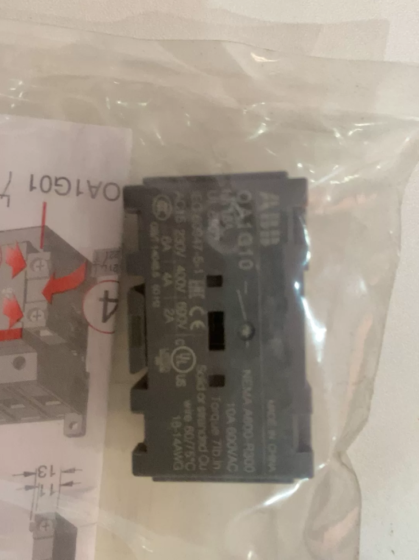
Hilfskontaktblöcke: Frontmontierte Module der Serie CA5X (CA5X-10E, CA5X-01E, CA5X-22E), erweiterbar bis zu 4 Paare von Hilfskontakten.
Überspannungsschutz: RV5X-Serie, Absorbiert Schaltüberspannungen von Spulen zum Schutz von SPS-Steuerkreisen.
Mechanische Verriegelung: VB5X-Serie, Bietet eine mechanische Verriegelung für den Vorwärts-/Rückwärtsbetrieb von zwei Schützen.
Terminal-Abdeckung: Verbessert das Schutzniveau und verhindert versehentlichen Kontakt.
- Anwendungsbereich & Betriebsgrenzen
6.1 Typische Anwendungen
- Kleine Motorsteuerung: Direkter Start/Stopp von Drehstrom-Asynchronmotoren wie z. B. Kleinventilatoren, Wasserpumpen, Förderer, Rolltischmotoren und Minikompressoren, geeignet für Belastungen bis 4 kW.
- Gebäude & HVAC-Systeme: Steuerung von Endgeräten zentraler Klimaanlagen, Frischlufteinheiten, Brandschutzventilatoren, Wasserversorgung & Entwässerungspumpen und Brandschutzklappen. Es fungiert als zentraler Aktor für Stromverteilungskreise in der Gebäudeautomation.
- OEM-Ausrüstung: Stromkreissteuerung für Verpackungsmaschinen, Textilmaschinen, kleine Werkzeugmaschinen, Lebensmittelverarbeitungsgeräte und andere automatisierte Maschinen. Die kompakte Größe spart Platz im Schrank.
- Stromverteilung & Lichtsteuerung: Fernschaltung von Hochleistungsbeleuchtungskreisen und kleinen Verteilereinspeisungen; Schalten von Kondensatorbänken geringer Kapazität in Niederspannungs-Blindleistungskompensationsschränken.
- Automatisierungslogiksteuerung: Fungiert als Leistungsverstärker für SPS-Ausgänge zur Ansteuerung von Magnetventilen, Kontrollleuchten und andere kleine Aktuatoren.
6.2 Umweltanforderungen
Installieren Sie es im Innenbereich in Schaltanlagen oder Steuerkästen. Eine Einwirkung von Regen und direkter Sonneneinstrahlung im Freien ist verboten.
Der Verschmutzungsgrad darf die Klasse nicht überschreiten 3; kein stark korrosives Gas, explosives Gas oder leitfähiger Staub vorhanden ist.
Keine starken Stöße oder Vibrationen auf der Montagefläche; Schwingbeschleunigung ≤ 20 m/s².
Bei einer größeren Installationshöhe ist eine Stromreduzierung erforderlich 3000 m oder Umgebungstemperatur überschreitet 55 ℃, Informationen zur Berechnung finden Sie im offiziellen Handbuch.
- Fehlerbehebungsmatrix
| Fehlerphänomen | Grundursache | Lösungen |
| Das Schütz schließt nicht ohne Ton | 1. Keine Stromversorgung, Lose oder defekte Verkabelung im Steuerkreis | 1. Unterbrechen Sie die Stromversorgung und führen Sie eine Sicherheitsprüfung durch; Überprüfen Sie die Verkabelung an den Klemmen A1/A2 und messen Sie die Spulenspannung erneut |
| 2. Verbrannte oder gebrochene Spule | 2. Testen Sie den Spulenwiderstand mit einem Multimeter; Ersetzen Sie die Spule oder die komplette Einheit, wenn ein offener Stromkreis auftritt | |
| 3. Mechanische Blockierung des Ankers oder Fremdkörper | 3. Betätigen Sie den Anker nach dem Ausschalten manuell, Entfernen Sie Staub und Fremdkörper von den Kernpolflächen | |
| 4. Versorgungsspannung weit unter Nennwert | 4. Passen Sie die Versorgungsspannung an den Nennbereich an und verhindern Sie einen Spannungsabfall im Netz | |
| Ständiges Summen nach Schließung | 1. Öl und Staub auf den Kernpolflächen führen zu schlechtem Kontakt | 1. Nach dem Ausschalten den Kern demontieren und das Öl reinigen & Schmutz auf den Polflächen |
| 2. Defekte oder gelöste Beschattungsspule | 2. Ersetzen Sie den Kern oder die komplette Einheit, wenn die Beschattungsspule beschädigt ist | |
| 3. Unzureichende Saugkraft aufgrund niedriger Versorgungsspannung | 3. Erhöhen Sie die Versorgungsspannung auf den Nennbereich | |
| Ungewöhnliche Überhitzung an den Hauptterminals / Kontakte | 1. Lose Anschlussschrauben führen zu hohem Übergangswiderstand | 1. Ziehen Sie die Klemmen nach dem Ausschalten wieder mit dem vorgeschriebenen Drehmoment an |
| 2. Dauerhafte Überlastung mit einem Strom, der den Nennwert überschreitet | 2. Laststrom messen, Überprüfen Sie die Modellauswahl und ersetzen Sie sie gegebenenfalls durch ein höher bewertetes Modell | |
| 3. Kontaktablation und schlechte Leitung | 3. Polieren Sie leicht abgetragene Kontakte; Tauschen Sie bei schweren Schäden die komplette Einheit aus | |
| Anormales Signal von den Hilfskontakten, Keine Rückmeldung an die SPS | 1. Ablation oder schlechter Kontakt der Hilfskontakte | 1. Testen Sie die Ein-/Aus-Leistung der Hilfskontakte nach dem Ausschalten und ersetzen Sie fehlerhafte Blöcke |
| 2. Lose oder gebrochene Kabel | 2. Überprüfen Sie die Verkabelung und den SPS-Eingangskreis, um Leitungsfehler zu beheben | |
| 3. Unsachgemäße Installation des Hilfskontaktblocks | 3. Hilfskontaktblock wieder einbauen und auf festen Anschluss achten | |
| Starke Überhitzung der Spule, Brandgeruch oder Rauch | 1. Die Versorgungsspannung überschreitet die Nennleistung der Spule | 1. Unterbrechen Sie sofort die Stromversorgung, Überprüfen Sie die Versorgungsspannung und schließen Sie einen falschen Hochspannungsanschluss aus |
| 2. Kurzschluss zwischen den Spulenwindungen | 2. Spulenwiderstand messen; Ersetzen Sie die Spule, wenn ein Kurzschluss zwischen den Windungen bestätigt wird | |
| 3. Langfristiger Betrieb unter Unterspannungsbedingungen mit übermäßigem Strom | 3. Halten Sie die Versorgungsspannung innerhalb des Nennbereichs und vermeiden Sie einen längeren Unterspannungsbetrieb | |
| Fehler beim Öffnen oder langsame Freigabe nach Stromausfall | 1. Adhäsion durch Öl an Kernpolflächen | 1. Reinigen Sie die Kernpolflächen vom Öl und prüfen Sie den Restmagnetismus |
| 2. Geschweißte Hauptkontakte | 2. Überprüfen Sie die Hauptkontakte nach dem Ausschalten; Ersetzen Sie die Kontakte oder schließen Sie die Einheit ab, wenn es zu Schweißnähten kommt | |
| 3. Ermüdungsversagen der Rückholfeder | 3. Rückholfeder austauschen oder Schütz komplettieren |




NH42-63-318x560.png "Automatische Transferschalter vom Typ CHINT PC (ATS)NH42-63/4SZ")