Contacteur,disjoncteur,capteur,Encodeur,API,Convertisseur

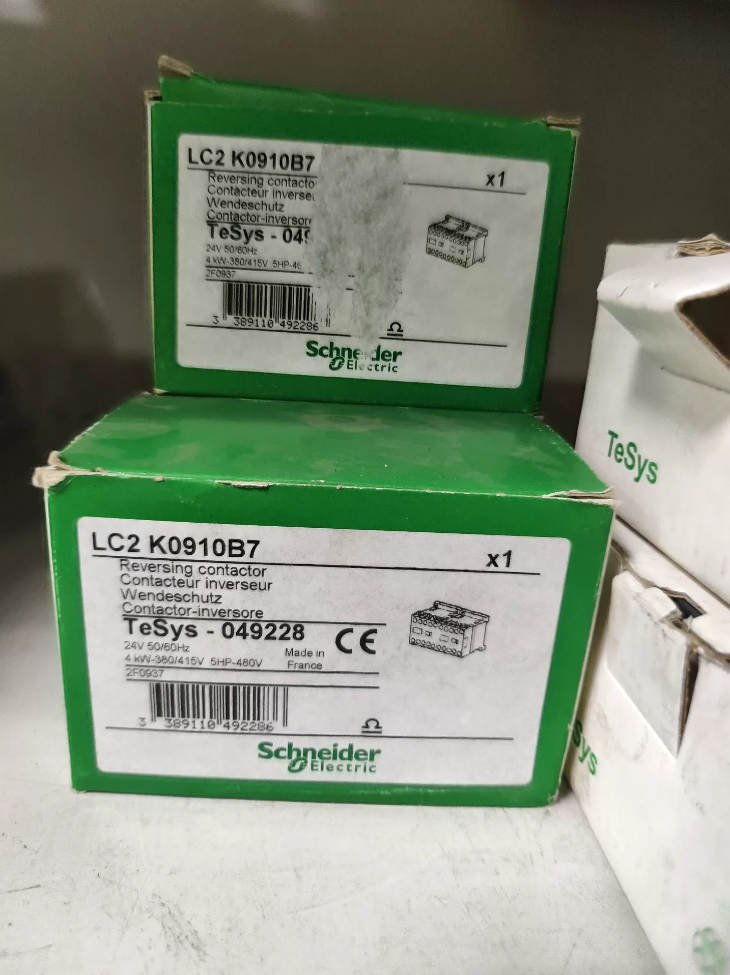

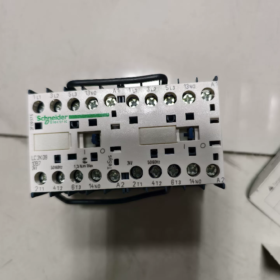
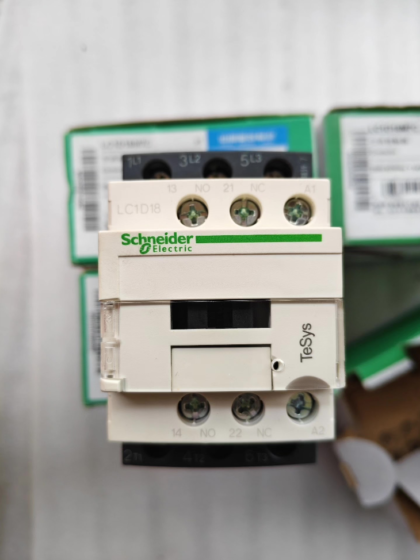
Produit: TeSys-K 3-contacteur inverseur de pôle, fabriqué en France, équipé d'un verrouillage mécanique intégré et d'un jeu de barres de puissance d'inversion pré-assemblé
Décodage du modèle
LC2K: Série de contacteurs inverseurs (LC1K signifie contacteur unique; LC2K = ensemble inverseur pré-assemblé de deux contacteurs)
09: Courant de fonctionnement nominal AC-3 9A
01: Configuration des contacts auxiliaires 1 Normalement fermé (1Caroline du Nord)
B7: Tension de bobine AC24V, 50/60Hz
Spécifications électriques de base
| Article | Paramètre |
| Pôles du circuit principal | 3P‑3NO |
| Courant de fonctionnement AC‑3 | 9UN |
| Puissance nominale du moteur | 2.2kW(230V) / 4kW(380-415 V) |
| Tension maximale du circuit principal | 690V et |
| Bobine | AC24V 50/60Hz; Appel 30VA, Maintien 4,5 VA |
| Contact auxiliaire | 1NC instantané |
| Courant thermique conventionnel Ith | 20UN |
| Catégorie d'utilisation | AC‑3, AC‑3e, AC‑4, AC‑1 |
| Verrouillage | Verrouillage mécanique intégré |
| Connexion des bornes | Bornes à vis, 0.75Conducteur ‑4 mm²; Couple 0,8-1,3N·m |
| Montage | rail DIN35 / Montage sur plaque avec vis |
| Dimension hors tout | L90 × H58 × P57 mm, Poids 0,39 kg |
| Endurance mécanique | 5 millions de cycles; Endurance électrique 1,3 millions de cycles (AC‑3) |
| Température ambiante de fonctionnement | -25~+50℃ |
| Certifications | CCC, UL, CE, CAE |
Scénarios d'application
Commande avant/arrière du moteur triphasé (convoyeurs, treuils, rouleaux, actionneurs de vannes). Le jeu de barres inverseur de phase est prémonté en usine, aucun échange de phase manuel requis pour le câblage du circuit principal. Un verrouillage électrique doit être mis en œuvre comme protection secondaire.
Modèles de référence similaires
LC2K0910B7: Bobine AC24V, auxiliaire 1NO (Normalement ouvert)
LC2K0901M7: 1Contact auxiliaire NF, bobine AC220V
LC2K0901F7: 1Contact auxiliaire NF, bobine AC110V
Sélection & Notes de substitution
- LC2K est une unité d'inversion complète. Ne pas assembler manuellement deux contacteurs LC1K distincts, car le jeu de barres inverseur monté en usine et le verrouillage mécanique correspondant seront manquants.
- Pour une alternative domestique: vérifier les paramètres: 9UN, Bobine AC24V, 1Contact auxiliaire NF, verrouillage mécanique intégré pour l'opération d'inversion.
- Points de contrôle des pièces de rechange: Mesurer la résistance des deux bobines; vérifier le verrouillage mécanique pour déceler un blocage; inspecter les principaux contacts pour l'ablation; vérifier le couple de serrage des bornes.
Note: LC2K0901B7 est un modèle importé. Le stock local est souvent limité et les délais de livraison sont longs.
Schneider LC2K0901B7 (Contacteur inverseur TeSys-K) Manuel d'installation
Ce manuel est compilé conformément à la feuille d'instructions originale de Schneider., pour le modèle LC2K0901B7, 3P., 9Et AC-3, 1Contact auxiliaire NF, Bobine AC24V 50-60Hz, verrouillage mécanique intégré et jeu de barres de puissance d'inversion pré-assemblé.
⚠️Prérequis de sécurité: L'installation et le câblage doivent être effectués uniquement par des électriciens qualifiés. Débrancher complètement l'alimentation électrique en amont avant tout travail. Degré de protection IP20. L'appareil doit être installé à l'intérieur d'une armoire électrique fermée, l'exploitation en plein air est interdite.
Table des matières
- Présentation du produit
- Résumé des spécifications techniques
- Conditions ambiantes & Montage mécanique
- Instructions de câblage électrique
- Couple aux bornes & Spécifications du câble
- Circuit de contrôle & Exigences obligatoires en matière de verrouillage
- Liste de contrôle avant la mise sous tension
- Procédure de mise en service
- Entretien & Dépannage
- Façons d’obtenir le manuel PDF original
- Présentation du produit
LC2K0901B7 est un contacteur d'inversion avant-arrière de moteur pré-assemblé en usine, assemblé à partir de deux contacteurs LC1K plus un verrouillage mécanique intégré et un jeu de barres d'alimentation inverseur préinstallé. L'échange biphasé est terminé à l'intérieur du jeu de barres d'usine; l'inversion de phase manuelle sur le circuit principal n'est PAS nécessaire.
Contacts principaux: 3 Normalement ouvert; Contact auxiliaire: 1 Normalement fermé (1Caroline du Nord) contact instantané
Bobine: AC24V 50/60Hz; Appel 30VA, Maintien 4,5 VA
AC-3 9A; Puissance nominale du moteur 4 kW à 400 V; 2.2kW@230V
Montage: Montage sur rail DIN35 / Montage sur plaque avec vis
Dimension: L90 mm × H58 mm × P57 mm, Poids 0,39 kg
- Conditions ambiantes d'installation
- Température ambiante de fonctionnement: -25℃ ~ +50℃; Température de stockage -50~+80℃
- Altitude: Pas de déclassement ≤2000m; un déclassement est requis au-dessus de 2000 m
- Environnement: Exempt de poussière explosive et de gaz corrosif, bien ventilé; éviter la lumière directe du soleil.
- Installation d'armoire: Maintenir un dégagement ≥ 10 mm en haut et en bas pour la dissipation thermique. Un montage compact côte à côte est autorisé; un dégagement supplémentaire est requis pour un environnement à haute température.
- Vibration & choc: Conforme à la norme IEC60068-2-6. Tenir à l'écart des équipements soumis à de fortes vibrations à l'intérieur de l'armoire.
- Montage mécanique
3.1 Montage sur rail DIN (préféré)
- Accrocher les loquets inférieurs du contacteur sur le rail DIN35.
- Appuyez sur le corps du contacteur jusqu'à ce que les loquets s'enclenchent et se verrouillent fermement..
- Suppression: Soulever le loquet inférieur avec un tournevis à lame plate, soulever le contacteur vers le haut.
3.2 Montage sur plaque avec vis
Utilisez des vis M3/M4 à travers les trous de montage sur le boîtier. Ne pas trop serrer pour éviter de fissurer le boîtier en plastique. La base de montage doit être plate et sans distorsion.
Orientation de montage: Installation verticale avec bornes orientées vers le haut. Le montage horizontal ou à l’envers est interdit, ce qui réduira la durée de vie mécanique.
- Instructions de câblage électrique
Pour contacteur inverseur intégré LC2K: Le jeu de barres de puissance inverseur est monté en usine. Ne le démontez PAS. Le démontage peut entraîner un risque de court-circuit lors de la commutation avant/arrière.
Bornes du circuit principal
L1, L2, L3: Entrée d'alimentation triphasée
T1, T2, T3: Se connecte au moteur triphasé U, V, W
Important: Ne pas échanger les phases du côté T. L'inversion de phase est réalisée par un jeu de barres interne pré-assemblé. La permutation des phases côté sortie entraînera un sens de rotation identique pour les commandes avant et arrière..
Bornes de bobine
A1, A2: Bobine du contacteur avant (AC24V)
A1, A2: Bobine du contacteur inverseur (AC24V)
Appliquer strictement la tension de bobine AC24V. L'application de 220 V brûlera la bobine instantanément. Plage de tension de fonctionnement de la bobine autorisée: 0.8~1,15×Uc, c'est à dire. 19.2V-27.6VAC.
Bornes de contact auxiliaires
13-14: 1Contact auxiliaire normalement fermé NF, utilisé pour le verrouillage du circuit de commande et le retour d'état.
- Couple aux bornes & Spécifications du câble
Bornes à vis-étrier, Phillips n°2 / 6 tournevis à lame plate de mm
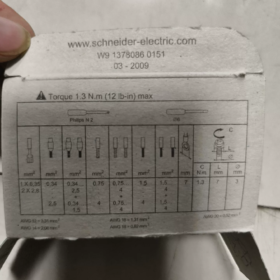
Couple de serrage: 0.8-1.3 N·m. Un serrage excessif fissure la base du terminal en plastique; un couple insuffisant provoque une surchauffe.
Conducteurs compatibles:
Monocœur solide: 1.5-4 mm²
Flexible sans virole: 0.75-4 mm²
Flexible avec embout de câble: 0.34-2.5 mm²
-Longueur de dénudage: 5-6 mm. Le cuivre nu exposé ne doit pas toucher les bornes adjacentes pour éviter les courts-circuits entre phases..
- Circuit de contrôle & Exigences obligatoires en matière de verrouillage
⚠️Cette unité est équipée uniquement d'un verrouillage mécanique. Le verrouillage mécanique ne peut pas éliminer complètement le risque de fermeture simultanée des deux contacteurs. Le verrouillage électrique via les contacts auxiliaires dans le circuit de commande secondaire est OBLIGATOIRE, sinon un court-circuit triphasé catastrophique pourrait se produire.
- Verrouillage mécanique: Le mécanisme mécanique interne permet physiquement à un seul contacteur de se fermer à la fois. Le risque de panne causée par un brouillage existe toujours.
- Câblage de verrouillage électrique: Contact auxiliaire série NC du contacteur avant dans le circuit de bobine inverse; Contact auxiliaire série NC du contacteur inverse dans le circuit de la bobine avant.
- Alimentation de contrôle: AC24V. Circuits bobines A1/A2 et A1’/A2′ sont isolés; éviter une mauvaise connexion commune.
- Configuration recommandée: Installer un relais de surcharge thermique pour la protection contre les surcharges du moteur; protection contre les courts-circuits en amont par fusible gG 25A.
- Liste de contrôle complète avant la mise sous tension
- Contrôle mécanique: Actionner manuellement le mécanisme de commande du contacteur. Le verrouillage mécanique doit fonctionner correctement; la fermeture manuelle simultanée des deux contacteurs ne doit pas être possible; le fonctionnement doit être fluide et sans blocage.
- Inspection du câblage: Toutes les bornes serrées à 0,8-1,3N·m; pas de brins de fil lâches ni de cuivre nu exposé; jeu de barres inverseur pré-assemblé intact et en bon état.
- Vérification de la bobine: Confirmez que la tension de commande est de 24 V CA pour éviter les dommages dus à une surtension.
- Essai de circuits: Vérification du multimètre pour le câblage correct du verrouillage électrique; pas de court-circuit entre L1-L2-L3 sur le circuit principal.
- Côté moteur: Résistance d'isolement du moteur normale, câblage du moteur correct.
- Mise en service
- Débrancher la charge du moteur; alimenter uniquement le circuit de commande AC24V.
- Déclenchez les commandes avant et arrière séparément: Un seul contacteur doit intervenir à tout moment; fonction de verrouillage valide. L'entrée simultanée ne doit pas avoir lieu.
- Mettre hors tension, rebrancher le moteur. Redynamisez-vous et testez en avant / sens de rotation inversé.
- Observer l'état de fonctionnement: Pas de bruit anormal ni de surchauffe aux bornes.
Fréquence de fonctionnement maximale: 3600 opérations par heure. Détarage pour les cycles avant-arrière fréquents.
- Entretien & Dépannage
| Phénomène de défaut | Points de dépannage |
| Bobine alimentée, le contacteur refuse de s'enclencher | Mesurer la tension de la bobine AC24V; inspecter le câblage A1/A2; vérifier le blocage mécanique; mesurer la résistance de la bobine |
| Le contacteur s'enclenche mais le moteur ne tourne pas | Vérifiez les bornes d'entrée/sortie du circuit principal desserrées ou ablées.; inspecter l'ablation par contact |
| Déclenchement instantané au démarrage | Confirmer que le jeu de barres inverseur est intact; vérifier qu'un verrouillage électrique existe; vérifier le risque de conduction simultanée entre phases |
| Fort bruit de fonctionnement | Vérifier l'écart de tension de la bobine; résonance du cabinet; saleté sur la face du noyau de l'armature |
Référence de durée de vie: Endurance mécanique 5 millions de cycles; Endurance électrique 1,3 millions de cycles dans des conditions AC-3.
Entretien périodique: Resserrer le couple des bornes; inspecter l'ablation par contact; éliminer l'accumulation de poussière.
- Accès au manuel PDF original
- Visitez le site officiel de Schneider et recherchez LC2K0901B7. Téléchargez la fiche d'instructions du contacteur LC2-K dans la section documentation du produit..
- Recherchez le contacteur inverseur TeSys-K dans le centre de téléchargement Schneider Chine.
Note: LC2K0901B7 est importé. Le manuel imprimé sur papier est principalement en anglais uniquement, sans version chinoise complète.. Ce manuel compilé suit strictement les spécifications originales de Schneider.
Défauts courants des contacteurs Schneider (Applicable à la série TeSys-K LC2K, aussi pour LC1D, LC1N etc.)
Catégories de défauts: Défaut d'arrivée; abandon instantané après l'arrivée; tiré mais pas de sortie du circuit principal; bourdonnement; ablation par contact; grillage de la bobine; défauts uniques du contacteur-inverseur, avec des conseils de dépannage.
- Bobine alimentée, le contacteur ne parvient pas à s'enclencher complètement
- Pas de tension ou tension insuffisante sur le circuit de commande
Phénomène: Tension nominale de bobine non mesurée entre A1-A2; tension de fonctionnement inférieure 80% de la tension nominale de la bobine.
Cause première: Alimentation de commande défectueuse, bouton-poussoir/contact de verrouillage cassé, câblage lâche.
Pour unité d'inversion LC2K: Distinguer la bobine avant A1/A2 et la bobine inverse A1'/A2'; évitez de mesurer les mauvaises bornes.
- Bobine brûlée en circuit ouvert
Résistance de bobine mesurée infinie; bobine visiblement brûlée en noir.
Déclencheurs: Mauvaise alimentation haute tension (par exemple. alimentant 220 V sur une bobine de 24 V), surtension soutenue, vieillissement à haute température.
- Bourrage mécanique
Débris étrangers ou fragments de plastique à l’intérieur du mécanisme; montage sur rail DIN incliné; verrouillage mécanique bloqué du contacteur inverseur.
L'actionnement manuel du mécanisme semble lourd et ne peut pas atteindre la position fermée.
- Mauvais contact du contact de verrouillage auxiliaire NC (panne haute fréquence sur les unités d'inversion LC2K)
Le contact auxiliaire de verrouillage oxydé coupe le chemin d’alimentation de la bobine.
- Bobine alimentée, abandon instantané / bavarder après l'arrivée
- Tension de bobine insuffisante: Chute de tension importante causée par de longs câbles de commande; tension inférieure 85% Ue entraîne une force de maintien de l'armature insuffisante.
- Saleté, contamination par la rouille ou l'huile sur les surfaces de contact du noyau de l'armature: L’écart du circuit magnétique augmente, force de maintien insuffisante, bavardage répété.
- Connexions du circuit de commande desserrées, tension intermittente.
- Spécifique au LC2K: Verrouillage mécanique à moitié bloqué, un déplacement incomplet du mécanisme provoque une chute.
- Le contacteur s'enclenche normalement, mais le moteur ne fonctionne pas (pas de sortie sur le circuit principal)
- Bornes du circuit principal desserrées et surchauffées: Un couple de vis insuffisant provoque une oxydation thermique; aucune tension de charge ne peut être considérée comme normale, la tension s'effondre sous charge.
- Ablation / contacts principaux déconnectés: Courant d'appel important, des cycles fréquents créent des contacts carbonisés piqués avec une résistance de contact élevée.
- Phase ouverte sur alimentation amont: Fusible grillé ou pôle amont du disjoncteur endommagé.
Rappel LC2K: Les jeux de barres inverseurs pré-assemblés desserrés ou détachés mènent à la phase ouverte. Ne retirez jamais le jeu de barres installé en usine.
- Fort bourdonnement / bourdonnement pendant le fonctionnement
- Contamination par la poussière et la graisse sur les surfaces de contact du noyau, fermeture magnétique incomplète, bourdonnement typique d'un contacteur AC.
- Tension de bobine trop élevée ou trop basse.
- Anneau de court-circuit cassé sur le noyau d'induit: Bruit intense, le remplacement du contacteur est obligatoire.
- Résonance de l'armoire ou montage sur rail DIN lâche.
- Soudage par contact (condition dangereuse)
Après la mise hors tension, les principaux contacts restent conducteurs, le moteur ne peut pas s'arrêter; pour les contacteurs inverseurs, cela conduit directement à un court-circuit entre phases.
Causes profondes:
- Surcharge, courant de surtension de court-circuit; jogging fréquent / inversions fréquentes dépassant la limite de fréquence de fonctionnement (Service AC-4).
- Une tension de bobine insuffisante provoque un rebond de contact et un soudage à l'arc.
- Contacteur sous-dimensionné.
Risque critique pour LC2K: S'appuyer uniquement sur un verrouillage mécanique sans verrouillage électrique, la fermeture simultanée des deux contacteurs crée un court-circuit et une soudure par contact.
- Bobine brûlée
- Mauvaise tension appliquée: L'alimentation en AC220V sur la bobine B7 24VAC brûle la bobine instantanément.
- Surtension soutenue au-dessus 115% tension nominale de la bobine.
- Mécanisme bloqué, l'armature ne peut pas se fermer; la bobine reste à un courant d'appel élevé et grille rapidement.
- Température ambiante excessive de l'armoire et mauvaise dissipation thermique.
- Défauts uniques pour le contacteur inverseur LC2K (avant-arrière)
- Impossible de changer le sens de rotation: Un verrouillage mécanique bloqué bloque le fonctionnement d’un contacteur.
- Travaux en avant, inverser aucune sortie (ou vice versa): Desserré / jeu de barres inverseur pré-assemblé détaché, ou ablation des contacts principaux sur une unité.
- Déclenchement immédiat lors d'un changement de direction: ① Jeu de barres inverseur d'usine retiré; ② Verrouillage électrique manquant entraînant l'enclenchement simultané des deux contacteurs.
- Contacts auxiliaires endommagés: Défaillance du signal de retour et perte de la fonction de verrouillage électrique.
- Surchauffe
- Couple de borne incorrect: Un sous-couple provoque une surchauffe lâche; un couple excessif fissure la base du terminal en plastique.
- Section de câble sous-dimensionnée.
- Contacts vieillissants à haute résistance de contact.
- Température élevée de l'armoire, mauvaise dissipation de la chaleur avec des appareils adjacents densément emballés.
Flux de travail de dépannage rapide sur le terrain
- Éteindre, actionner manuellement le mécanisme du contacteur pour vérifier le blocage mécanique.
- Mesure à la mise sous tension de la tension de fonctionnement réelle de la bobine.
- Mesure de la résistance de la bobine hors tension pour juger de l'intégrité de la bobine.
- Avec contacteur tiré, mesurer la tension triphasée d'entrée à sortie sur le circuit principal pour localiser la borne / défauts de contact.
- Pour unités inverseuses: Inspecter le verrouillage mécanique, câblage de verrouillage électrique et intégrité physique du jeu de barres inverseur pré-assemblé.
Recommandations préventives
- Pour contacteur inverseur LC2K: Le verrouillage mécanique n'est pas une protection de sécurité suffisante; un verrouillage électrique doit être mis en œuvre.
- Suivre strictement le couple spécifié pour le serrage des bornes.
- Déclassement du contacteur pour les applications d'inversion fréquentes AC-4 à usage intensif.
- Maintenir la ventilation des armoires; effectuer un dépoussiérage périodique.
Contacteur à enclenchement Normal, Mais pas de sortie du circuit principal (Alimentation présente mais pas de tension de charge)
Phénomène: Bobine alimentée, action de traction audible, l'indicateur d'état indique l'état fermé; cependant aucune tension n'apparaît côté charge et le moteur ne peut pas fonctionner. La description s'applique au contacteur inverseur LC2K0901B7 et aux contacteurs CA à usage général.
- Terminal & Pannes de câblage (Cause sur site la plus fréquente)
- Vis du circuit principal sous-serrées entraînant une connexion de câble desserrée
Les vis semblent serrées mais les conducteurs ne sont pas solidement serrés. Une résistance de contact élevée entraîne un effondrement de la tension sous charge.
Couple spécifié pour les bornes LC2K: 0.8-1.3 N·m. Trop faible → surchauffe lâche; trop haut → boîtier en plastique fissuré.
Symptôme: La tension peut être normale à vide, mais disparaît dès que la charge est appliquée; les bornes présentent une décoloration due à la chaleur.
- Longueur de dénudage des câbles insuffisante, brins de fil lâches pas complètement serrés à l'intérieur de la borne; conducteurs flexibles sans embouts de câble.
- Défaut spécifique au LC2K: Desserré, jeu de barres inverseur pré-assemblé détaché ou fracturé. Des dommages se produisent si le jeu de barres est démonté, ce qui entraîne une phase ouverte. ⚠️ Ne pas retirer le jeu de barres inverseur monté en usine.
- Défaillance interne du contact principal
- Ablation, contacts principaux usés ou oxydés avec perte de conduction
Le mécanisme effectue une course mécanique complète, pourtant, les contacts principaux piqués et recouverts de carbone ne peuvent pas établir la conduction électrique.
Méthode de mesure: En condition de mise hors tension, maintenir manuellement le contacteur en position fermée; mesurer la résistance L-T pour chaque pôle avec un multimètre. La lecture normale est proche de 0Ω; des centaines d'ohms ou une résistance infinie indiquent des contacts endommagés.
Déclencheurs: Démarrages et arrêts fréquents, Course à pied AC-4, surtensions de court-circuit, état de fin de vie électrique.
L'inspection visuelle peut ne montrer aucun dommage évident alors que les surfaces de contact internes sont brûlées.
- Décalage mécanique de l'ensemble de contacts: L'armature atteint la position fermée, mais les contacts principaux ne sont pas entièrement compressés.
- Défauts d’alimentation en amont (Facilement diagnostiqué à tort comme une défaillance du contacteur)
- Fusible monophasé grillé ou un pôle défectueux sur le disjoncteur amont. La phase d'entrée manque avant d'atteindre le contacteur.
-Priorité de dépannage: Mesurez d'abord la tension triphasée aux bornes d'entrée du contacteur L1/L2/L3 pour confirmer l'intégrité de l'alimentation..
- Relais de surcharge thermique en amont déclenché, coupant le chemin d'alimentation principal.
- Conditions spécifiques aux contacteurs-inverseurs LC2K
- Un seul sens de rotation mort (avancer OK / inverser aucune sortie, ou en face): Inspecter le jeu de barres inverseur et les contacts principaux de l'unité de contacteur correspondante.
- Verrouillage mécanique partiellement bloqué: L'armature semble fermée, pourtant les contacts principaux ne sont pas complètement enfoncés en interne.
Séquence de dépannage sur site
- Étape 1: Mesurer la tension d'entrée triphasée L1, L2, L3 aux bornes d'entrée du contacteur
Confirmer l'alimentation triphasée complète, éliminer la phase ouverte en amont.
- Étape 2: Avec contacteur maintenu tiré, mesurer la tension côté sortie T1, T2, T3
Si la tension d'entrée est normale alors qu'une certaine phase de sortie indique zéro → le défaut réside dans le contacteur (bornes / contacts / jeu de barres inverseur).
- Fonctionnement sûr hors tension: Maintenir manuellement le contacteur fermé; mesurer la résistance L1-T1, L2-T2, L3-T3 avec ohmmètre
Normale: Conduction proche de zéro;
Résistance infinie: Contacts non conducteurs;
Haute résistance: Contacts ablés ou bornes desserrées.
- Vérifier le serrage des bornes; inspecter l'intégrité physique du jeu de barres inverseur pré-assemblé (LC2K).
Distinguer deux phénomènes similaires
- ✅ Le contacteur s'enclenche, pas de sortie du circuit principal: Défaut couvert ci-dessus.
- ❌ Le contacteur bavarde à plusieurs reprises et ne peut pas rester fermé: Causé par une tension de bobine insuffisante ou des faces de noyau contaminées, mode de défaillance différent.
Mesures correctives
Bornes lâches: Resserrez au couple spécifié; installer des embouts de câble pour les conducteurs flexibles.
Contacts ablés ou jeu de barres inverseur endommagé: Ne PAS limer ni polir les contacts; remplacer directement l'ensemble contacteur. Le polissage accélère la dégradation des contacts.
Pour unité d'inversion LC2K: Ne démontez pas le jeu de barres de puissance inverseur fourni en usine..




NH42-63-318x560.png "Commutateurs de transfert automatiques de type PC CHINT (ATS)NH42-63/4SZ")